If you’ve got apples and pears sitting on your counter at the same time right now, that’s not an accident, and it’s the entire reason this recipe exists. Late summer is one of the only stretches all year when both California crops show up in stores together, and poached pears and apples are hands down the easiest thing to do with them.
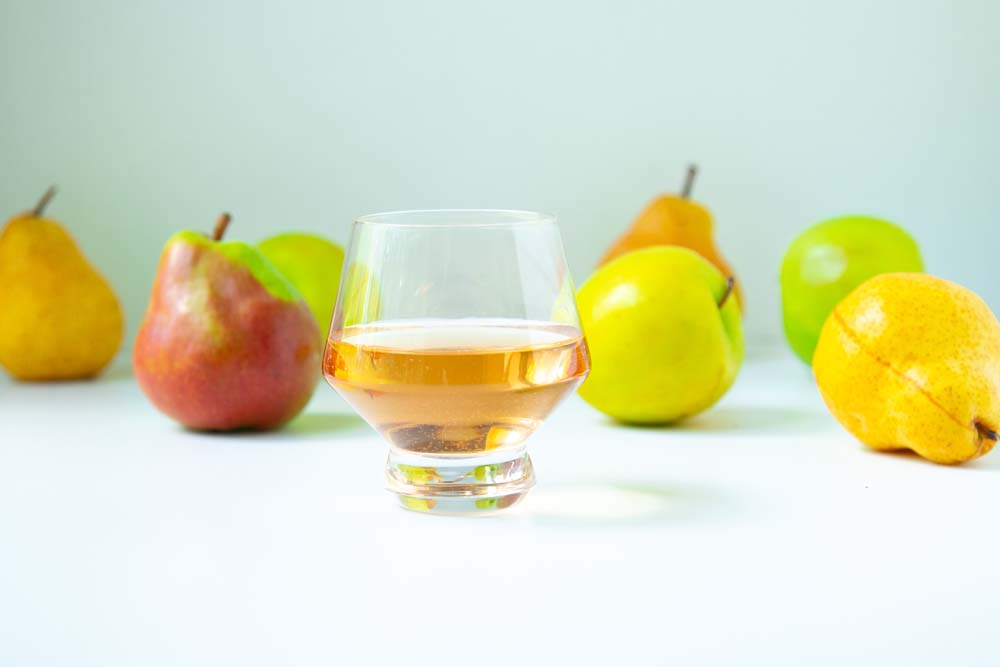
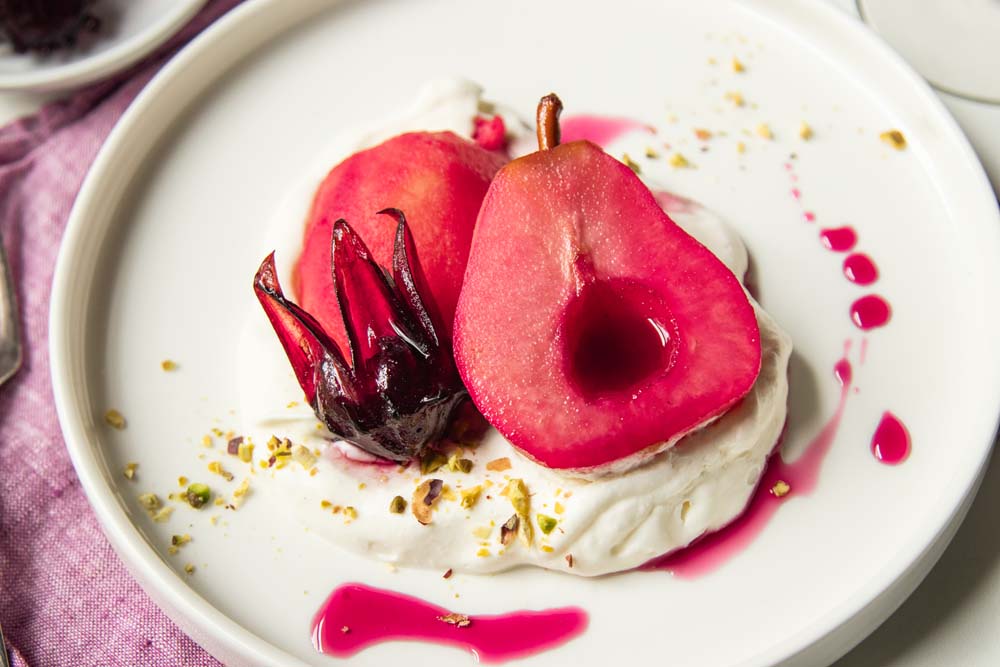
I avoided poaching for years because it sounded like something that required a copper pot and a set of really well honed culinary skills. It doesn’t. You make a sweet liquid and drop fruit into it, then leave the kitchen for ten minutes. The hibiscus and rosé in this one do something pretty, turning everything a deep rose pink and filled with flavor.
So What Does Poaching Actually Do?
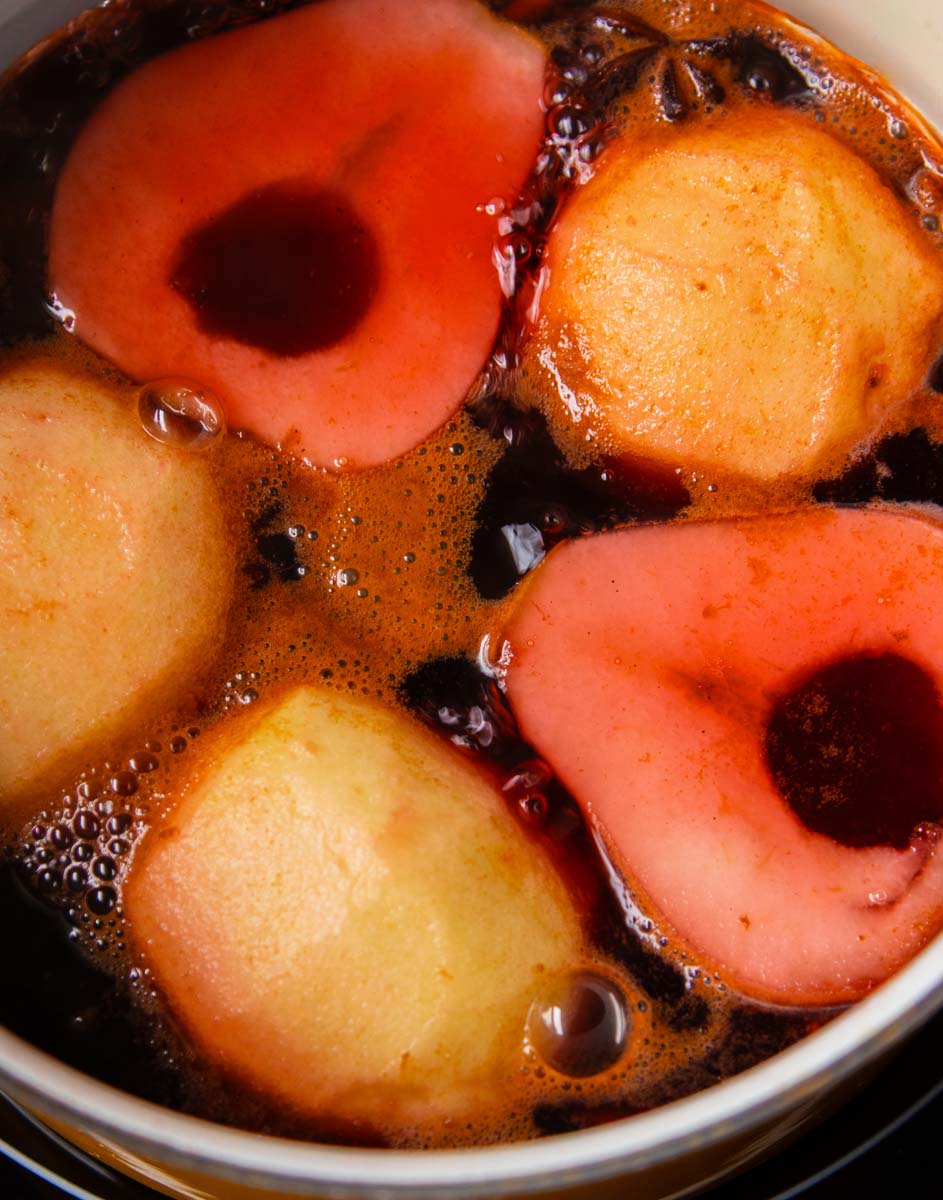
Poaching just means cooking something in liquid that never quite boils. You want a gentle simmer, a bubble breaking the surface every few seconds is ideal. Crank the heat past that and your beautiful pear halves turn into something more like fruit sauce.
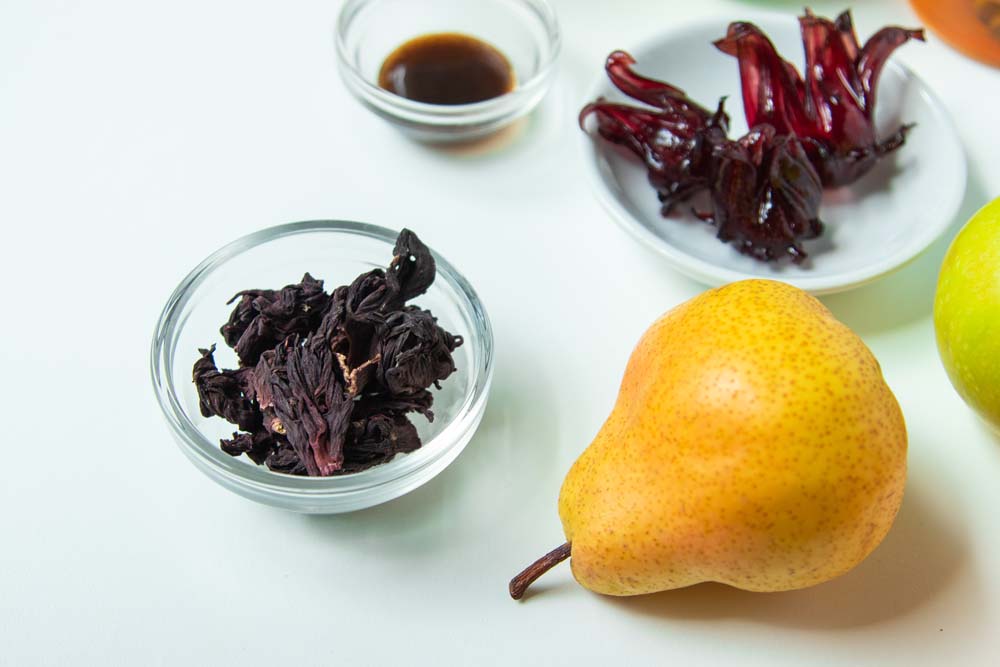
While the fruit sits there, two things happen at once. The flesh softens and loses its crisp raw texture and the poaching liquid works its way in, dragging color and flavor with it. Hibiscus is doing the heavy color lifting here, and its tartness keeps things from going syrupy-sweet, which is a real risk in a pot holding both sugar and honey.
What I love most about this cooking process is how forgiving it is. Poached fruit holds in the fridge for days and honestly tastes better after a day or two, once the syrup has had time to soak all the way through. Not a lot of desserts improve while you ignore them, but this one does.
California’s Weird, Wonderful Overlap Season
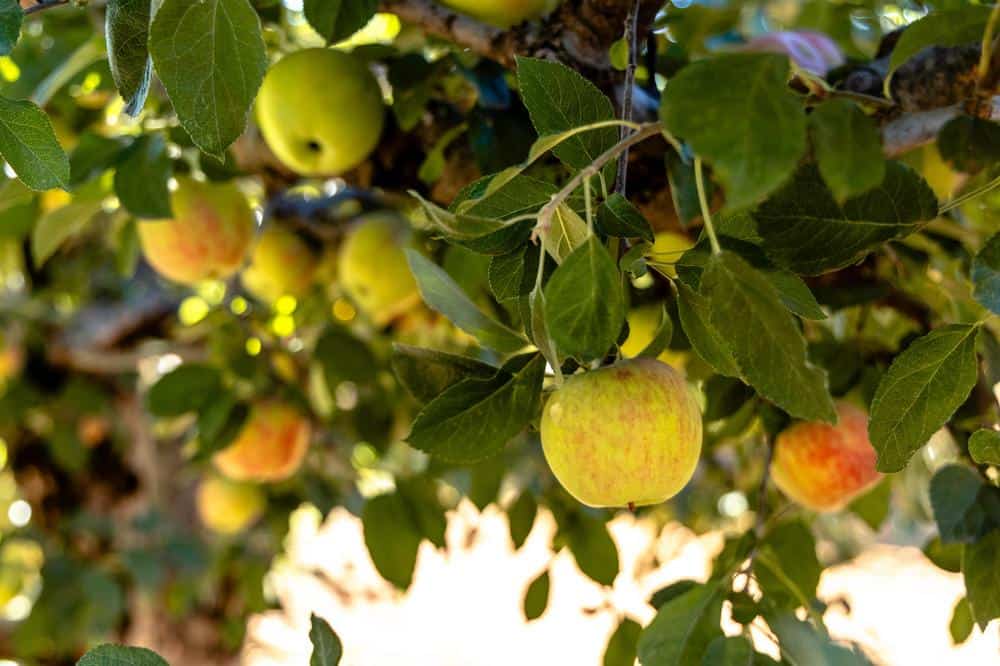
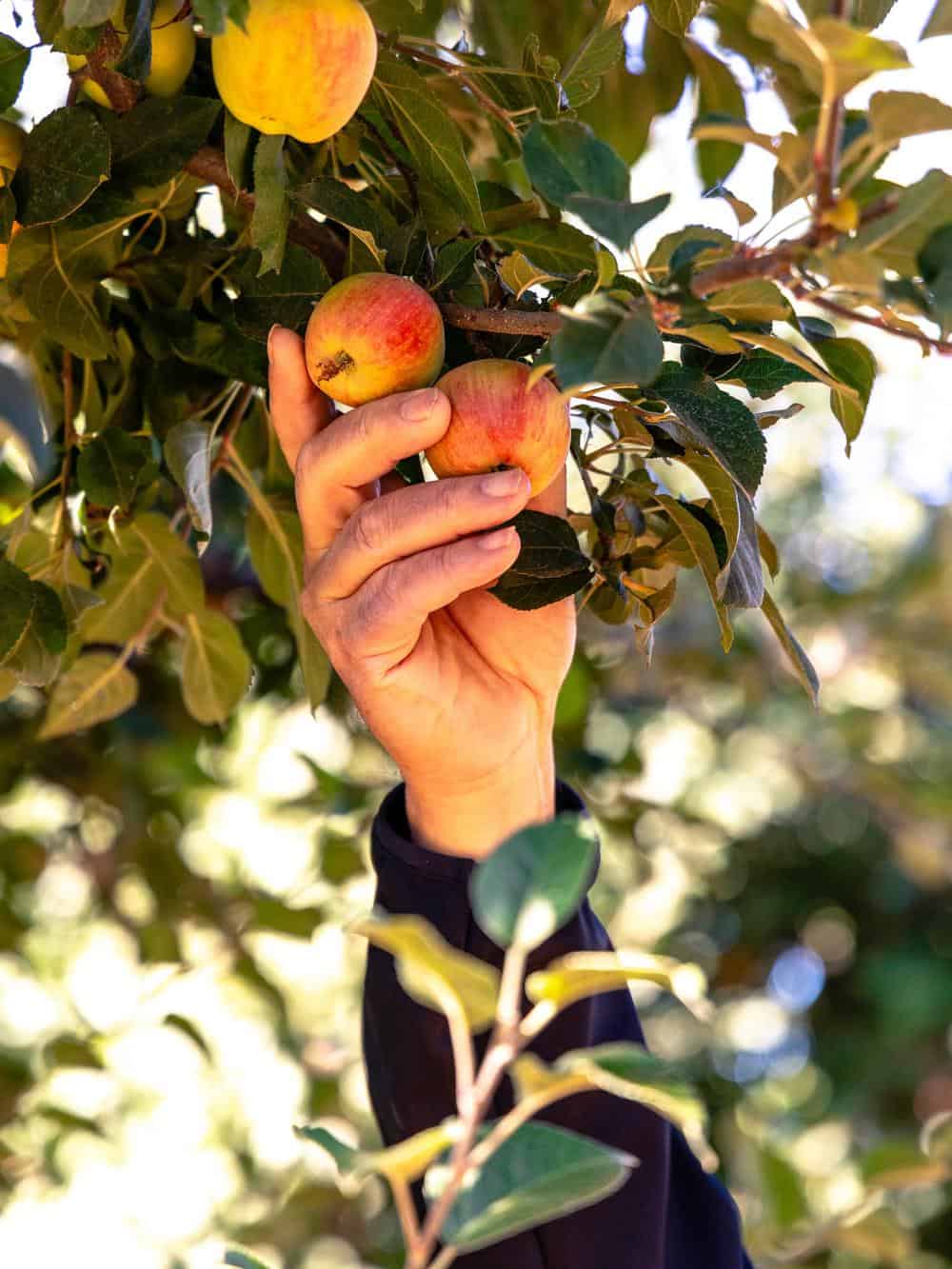
We’ve all been trained to think of apples as a fall fruit, and California growers would very much like a word about that. CA GROWN apples beat almost everyone else to market, with the season starting at the end of July and running through the end of October. That head start is the whole ballgame for freshness, since California picks, packs and ships within such a short window that the fruit lands in stores weeks ahead of neighboring states.
Most of the commercial crop comes out of one very specific pocket of the state. Apples grow in cool spots from the coastline to the Sierra Foothills, but commercial production centers on the Sacramento-San Joaquin River Delta, where that famous Delta Breeze drops nighttime temperatures enough to build sugar, deepen skin color, and keep the texture crisp. Grab Granny Smiths if you can. Tart, firm fruit holds its shape in hot liquid, and you’ll taste that acidity cutting through the honey later.
When most people think apples, the Pacific Northwest usually gets the spotlight. But here’s the thing: upper Northern California has an ideal climate for growing apples, especially a few standout varieties. California focuses on four main ones: Gala, Fuji, Granny Smith, and Cripps Pink, all known for their balance of sweetness, crunch, and versatility.
Apples are grown in all 50 states, but only 36 states grow them commercially. California ranks as the 5th-largest apple producer in the country and the 2nd-largest exporter. Harvest season runs from July through October, with California apples being the first out of the field in July. Unlike apples that sit in long-term storage, California apples are picked and delivered fresh, resulting in more flavor and better texture.
Pears are running on roughly the same clock. California harvests them from July through September.The most useful thing to know at the store is that pears are one of the only fruits picked before they’ve ripened, because they ripen from the inside out and would go mushy if growers left them hanging. They come off the tree fully formed and firm, then finish ripening later. So those rock-hard underripe pears you’d normally stash in a paper bag for a week are actually what you want for this recipe. Buy them and cook them that afternoon.
Yes, You Should Use the Rosé
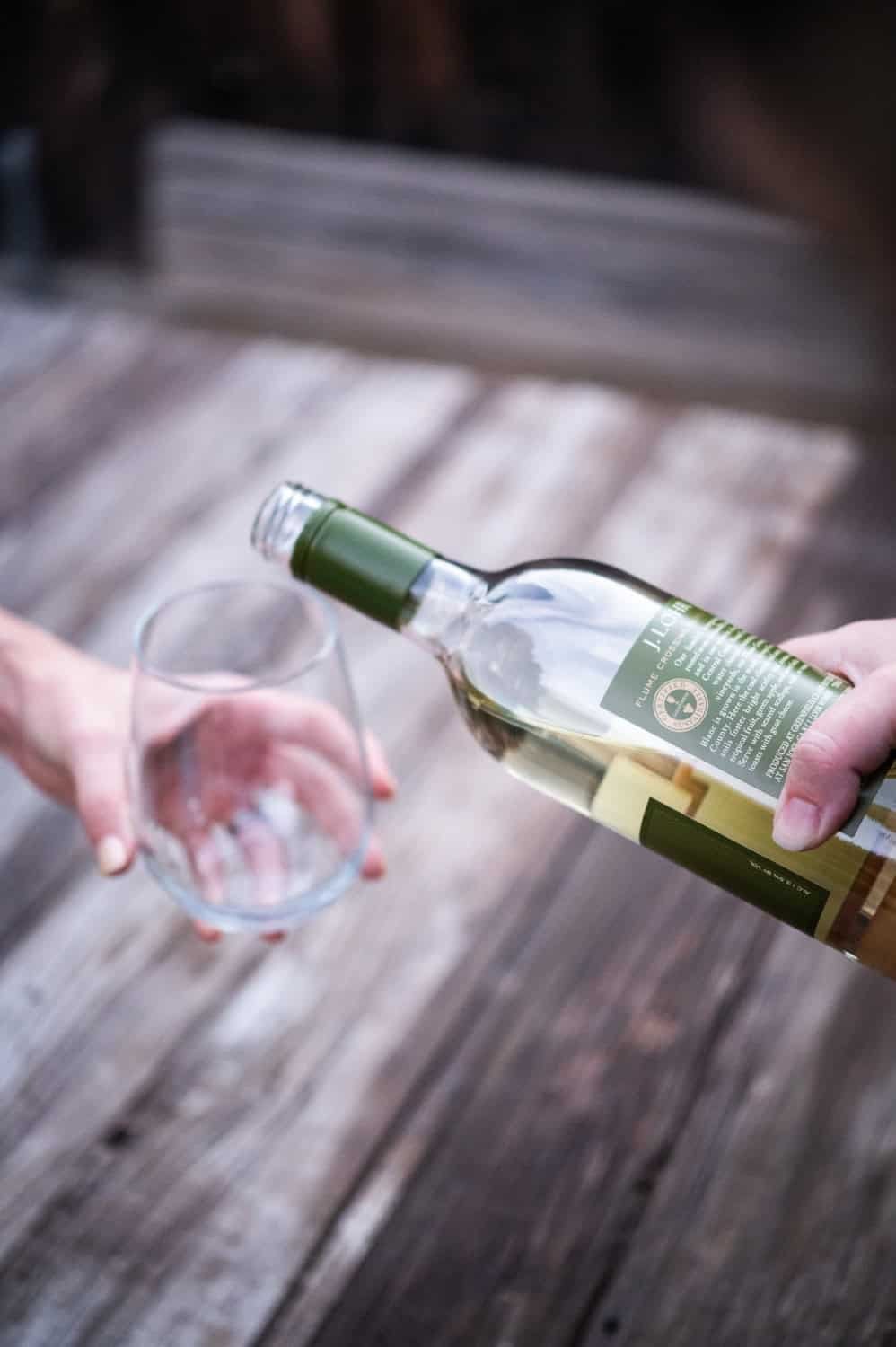
Sweet California rosé is carrying this poaching syrup. It brings acid and enough fruit on the nose to stand up to the orange zest and warm spices without disappearing.
Finding a bottle isn’t exactly a challenge around here. There are over 6,200 wineries in California, and most of them are family owned.
California is the fourth-largest wine-producing region in the world, and sustainability is built into how wine is made here. Nearly 70% of vineyard acreage is certified, and over 90% of California wine is produced in certified wineries, using climate-smart practices that actually make a difference.
That care carries through to the glass. Wines like California Sauvignon Blanc reflect the state’s diverse regions and thoughtful approach to farming and winemaking. From everyday meals to cooking with wine, California wine proves that taking care of the land and making great wine go hand in hand.
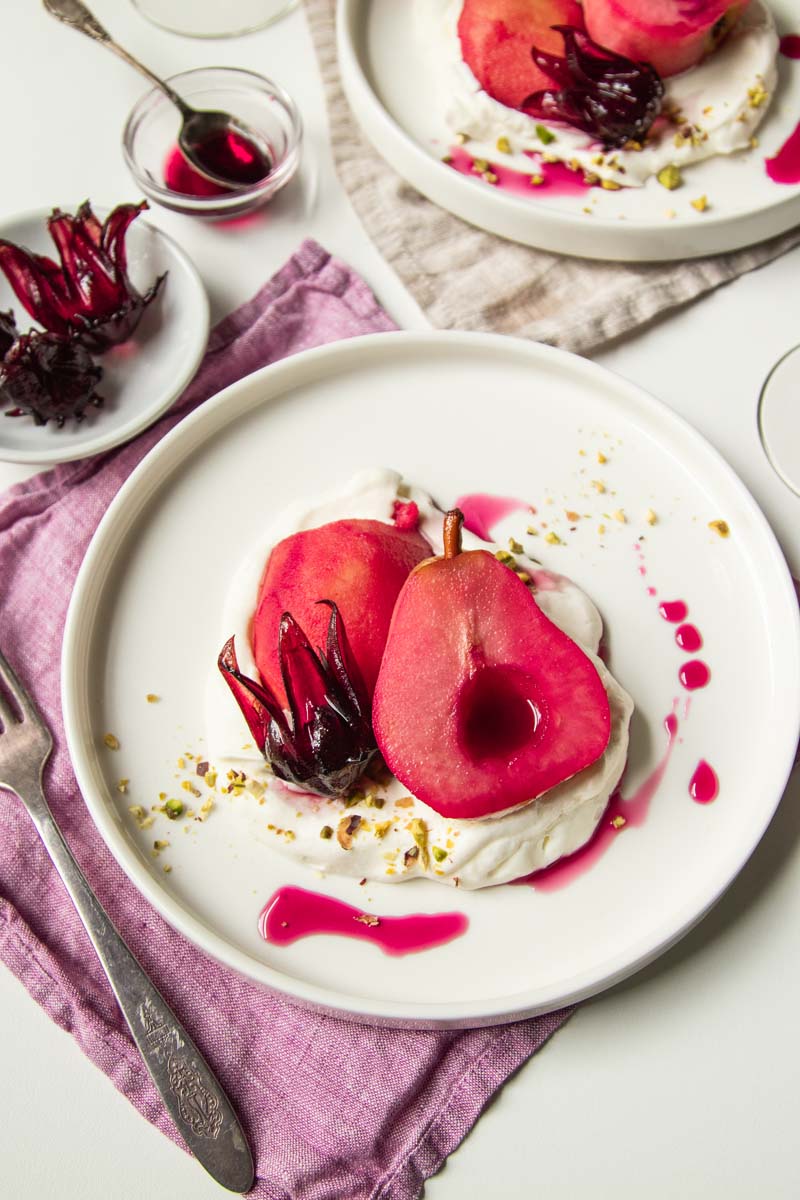
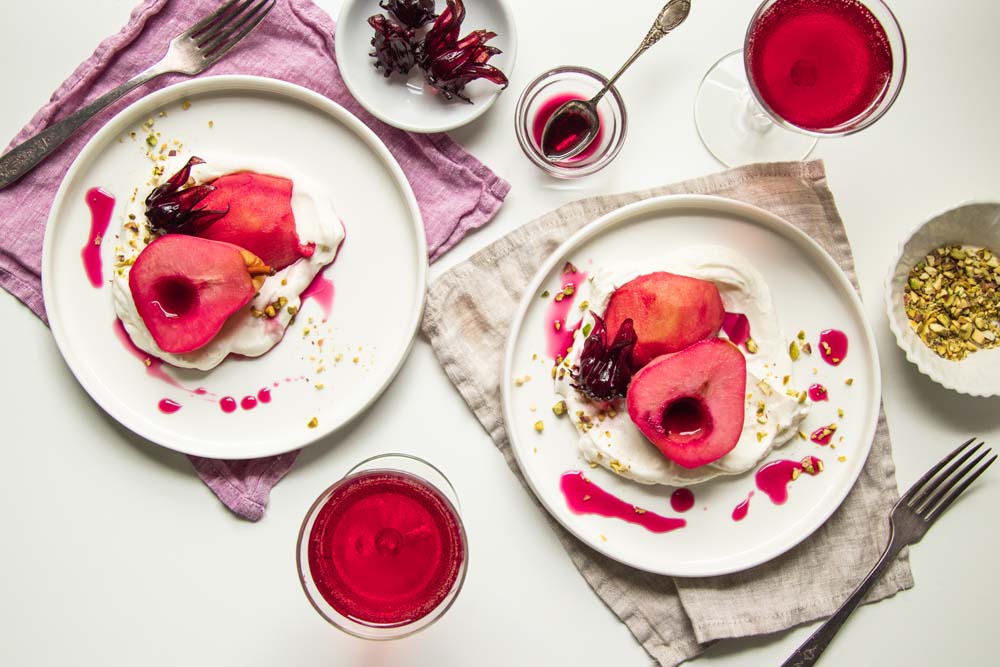
Don’t sleep on the garnish either. Toasted pistachios give you crunch and a green flash against all that pink, and odds are good they grew a couple hours from those vineyards, because if your pistachios were grown in the United States, they were almost certainly CA GROWN. Pile on whipped cream made with Real California Milk and you’ve got a dessert plate worth snapping a picture of.
Start with the fruit. Peel your pears, halve them lengthwise, and scoop out the seeds, then peel and core the apples. Everything should be firm and on the underripe side, because juicy pears at peak ripeness will absolutely fall apart on you.
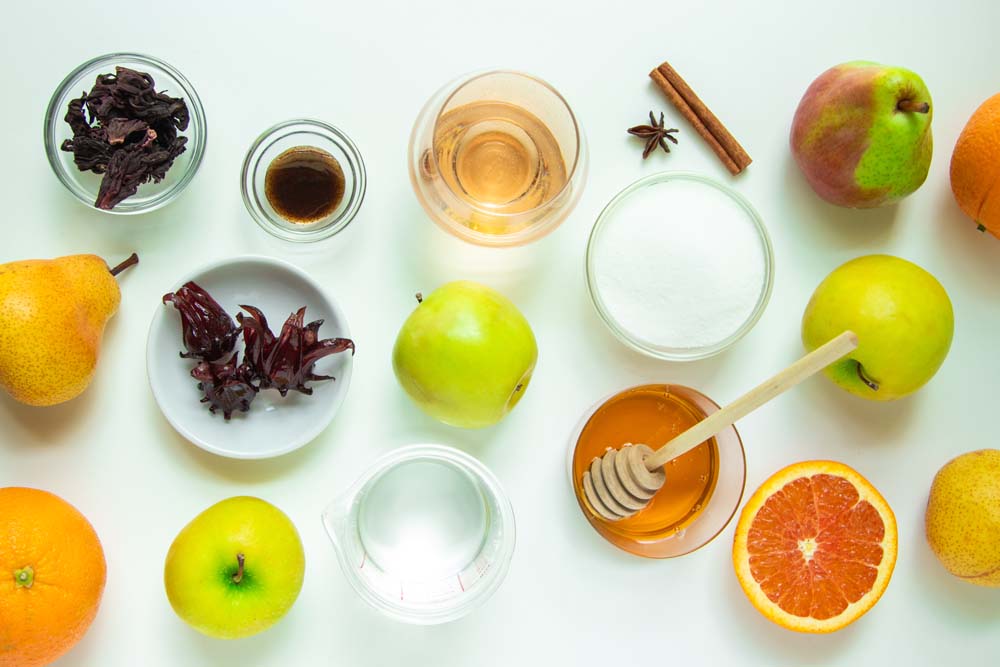
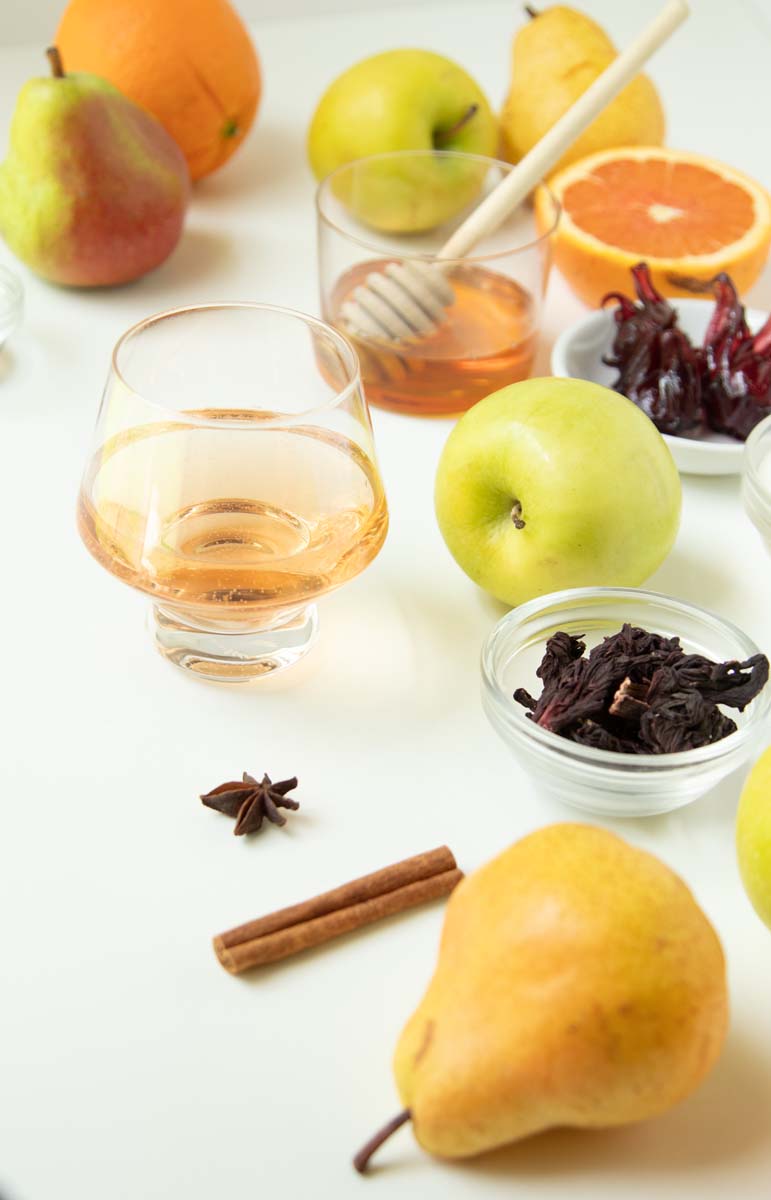
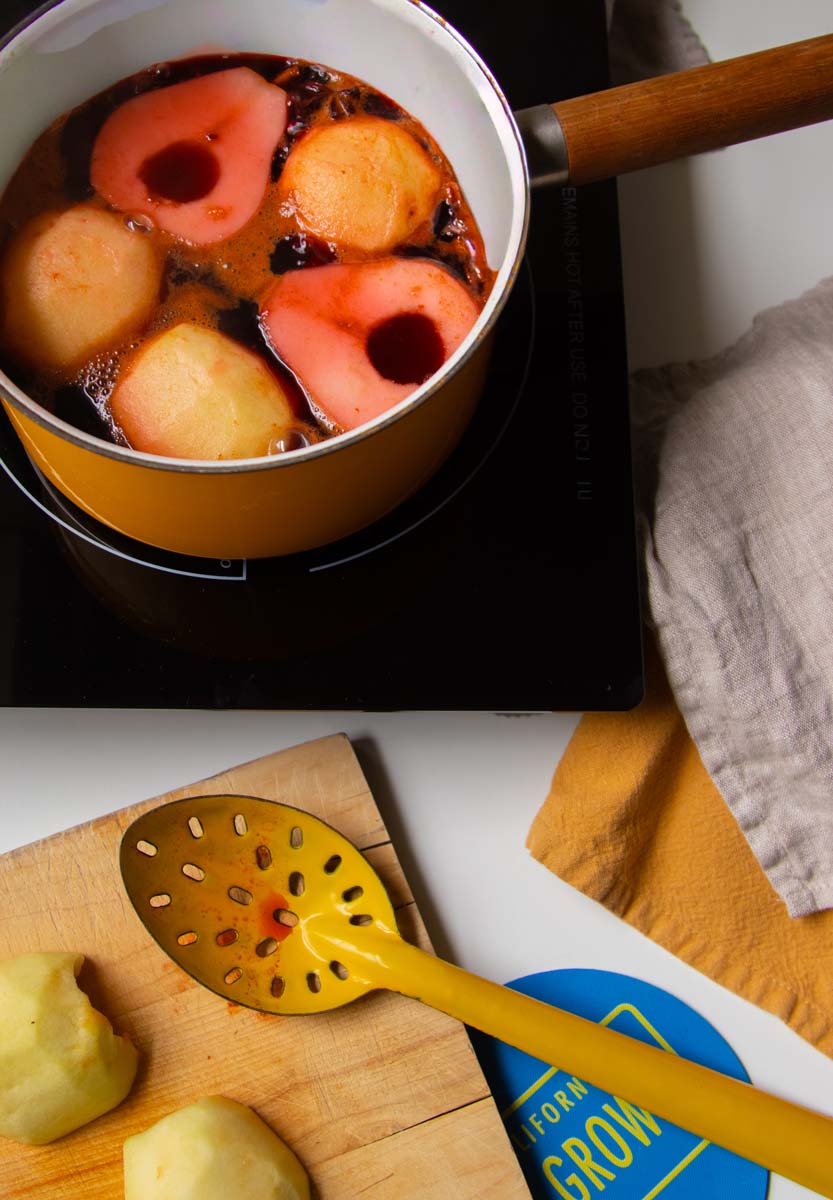
Next comes the poaching liquid. Water, rosé, orange juice, hibiscus tea, sugar, honey, orange peels, vanilla bean paste, plus a star anise pod and a small cinnamon stick if you want them, all go into a medium saucepan over medium heat. Bring it up to a boil, then pull it back to medium low before the fruit goes in.
Working in batches if needed, slide the fruit in gently and simmer the pears 8 to 10 minutes, until they’ve gone light pink, softened, and give easily when you poke them with a fork. Use a slotted spoon to transfer the fruit to a heatproof container. Then leave the sauce going another 10 minutes on the stove so it reduces and thickens up.
Strain the syrup through a sieve to catch the tea leaves and spices, then pour it over the fruit. You can eat it warm, at room temperature, or cold. If you can wait, let it come to room temperature and then chill it at least 3 hours. To serve, add whipped cream, a drizzle of that poaching liquid and chopped toasted pistachios.
More Recipes Featuring Pears, Apples, and Poaching
Firm beats ripe, every time. If a peeled pear gives under your thumb before it hits the pot, it’s not going to make it. Save that one for breakfast.
Watch your heat. Medium low, gentle simmer. A hard boil roughs up the fruit and clouds your poaching syrup.
Halves and wholes are not the same. This recipe times apple and pear halves at 10 to 15 minutes. Whole pears and apples look gorgeous on a plate but need considerably longer to poach
Don’t bail on the reduction. Those last 15 minutes are what take you from thin cooking liquid to a glossy wine syrup people will rave about.
Keep the leftover syrup. It’s ridiculous over yogurt or vanilla ice cream, good stirred into sparkling water, and even better in a cocktail.
One Last Thing
California apples and pears are both in season at this exact moment, which means the fruit has already done most of the work before it gets anywhere near your stove.
Need a new soundtrack for your kitchen? Check out this CA GROWN Spotify playlist:
Are you planning on making poached pears and apples? We’d love to see your creations! Share your photos with us by tagging #CAGROWN on social media.
Don’t stop here! Follow us on Pinterest for more fresh and fabulous recipe inspiration. Dive into the world of CA GROWN goodness, and let’s make every meal a celebration of the Golden State’s bounty.
3medium oranges,( zest removed in strips, avoiding the white pith, and 1 cup juice reserved)
1/2cupsugar
1/4cuphoney
1tsppure vanilla bean paste or extract
1star anise podoptional
1small cinnamon stickoptional
Optional garnishes
unsweetened whipped cream
coarsley chopped toasted pistachios
reduced hibiscus rosé syrup
strawberries
Instructions
Prepare the pears: peel, slice in half lengthwise, and scoop out the seeds.
Prepare the apples: peel and core to remove seeds, Then slice in half lengthwise.
Prepare the poaching liquid: in a medium saucepan over medium heat, combine water, rosé, orange juice, hibiscus tea (bags), sugar, honey, orange peels, vanilla, star anise, and cinnamon stick if using.
Bring the liquid to a boil, then reduce the heat to medium low. Gently submerge the fruit in the poaching liquid. Simmer the pears for 10 to 15 minutes, until light pink, softened, and fork tender.
Pull the pears out of the poaching liquid and place them in a heatproof container. In the meantime, simmer the sauce for 15 – 20 more minutes, until reduced by half and slightly thickened.
Pour the syrup over the fruit, straining out remaining tea leaves, zest, and spices using a sieve.
Eat warm, at room temperature, or cold. If serving cold, allow to come to room temperature, then store in the fridge for at least 3 hours before serving.
To serve, plate with whipped cream, a drizzle of the poaching liquid syrup, and chopped toasted pistachios. Add fresh strawberries to the plate if desired.
Your participation is appreciated. Please fill-out the form below and a Buy California Marketing Agreement
(BCMA) representative will contact you. Or, you may contact the BCMA at [email protected].
Your participation is appreciated. Please fill-out the form below and a Buy California Marketing Agreement
(BCMA) representative will contact you. Or, you may contact the BCMA at [email protected].