Riverdog Farm: More Than Just Great Produce
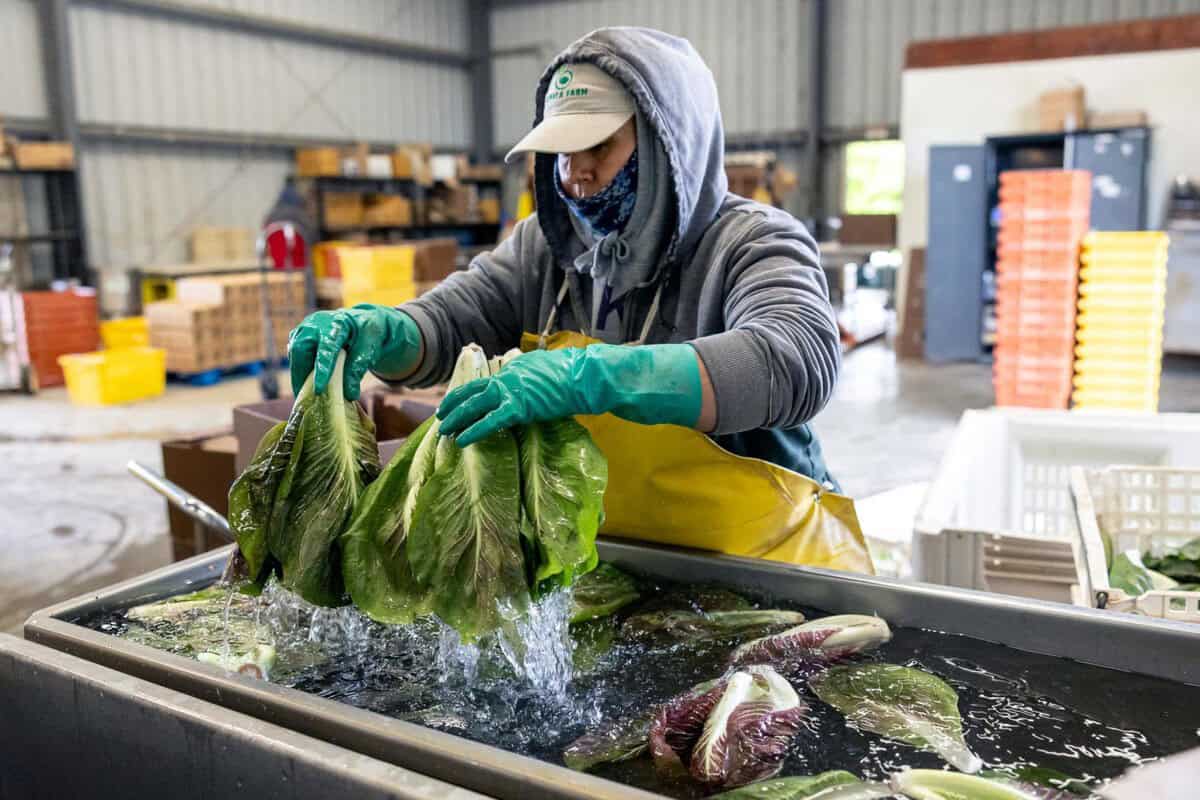
At Riverdog Farm, farming isn’t just about growing great produce. Owner Tim Mueller is equally committed to providing a stable, safe environment for his employees – the people who help to keep the operation afloat. While the 300-acre farm supplies everything from leafy greens and citrus to pasture-raised meats to farmers’ markets, restaurants and CSA boxes across Northern California, Mueller believes the farm’s greatest accomplishment is its dedicated team. We met with Tim to chat about why he believes that Riverdog Farm’s success is rooted in organic practices, skilled labor, and the belief that strong farms are built by strong teams.
Farming organically, since day one
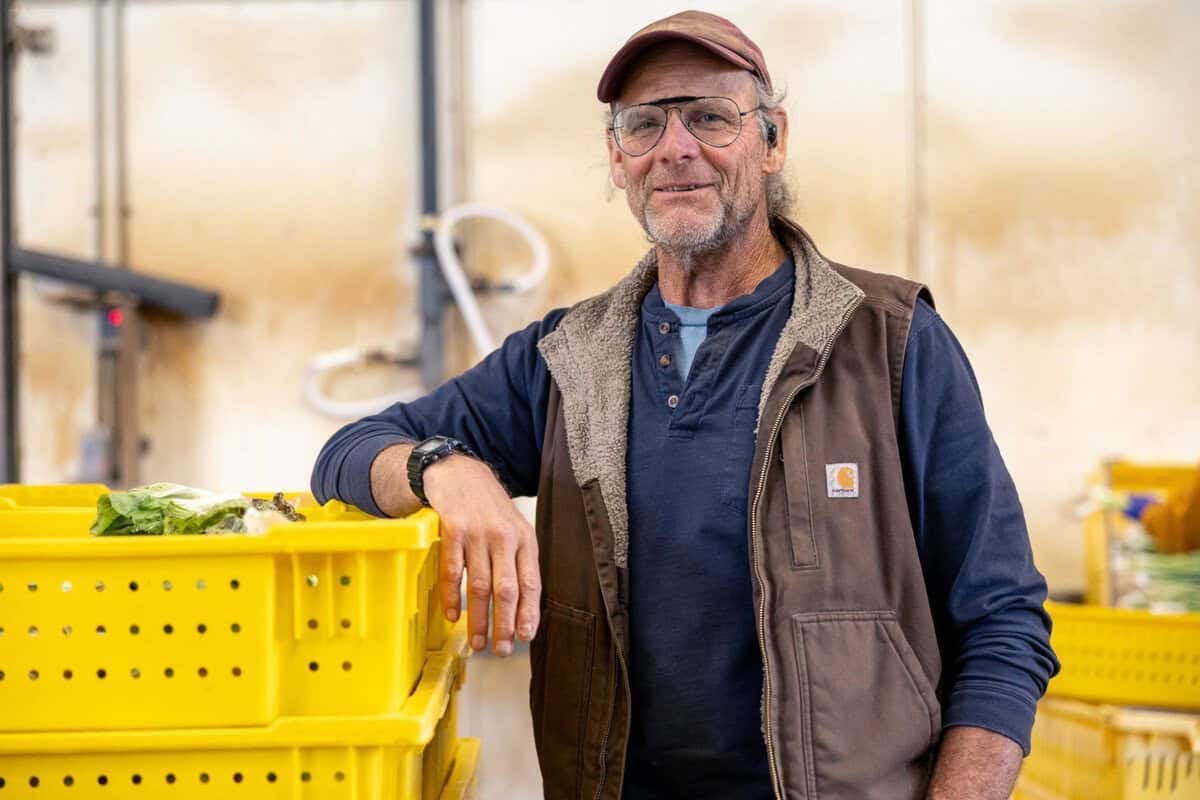
Tim Mueller didn’t grow up in a farm family – nor did he study agriculture in college. Rather, he stumbled upon his love for farming while pursuing a degree in anthropology. He laughs and explains, “I was an anthropology student doing ethnographic research on farms and decided I wanted to farm. So I finished my degree and started farming right after that.”
Tim originally purchased a two-acre parcel in Napa, before relocating to Yolo County – where land was more affordable.
With little farming experience under his belt, other than gardening with his grandparents as a child, Tim admits to learning everything from the ground up. From the very beginning, however, he knew he wanted Riverdog Farm to operate organically. Tim confidently asserts, “It’s important for me to farm organically, mostly for worker safety reasons. None of us want to work with agricultural chemicals that are dangerous. All 300 acres are certified organic by CCOF, and have been since the 90s.”
Always in season
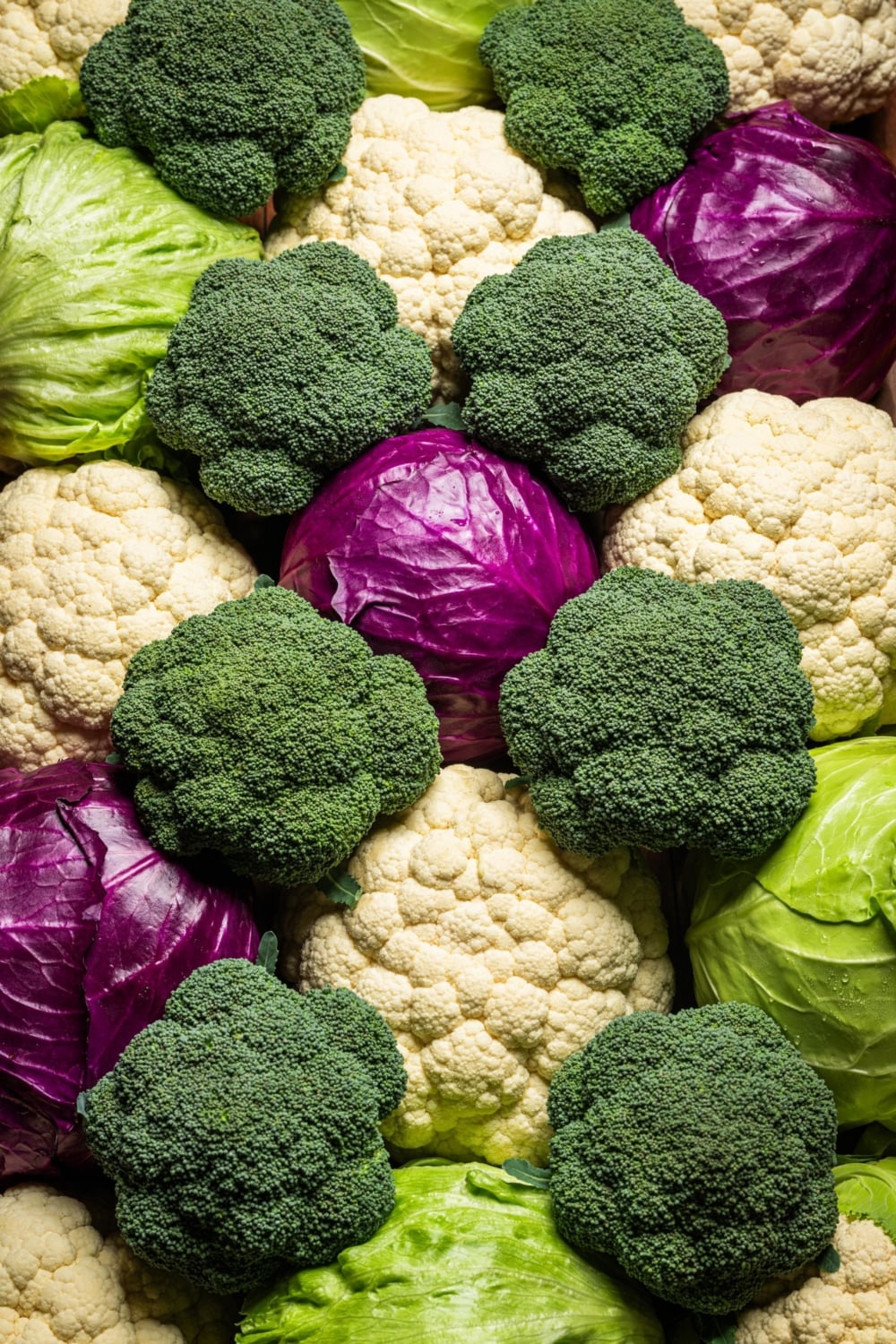
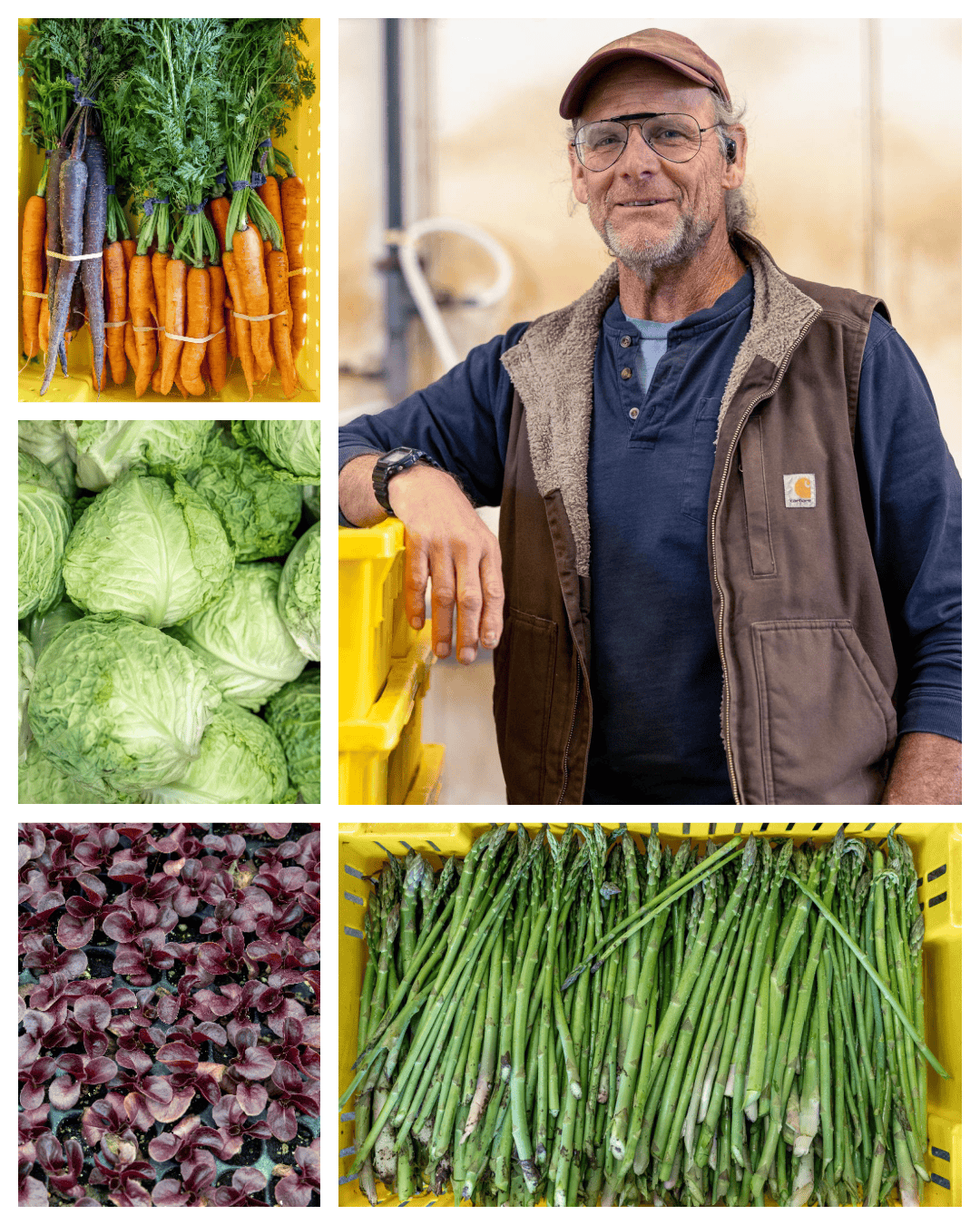
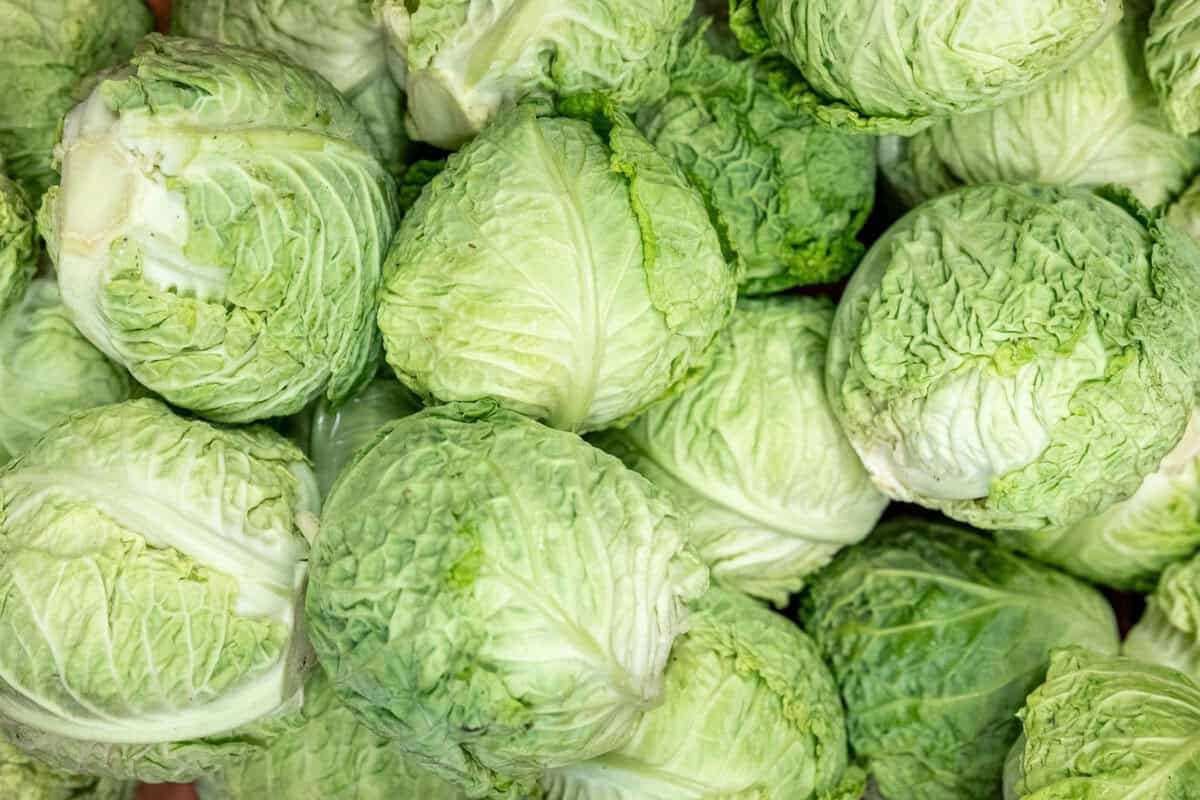
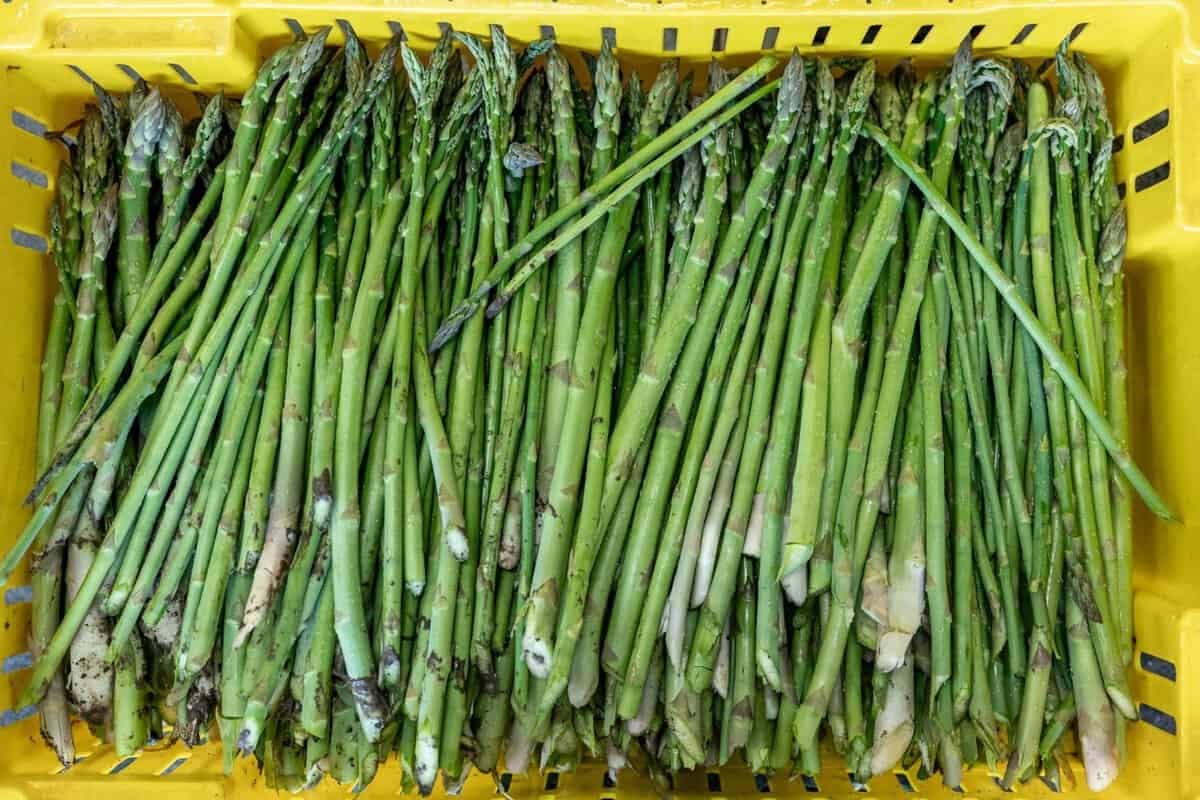
Yolo County’s temperate climate allows for year-round production, meaning the Riverdog Farm team is always hard at work. Tim notes, “Yolo County has been a great place for us to farm because we get to grow year-round. We are a mixed vegetable operation, primarily. Whether it’s lettuce or tomatoes, sweet corn, melons, watermelons, cabbage, cauliflower, broccoli or asparagus, we’re always picking something. We are at markets in Sacramento and in the Bay Area, 50 weeks out of the year – we take two weeks off between the winter solstice and New Year’s.”
Continual operation isn’t just good for business; it also allows Riverdog Farm to offer year-round employment. “Most of the people who work here work year-round, have health insurance, live in town, and have a stable life. It’s hard to do in other places”, Tim states.
Where to find Riverdog Farm’s produce
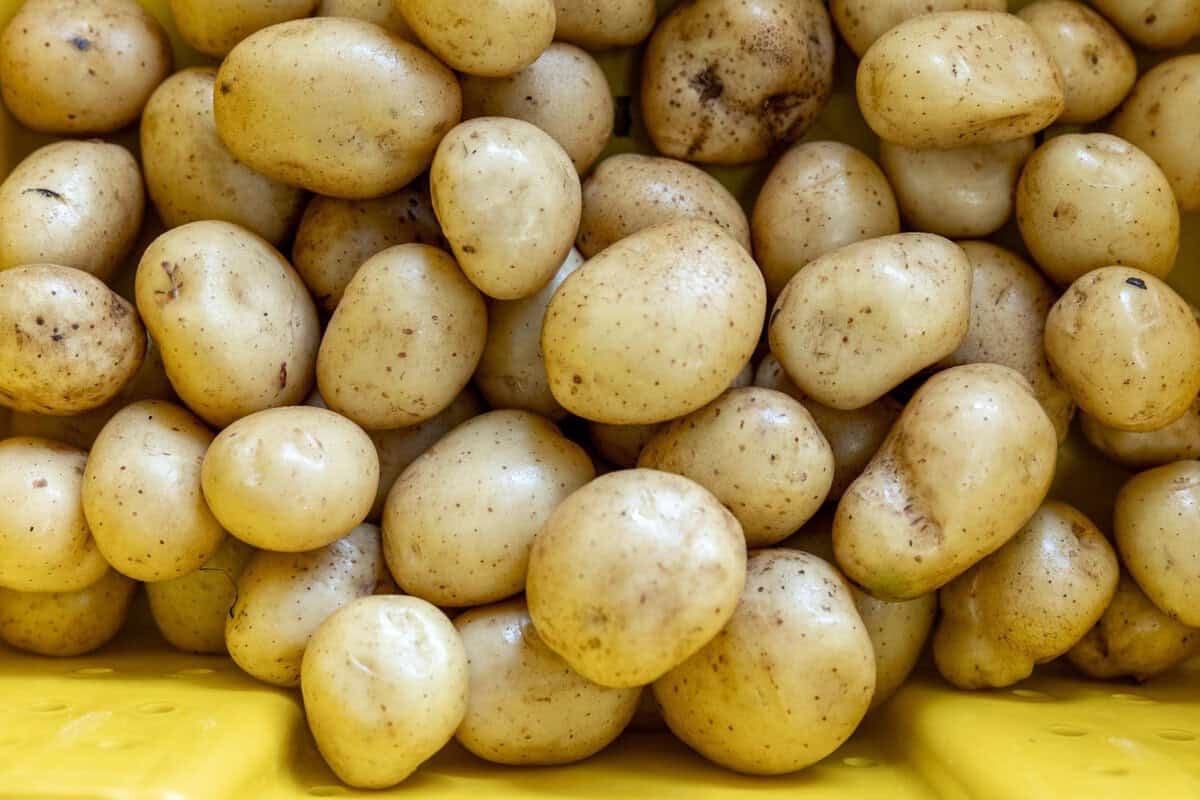
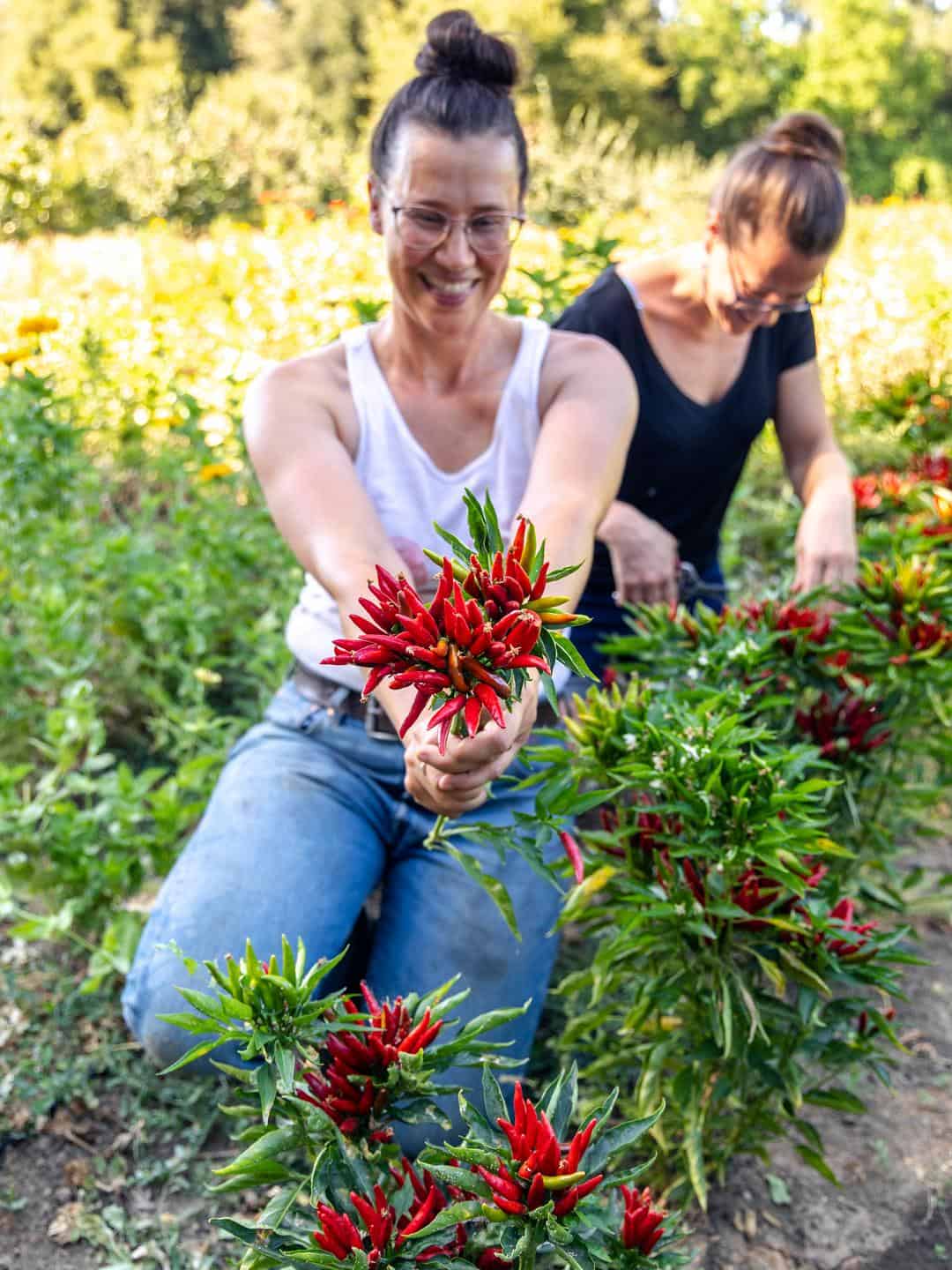
Riverdog Farm’s produce is widely available to Sacramento and Bay Area residents. Tim explains, “Here at Riverdog, we do farmers markets in the Bay and in Sacramento. We also do CSA boxes to Sacramento, the Bay Area, Napa County, and Lake County. Those are year-round; we’re always feeding your family. Every week, you get a mix of whatever is coming off the farm. In the winter, it’s heavy on leafy greens, carrots and winter squash and potatoes. In the summer, it’ll be heavy on sweet corn, tomatoes, peppers, eggplant, cucumbers and zucchini. We have a couple of great citrus growers here in the Capay Valley, and we include some of their mandarins and oranges in the winter as well. You can also special order wheat and nuts through us.”
In addition to receiving weekly boxes of farm-fresh produce, CSA members receive an invitation to Riverdog’s annual pumpkin party. The event provides customers with an opportunity to connect with the people who grow their produce. “We have a really nice low-key potluck and do a quick farm tour, get to know each other, and it’s a big event. Most of the workers and their families will show up, and then we typically have about 200 CSA members who show up as well,” Tim adds.
Riverdog Farm also provides produce to around 40 different restaurants, including Chez Panisse, Bombera, Mister Jiu’s, and June’s Pizza.
What grows at Riverdog Farm
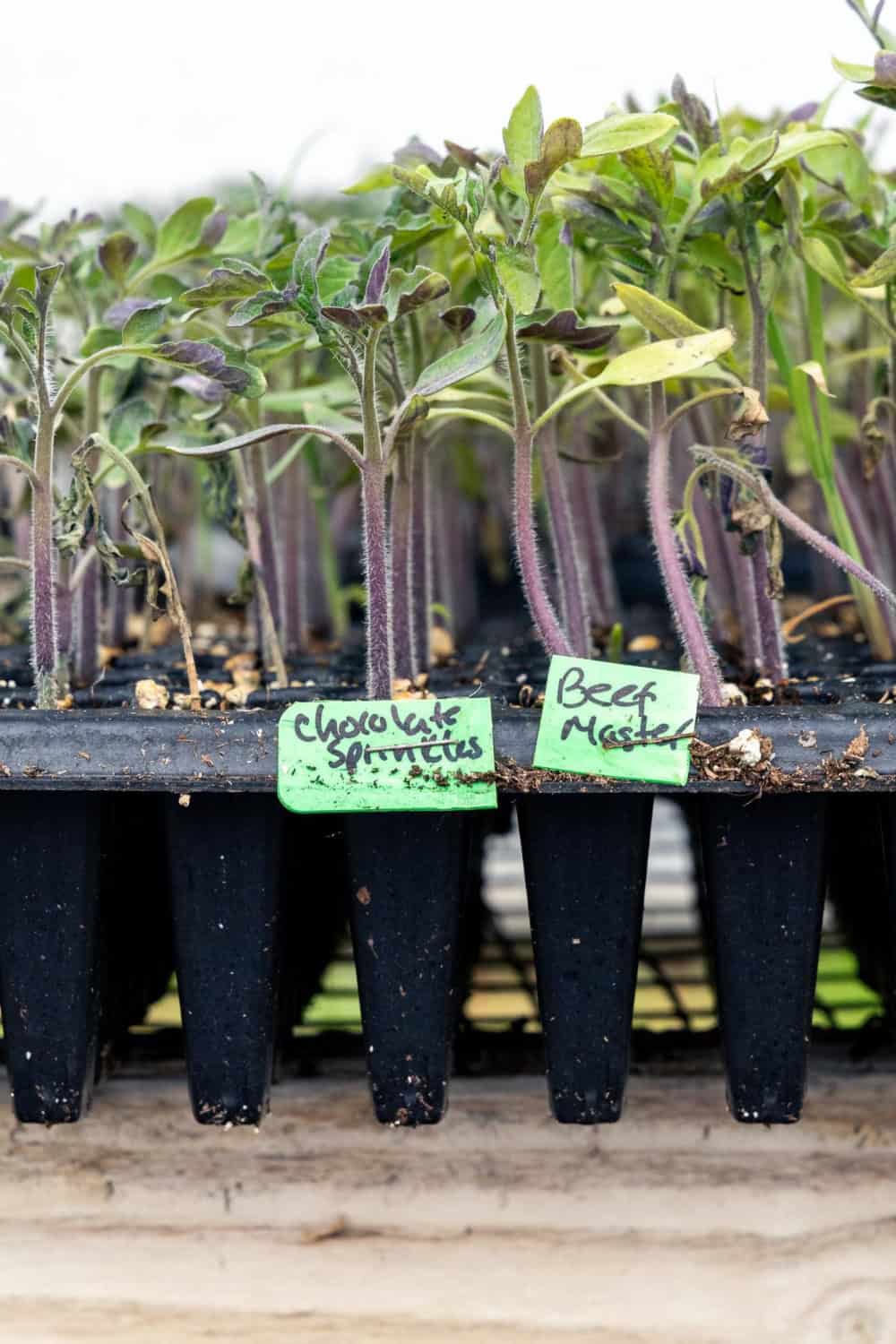
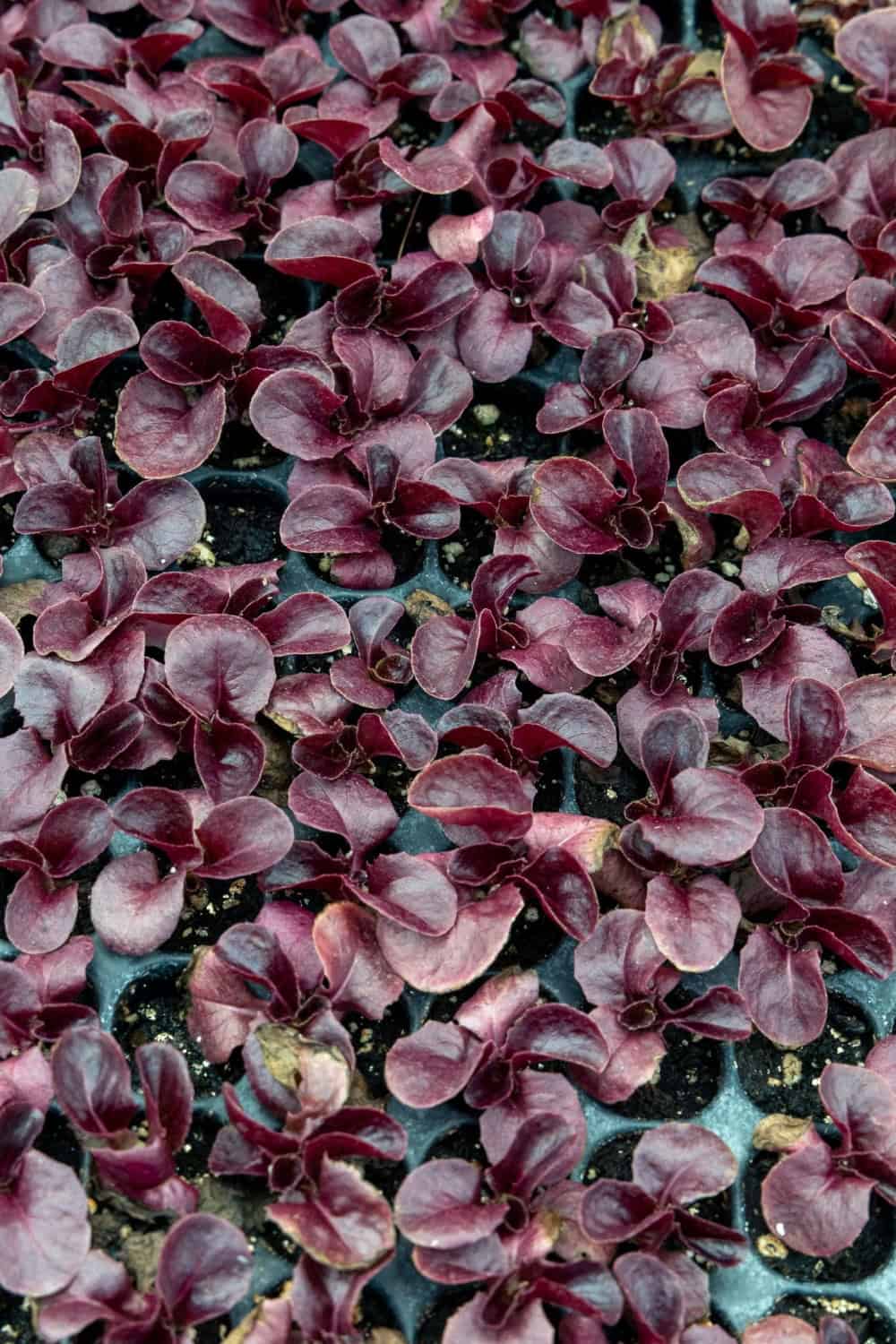
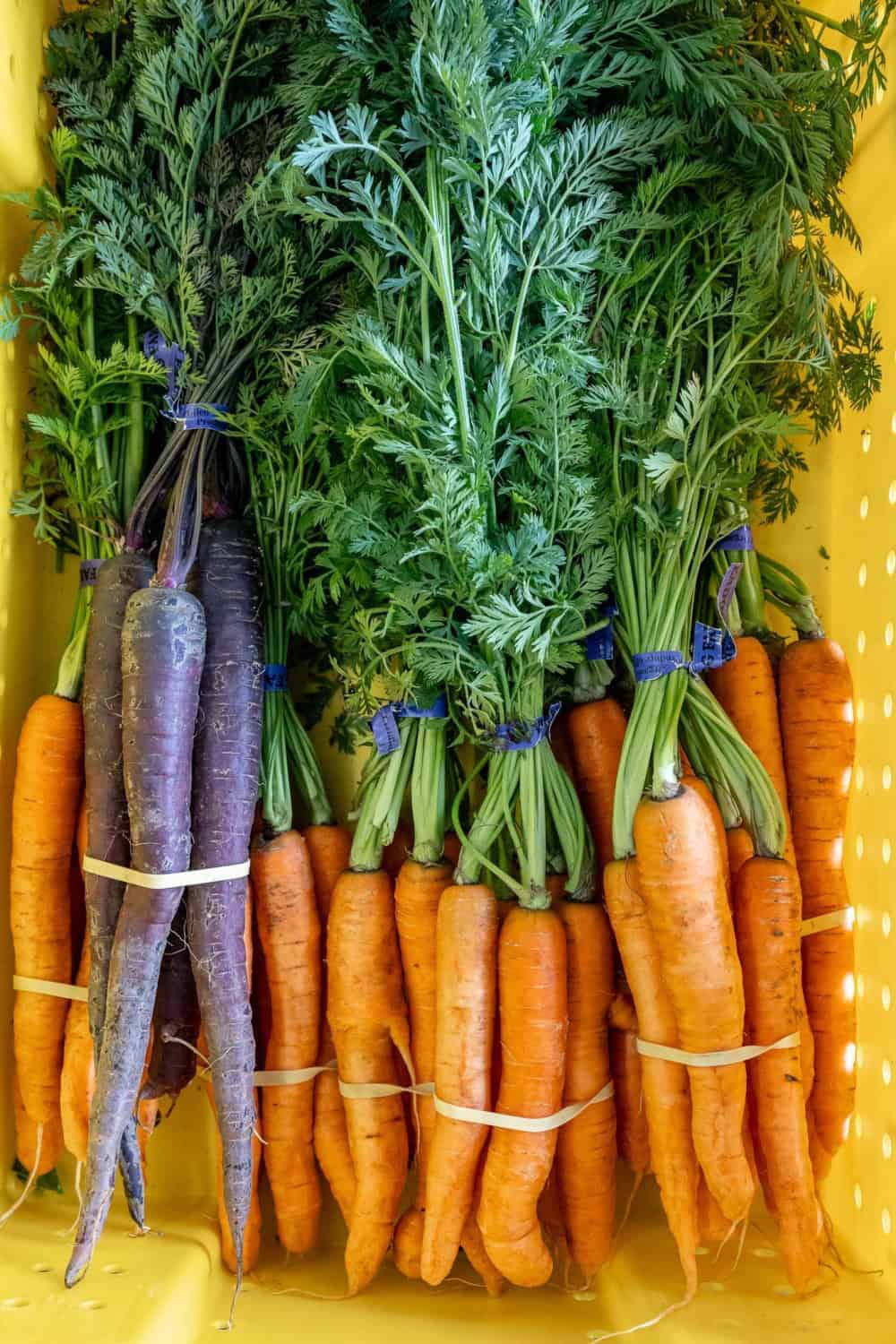
Riverdog Farm offers over 80 organic fruits, vegetables, nuts and proteins. Here are just a few examples of what you might find in one of their CSA boxes or at their farmers market stands!
Vegetables: Leafy greens, cabbage, carrots, beets, potatoes, turnips, sweet corn, cauliflower, broccoli, asparagus, garlic, onions, herbs and more
Fruits: Melons, stonefruit, tomatoes, pomegranates
Proteins: Lamb, pork, chicken, eggs
Nuts + wheat
“Without agricultural workers, there is no agriculture”
“I think it’s important that people understand that without agricultural workers, there are no farms,” Mueller says. Tim understands that having a strong team is crucial to an operation’s success. At Riverdog Farm, he works to create a stable environment where employees can build long-term careers and support their families. “In California, most of the product is still hand-harvested or mechanically harvested, and then has some hand processing. Without agricultural workers, there is no agriculture.”
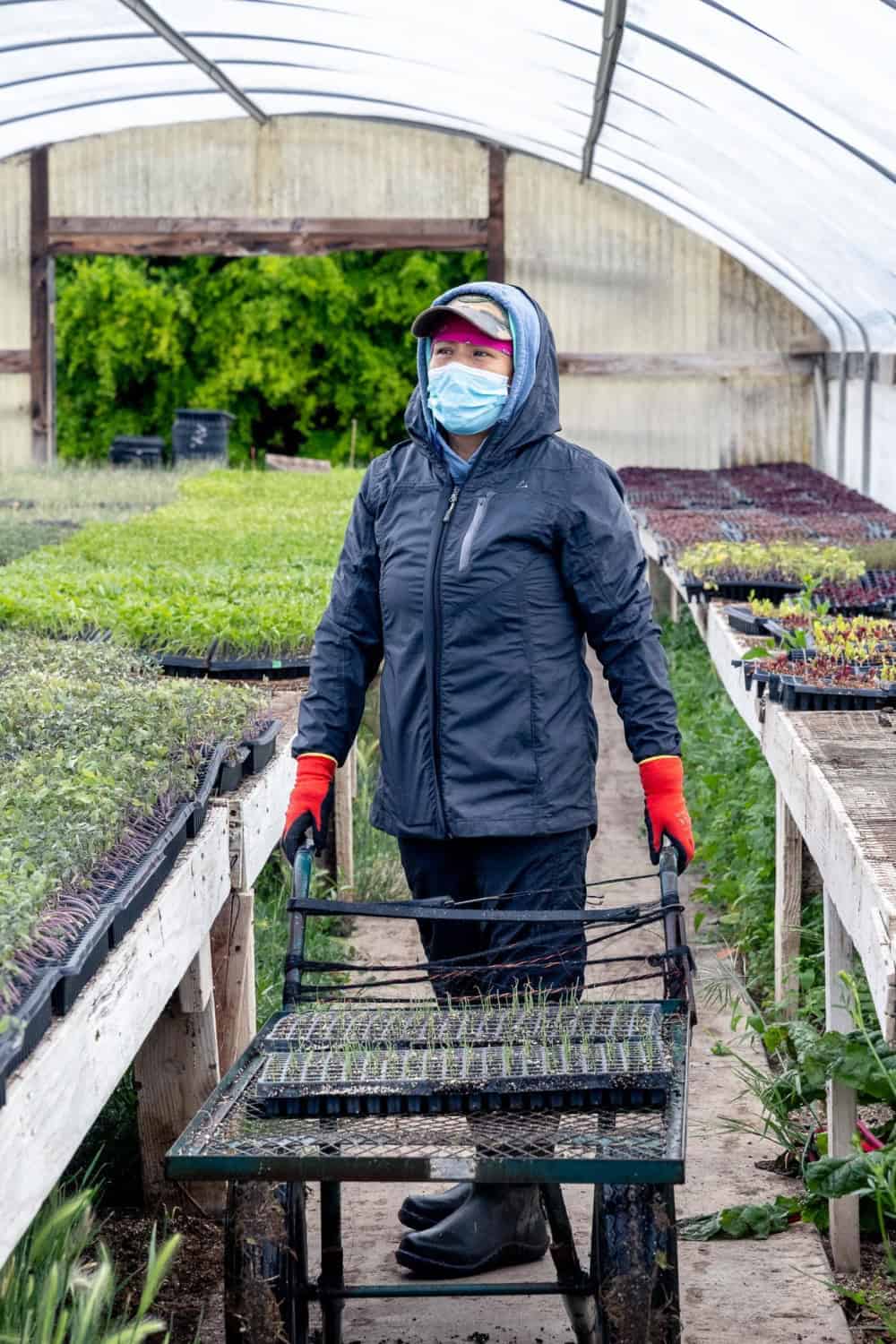
Tim also believes farm labor deserves far more recognition as skilled work. Laughing, he notes, “We have people who come out and want to volunteer, and we just don’t do it because it’s just comical.” Shaking his head with a wry smile, he continues, “The mindset, the hand-eye coordination and the psychological endurance to do ag labor is phenomenal. These are very intelligent, skilled, hardworking people.” Tim strives to create an environment based on mutual respect and proudly notes that many of his employees have worked at Riverdog for decades.
“We really try to create stability for people so that they stick around and they’re here,” Mueller says. “Our sales manager’s been on the farm since 1998. Our operations manager’s been on the farm since 2002. People come here, and they stay because it’s hopefully a good place to work.”
Supporting small farms supports a stable economy.
Locally grown, organic produce often costs more than conventional, imported options. Tim, however, encourages everyone to look past the price tag and consider the following: by paying a little extra for locally grown produce, consumers are creating a stronger economy and community. Tim explains, “I think that when people support farms like Riverdog, they are supporting a stable agricultural economy for the (farm) families. Their kids go to one school system, they don’t move around, they get to live full lives, and that makes the whole community stronger and safer and more profitable for everybody.”
Visiting Yolo County? Check out a few of our favorite agritourism destinations
Article and photography by Hilary Rance.
I have wanted to get farmers to have produce stands like along time ago in the Dunnigan area. Looking into it, it seems like there so much bureaucracy crap that prevents that. I haven’t went as far as to reach out to farmers but it would be neat to try something out like this and have a set schedule so people will be prepared and budget for the event. Any suggestions or ideas would be great!