

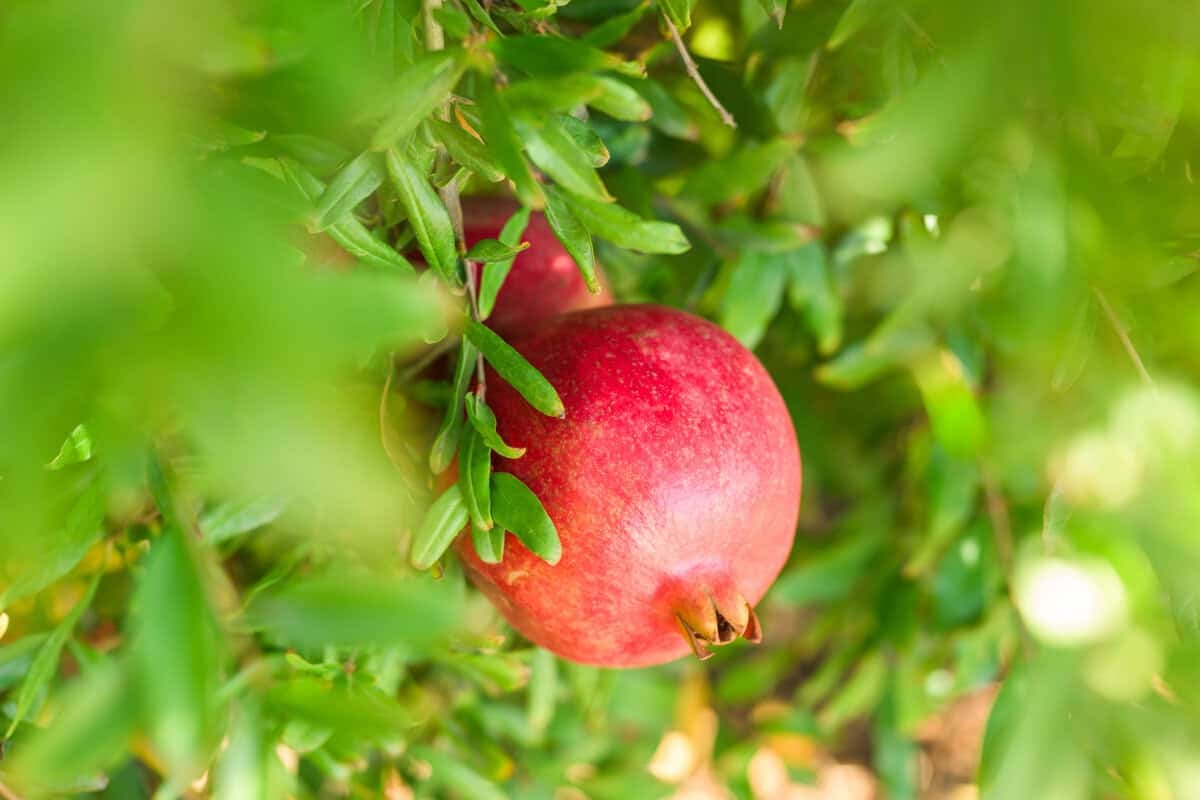
How Are Pomegranates Grown in California?
Did you know that the Golden State grows 99% of the nation’s pomegranates? We met with Stacey Grote of Simonian Farms to learn more about how pomegranates are grown in California!
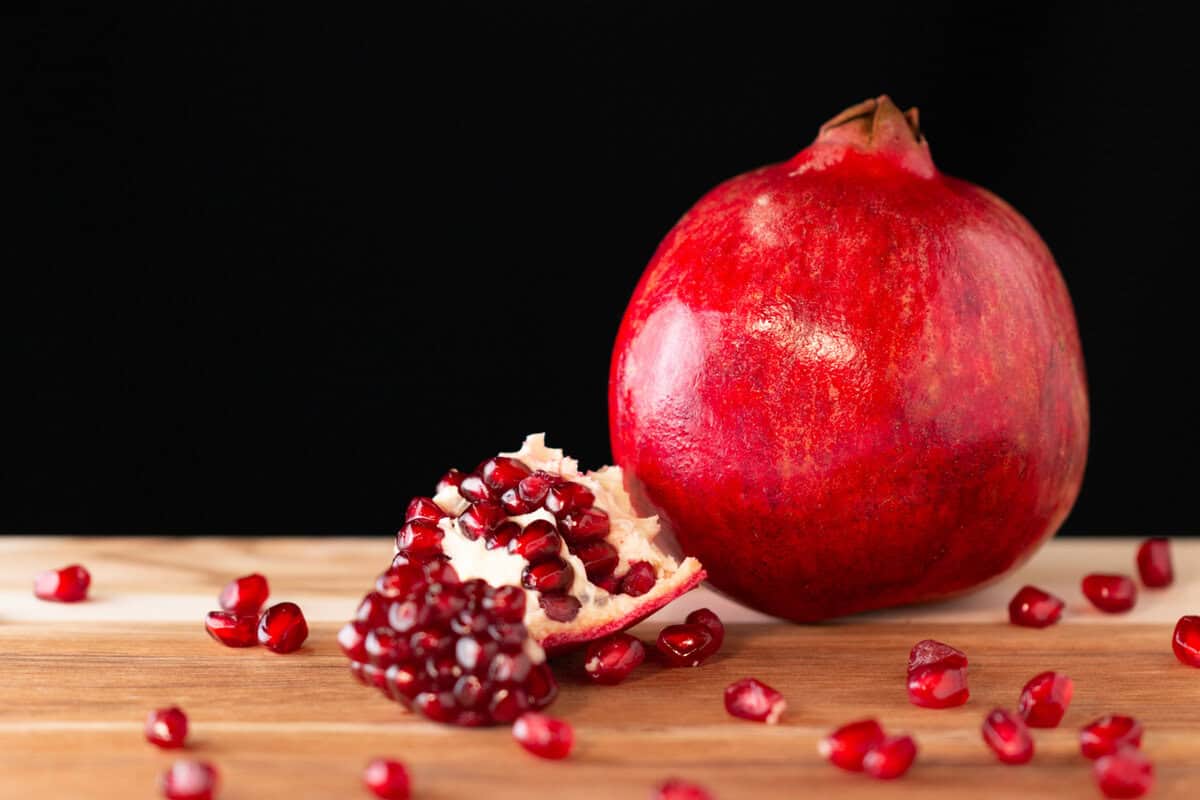
Pomegranates are a beloved winter fruit – and their allure is anything but new. With their glossy ruby exterior and jewel-like crimson arils, it’s easy to see why pomegranates have been revered for over 6000 years.
First cultivated in the area that is modern-day Iran, pomegranates symbolized fertility and prosperity in many ancient societies. The fruit’s cultural significance is underscored by its ties to Christianity, Judaism, Islam, and even Egyptian mythology.
Here in California, we might lack the historic lore, but we do boast one important claim to pomegranate fame: Golden State growers are responsible for 99% of all US pomegranate production.
Where do pomegranates grow in California?
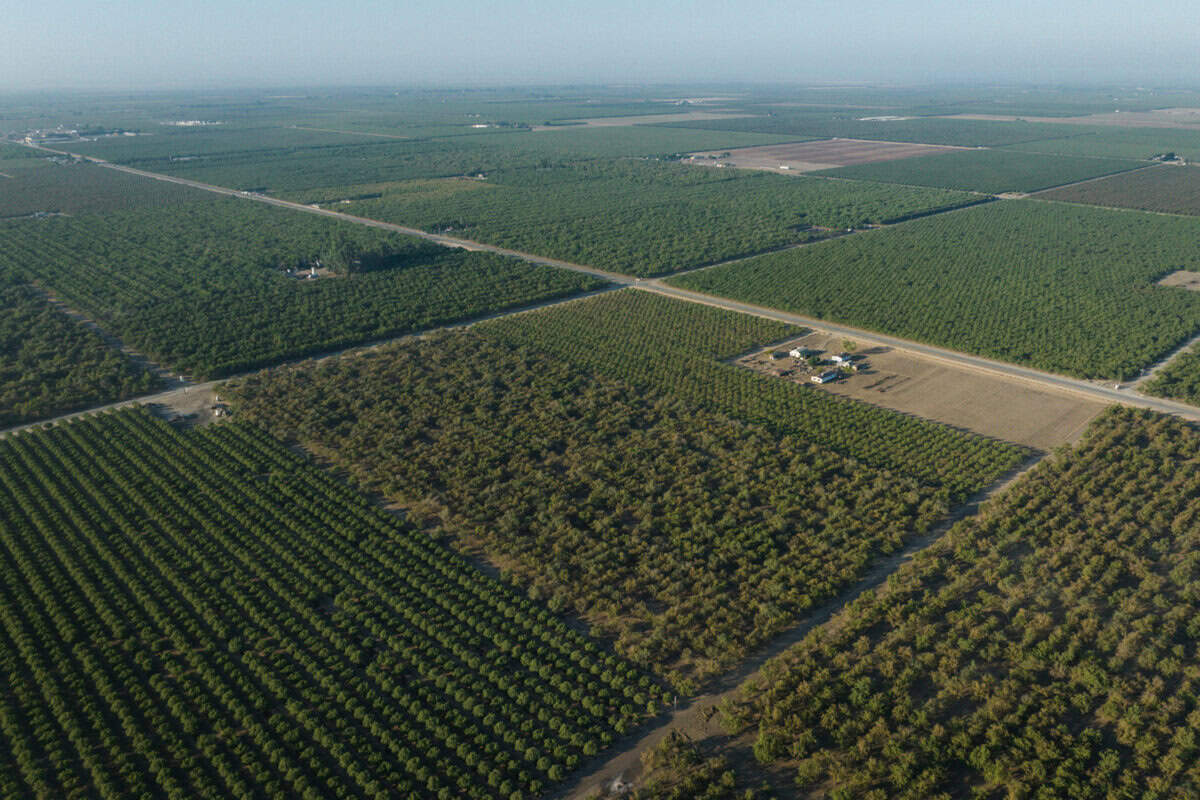
Virtually all California pomegranates are grown in the Central Valley, with Fresno, Kern, Madera and Tulare counties leading the charge. Pomegranates require a long stretch of hot, dry weather to fully mature, and thrive in the San Joaquin Valley sunshine.
How are pomegranates grown?
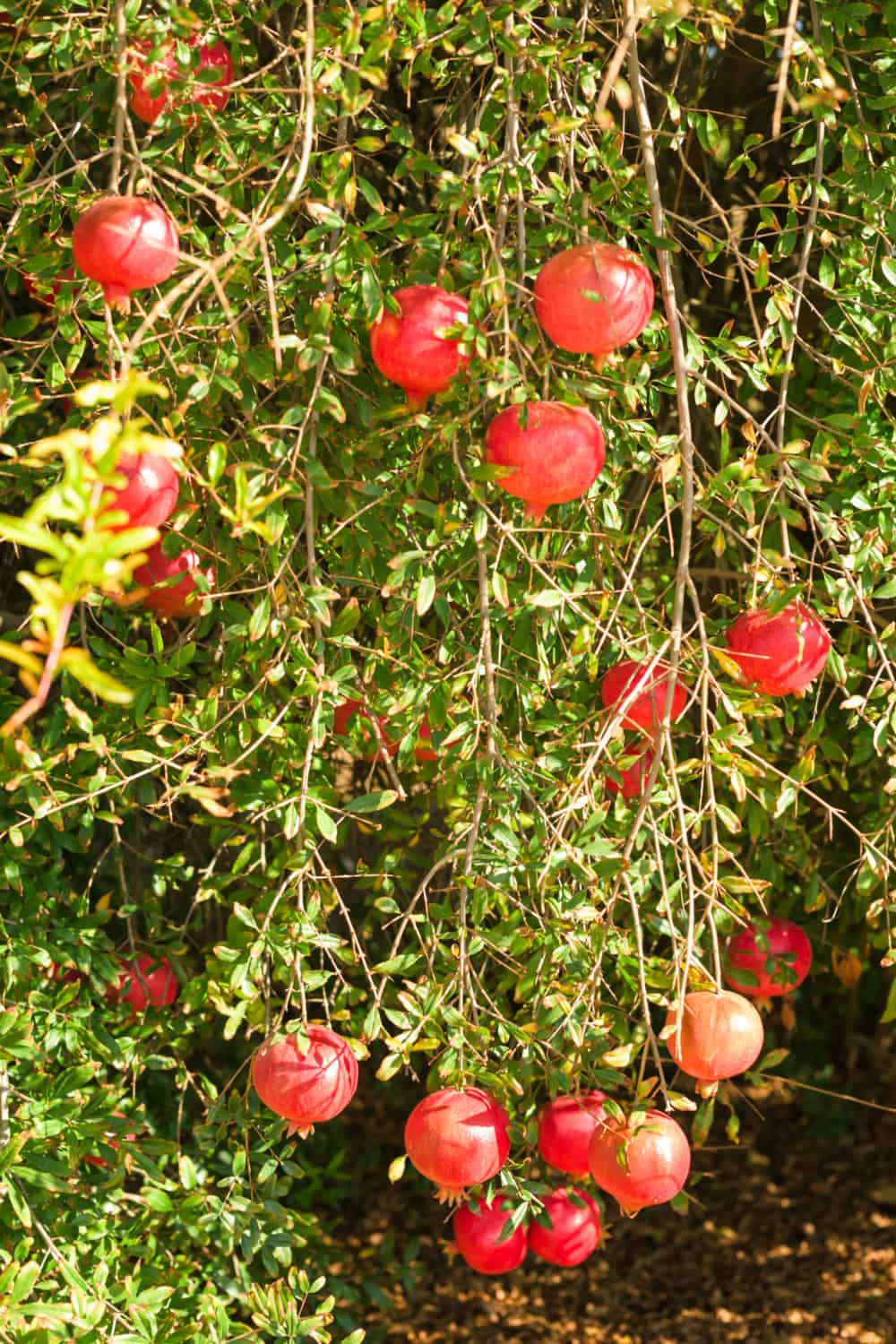
Like most fruit trees, pomegranate trees begin to bear fruit within two to three years of planting, although it takes another 5-7 years for the trees to fully mature. When properly maintained, a single tree can produce up to 250 pomegranates, or about 75 pounds of fruit! While a typical pomegranate orchard remains in production for 15-30 years, the trees themselves can survive for up to 200 years!
According to Stacey, pomegranate production is relatively straightforward. “They’re actually very easy to grow”, she explains. During the winter months, the trees require some pruning to encourage a strong, healthy crop.
Then, in late spring, pomegranate trees begin to bloom, and while they are technically self-pollinating, bees are often used to increase fertilization rates. After pollination, the petals fall from the flower, while the base of the bloom begins to develop into the pomegranate fruit. After six to seven months of steady growth and warm sunny days, the pomegranates are ready to harvest.
How are pomegranates harvested?
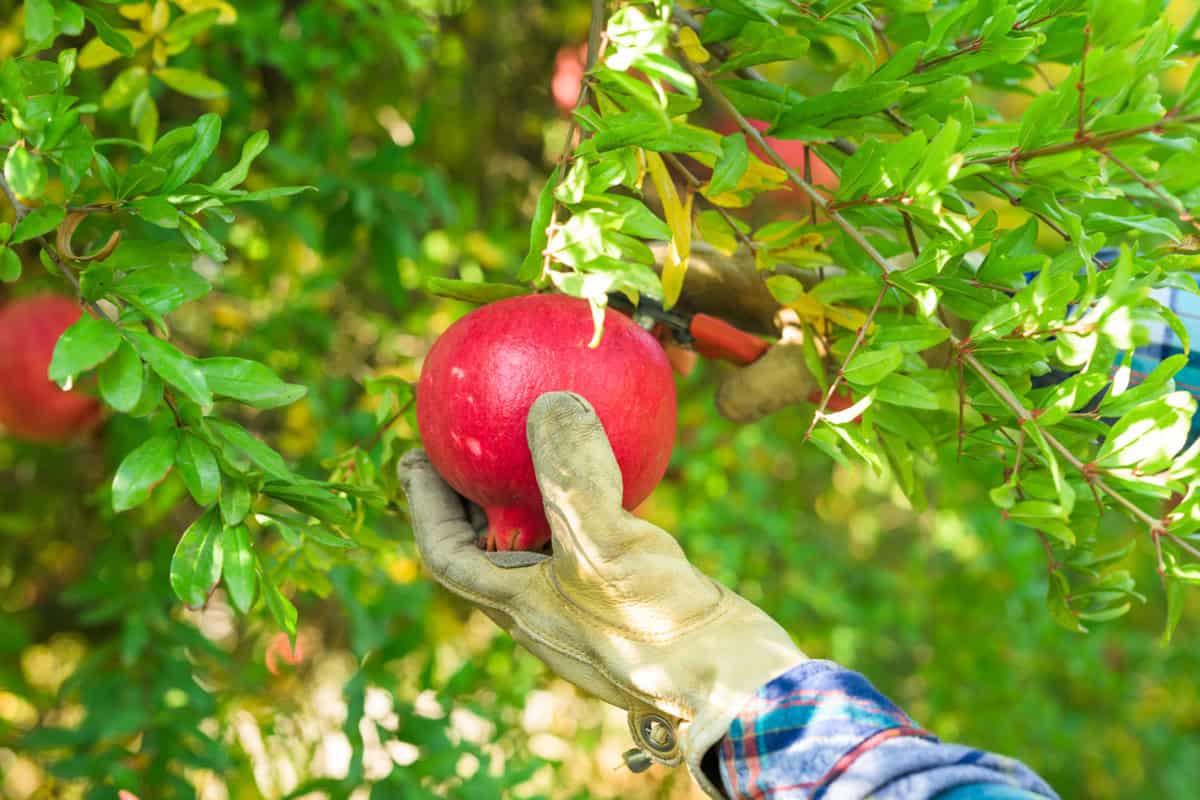
The easiest way to tell if a pomegranate is ripe is by its color. Once the fruit develops a vibrant red hue, it’s ready to harvest. In California, pomegranate harvest begins in late September and runs through December. The fruit is carefully hand-harvested with clippers, then packed and shipped to your local grocer.
When are pomegranates in season in California?
In California, pomegranates are in season from September through January.
How to eat a pomegranate

While the tough outer shell of a pomegranate is inarguably beautiful, many people are intimidated by the prospect of extracting the edible seeds, which are called arils. There are about a million different “tricks” for opening a pomegranate, but Stacey likes to keep things simple. She flashes a grin and states, “I just crack ‘em open and flip them out.”
Need a little more guidance? One of the simplest ways to extract the arils is as follows:
- Wash the exterior of the pomegranate.
- Cut the pomegranate in half horizontally.
- Holding the fruit over a medium bowl, place the pomegranate in your non-dominant hand, with the arils facing downward.
- Smack the shell of the fruit with a wooden spoon, with your fingers spread so that the arils can fall into the bowl. Don’t be gentle – you’ll need a decent amount of force to remove all of the seeds.
- Pick out any remaining pith and enjoy!

How many seeds are in a pomegranate?
There’s really no set answer to the question of how many seeds are in a pomegranate! While Jewish folklore holds that each pomegranate has 613 seeds (one for each commandment), the number varies by fruit size and variety. A single pomegranate can yield anywhere from 200 – 1000+ seeds – and if you’re motivated to count them to confirm, let us know where you land.
How to store pomegranates
Whole pomegranates can be stored in the fridge for up to two months. Arils should be refrigerated in an airtight container and used within 5-7 days.
One of the best ways to enjoy California Grown pomegranates year-round is to freeze the arils when in season. To freeze arils, spread them out evenly on a baking sheet lined with wax paper. Place in the freezer for two hours, then transfer to an airtight bag or storage container. Frozen arils will stay fresh for up to one year!
Try these delicious ways to enjoy California Grown pomegranates






LOOKING FOR THE PERFECT SONGS TO BLAST WHILE YOU’RE IN THE KITCHEN? CHECK OUT THIS CA GROWN SPOTIFY PLAYLIST:
Article by Hilary Rance. Photos by James Collier.