California Midwinter Fair Celebrates Imperial Valley Agriculture
Every spring, an unmistakable agricultural pathway opens with the California Midwinter Fair in Imperial, California, which becomes the largest event in the Imperial Valley. Grandstands fill with families. Swine barns hum with teenagers brushing their pigs one last time before showtime.
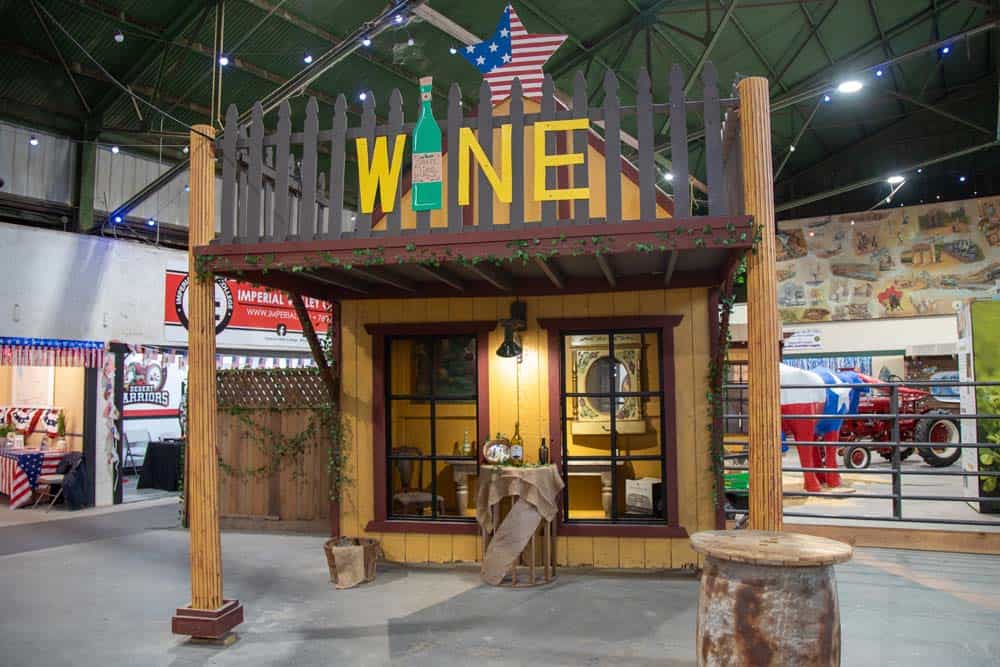
It is also, unmistakably, an agricultural pathway. The 4-H and FFA students showing livestock each year are the next generation of Imperial Valley farmers, ranchers, vet techs, crop insurance agents, and California Grown producers. The fair is where that generation gets its first public platform.
Why Imperial Valley Agriculture Matters
To understand why the fair matters, you have to understand the region it represents. The California Midwinter Fair takes place in Imperial Valley, one of the most productive growing regions in the United States. (Check out our article on what grows in Imperial Valley to learn more.) During the colder months, a significant share of the country’s fresh vegetables comes from regions like Imperial Valley. The fair is where that system becomes visible.
A Third Generation of Agriculture, Community, and Caring
That connection between agriculture and community is most visible in the people who support the fair year after year. Cher Watte Angulo wears two hats that both lead back to the same place. She is the head of California Grown and currently the president of the board of the California Midwinter Fair. It’s where she showed livestock as a child, where her mother served on the board, and where her children became the third generation to show animals.
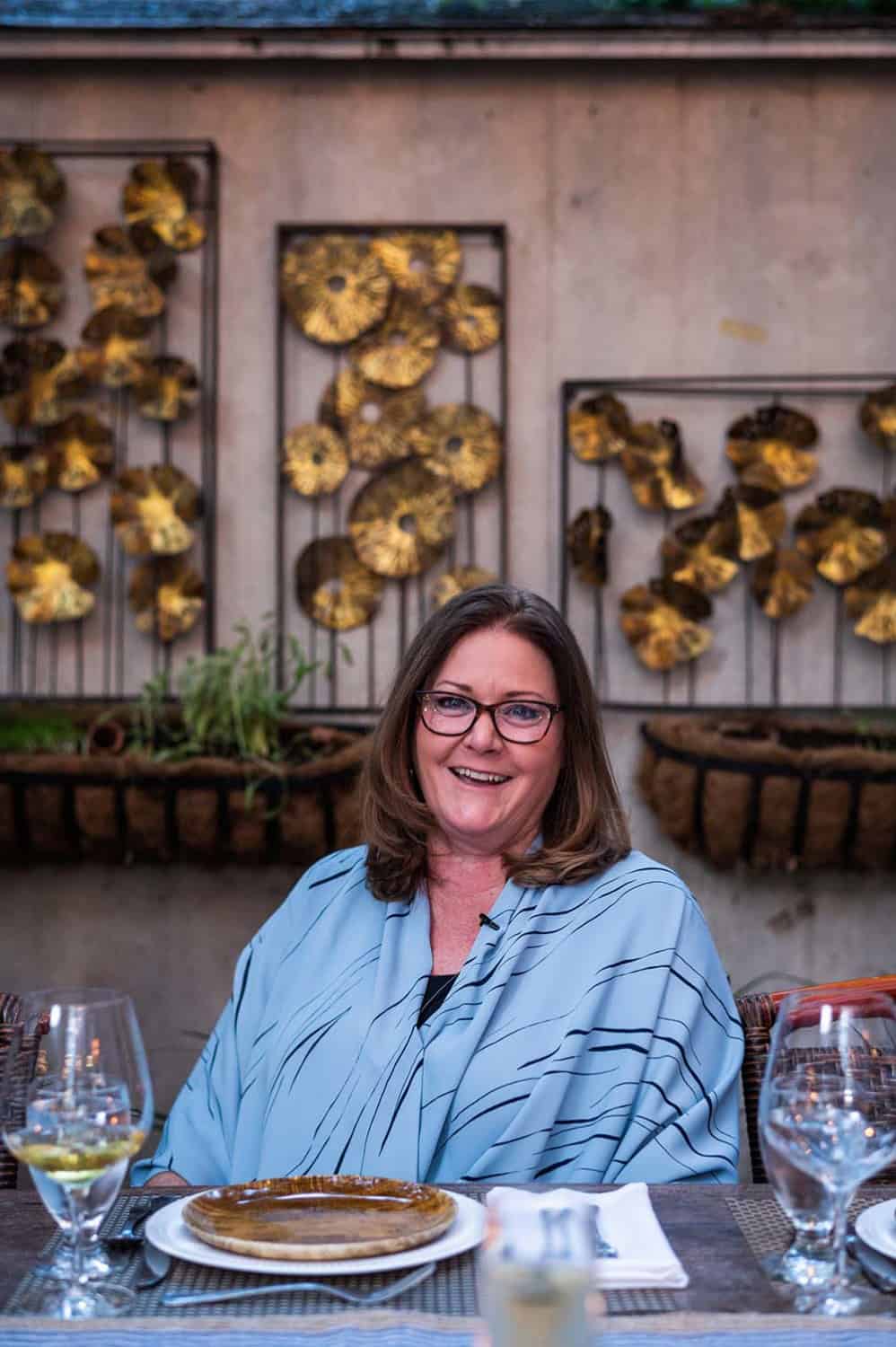
“I live in the community in which I was raised, and I raised my children here as well,” Cher says. “I put my time and energy into this entity because it is the largest community event that occurs here in the Imperial Valley, and it’s the one occasion when everybody comes together with one purpose, which is to highlight all that is great about the Imperial Valley.”
The Imperial Valley is geographically large and home to communities that do not always agree on which high school football team is best. For the length of the fair, that rivalry quiets. Everybody is here for the same thing.
Where California’s 75 Fairs Fit Together
The Midwinter Fair is part of something much larger, and the California fair system is more intricate than most realize. There are roughly 54 District Agricultural Associations governed directly by the California Department of Food and Agriculture. Add to that another two dozen or so community, county, and district fairs outside the CDFA network. Altogether, close to 75 fairs keep the state’s agricultural calendar moving.
The California Midwinter Fair is the southernmost DAA in California. The fair system itself dates back to the mid-1800s, when the first fair in the San Francisco Bay Area was organized to showcase agricultural products entering the city. Today, these fairs don’t just entertain; they also serve as California’s most visible agricultural education system. They connect the public to the people, crops, and careers that sustain the state’s food supply.
The 4-H Pathway to Ag Education
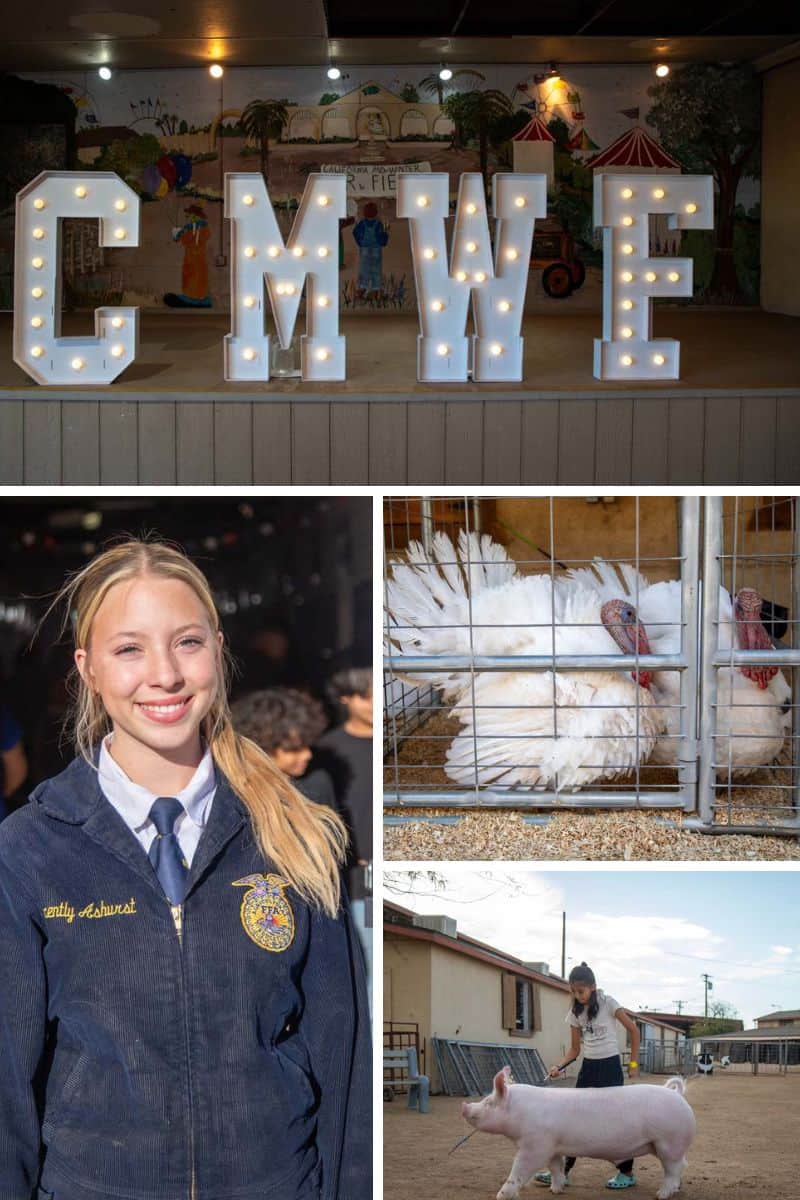
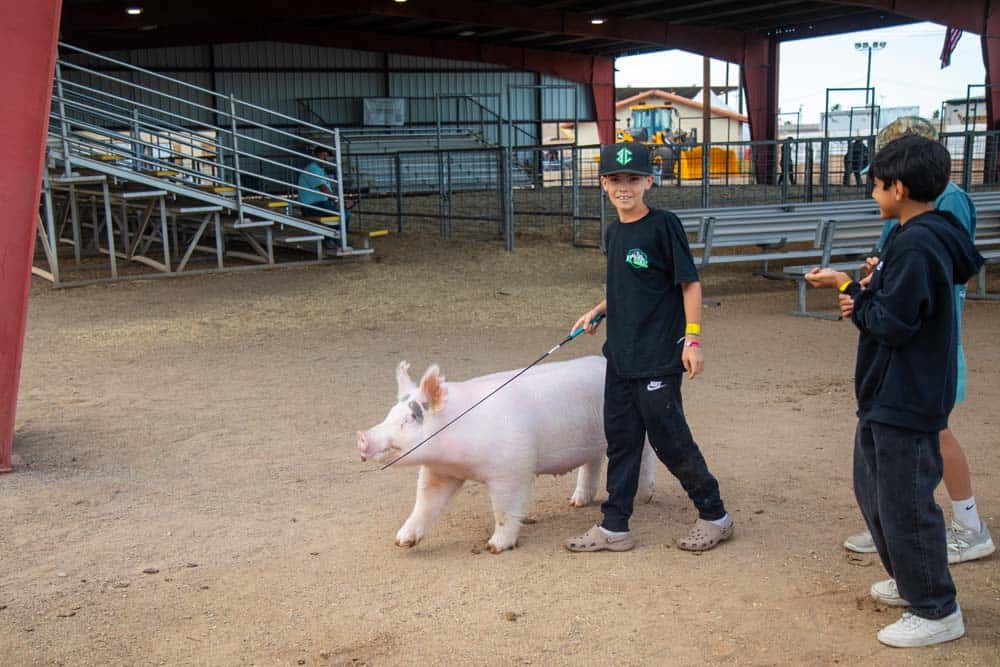
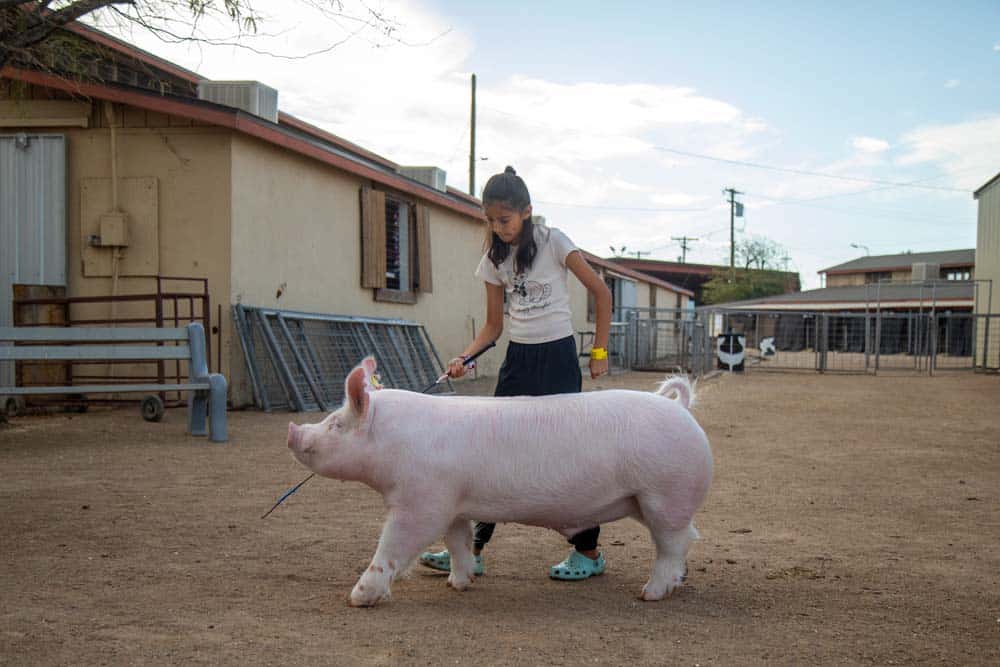
Grace Madeline Angulo is twelve. She is in her second year of 4-H with the Mt. Signal Club, and her current project is a pig named Memphis. When she first got Memphis, he was scared to leave the barn and had to be pushed through the gate. Now he loves walking, goes out on his own, and is ready for the biggest crowd of his young life.
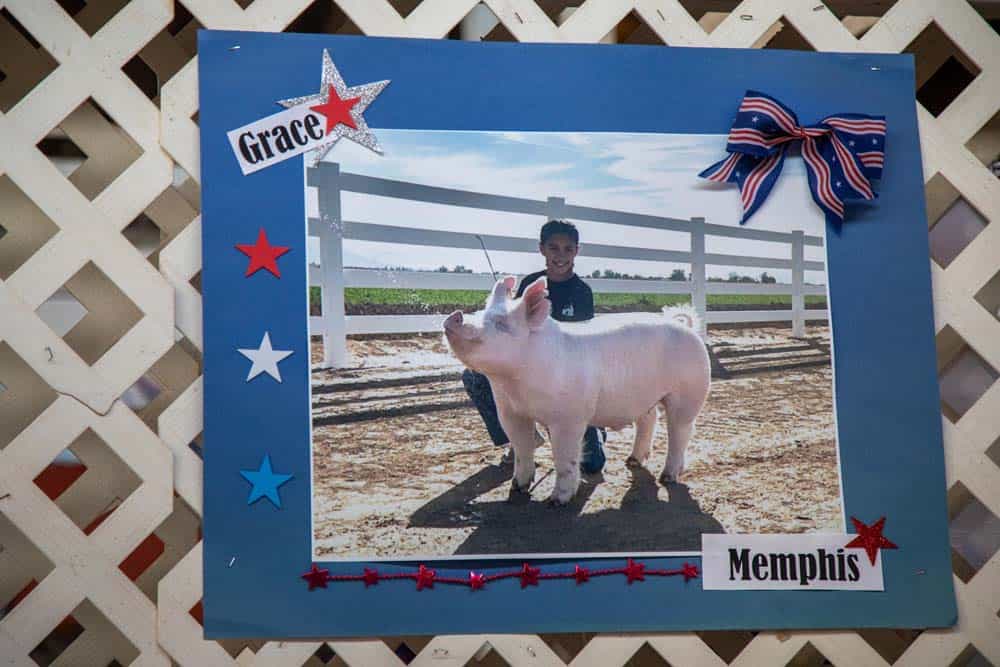
“I feel like I’m really confident about it,” Grace says. “And even if I don’t win, that’s okay. I know that I’m a really good showman either way.” 4-H is formally an institution within the University of California Cooperative Extension program, where students can join as young as five to seven years old.
Grace already knows what the program is preparing her for. “I want to be a livestock judge when I grow up,” she says. “I watch other people’s shows, and I study the animals a little bit, and I imagine myself being a livestock judge.”
FFA: From Ag Classroom to Career
While 4-H operates through community programs, Future Farmers of America is embedded in California high schools. FFA students study botany, vet science, and agricultural business alongside standard coursework.
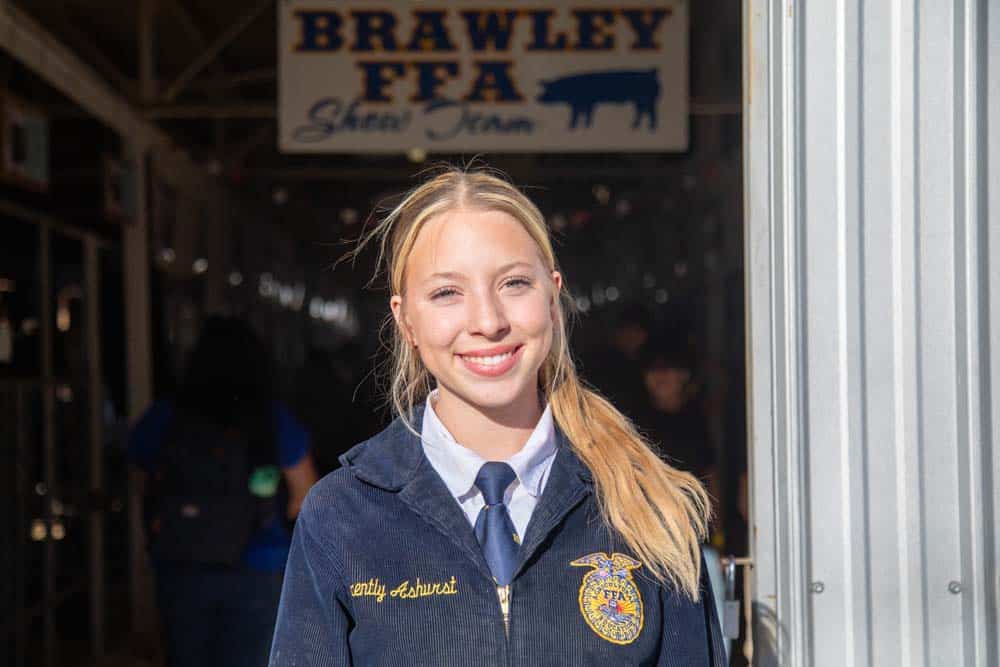
Brently Ashurst is a chaplain for the Brawley FFA chapter. FFA has taught her more than showing animals. “FFA has taught me to become a leader and to become a better person,” she says. “I’ve kind of branched out more. I’m more of an outgoing person now. I’m comfortable with my public speaking because of all the contests, and it’s just turned me into a great leader now.”
Brently plans to become a crop insurance agent, just like her mother, and eventually to work alongside her.
Four Generations of Beekeeping and Counting
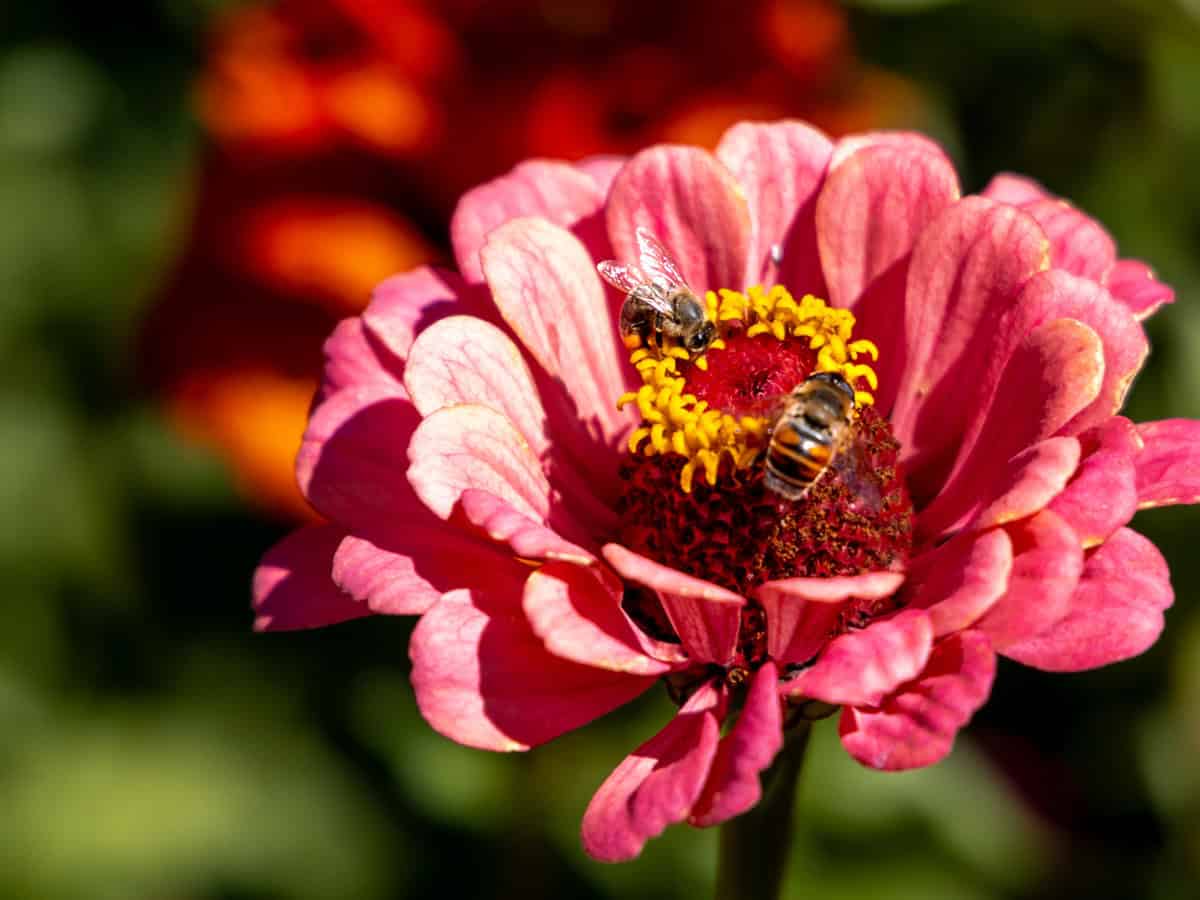
Agriculture in the Imperial Valley is very often a family story, and Brently’s is a particularly long one. The Ashurst family has been in commercial beekeeping for more than one hundred years.
“My family has a background in pollinating in the honey industry,” Brently says. “We kind of just put bees on crops that need to be pollinated.”
Their bees pollinate crops that need help reproducing: alfalfa, produce, seed crops, and many other plants that feed the valley’s export economy. Beekeeping is one of those agricultural roles most consumers never see but cannot eat without.
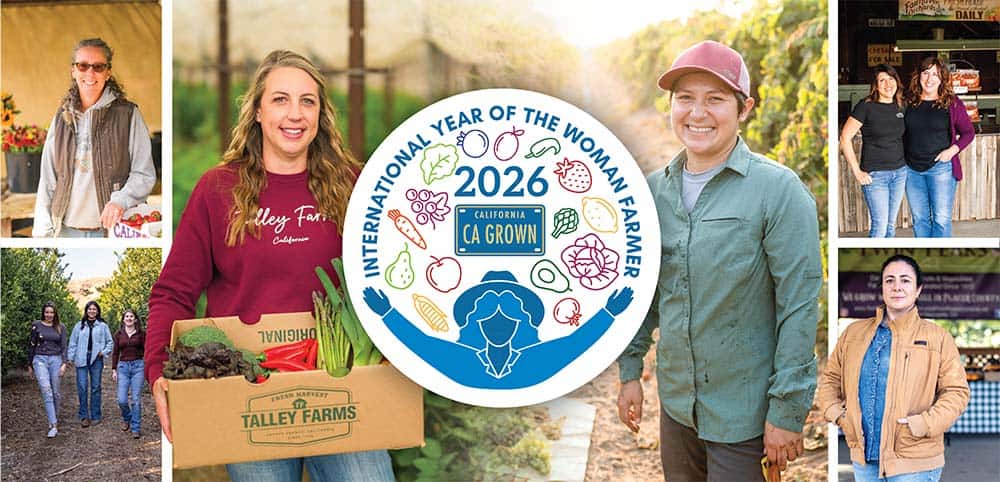
The International Year of the Woman Farmer
Considering 2026 is the United Nations’ International Year of the Woman Farmer, and the women role models around Imperial Valley agriculture are hard to miss at the fair.
Cher points out that almost every high school in the county has at least one female ag teacher guiding students through the FFA program. Three of those teachers were personally important to her own children.
For Brently, the inspiration is closer to home. Her mother left stay-at-home life to become a crop insurance agent, and that is the career Brently is now chasing.
What To Experience at the California Midwinter Fair
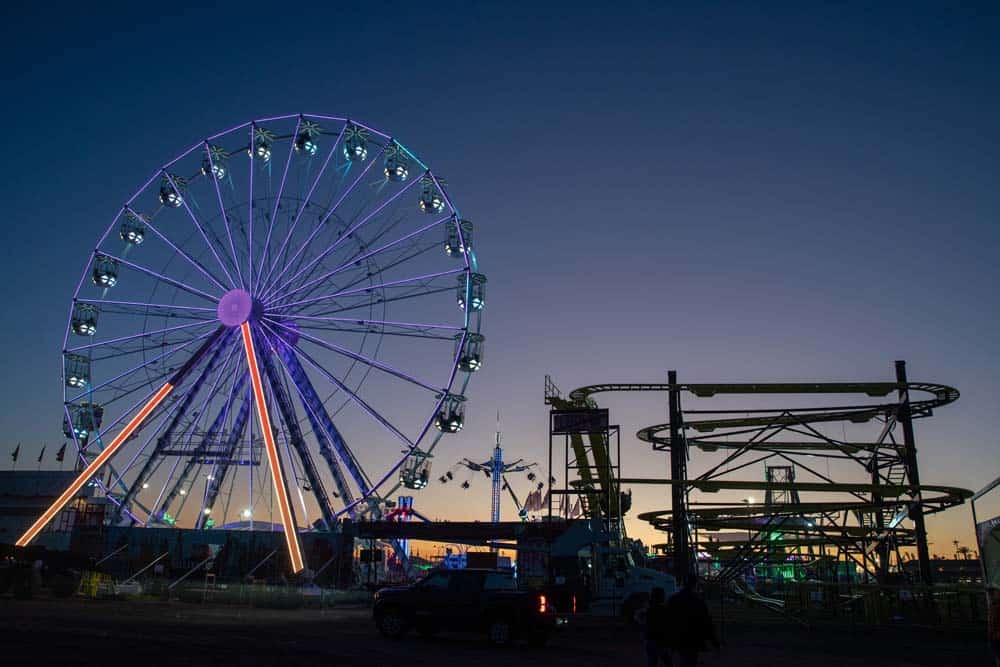
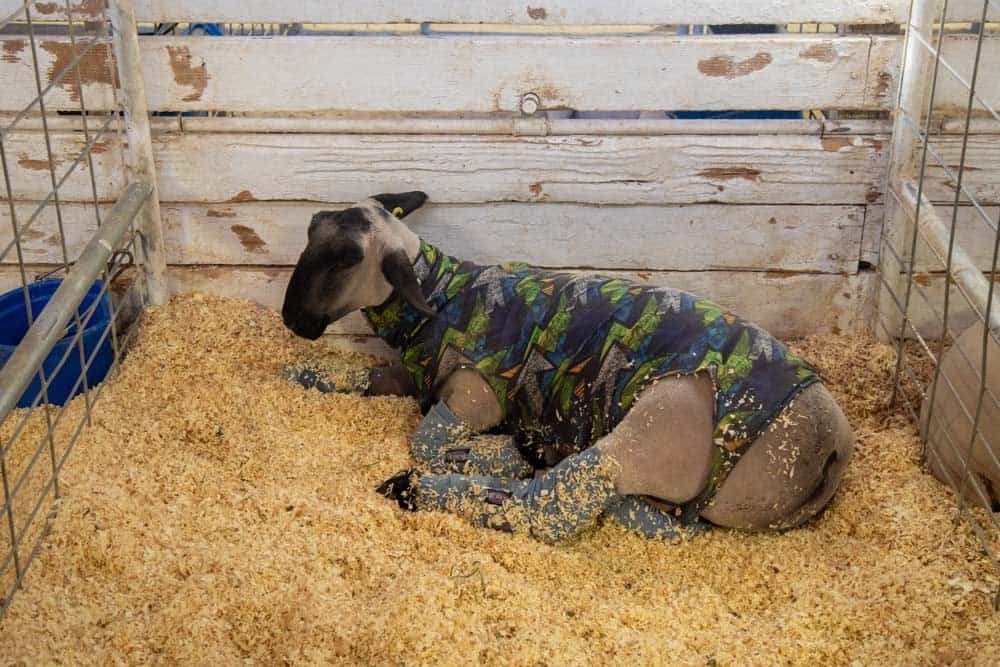
For visitors, the California Midwinter Fair offers a rare chance to see agriculture up close. Livestock shows are the centerpiece, with 4-H and FFA students competing in pigs, cattle, sheep, and goats. These programs emphasize animal care, discipline, and public presentation. Arriving early in the day offers the best chance to watch these events in full.
Beyond the show ring, agricultural exhibits highlight the crops and systems that define the Imperial Valley, while local vendors and food stands reflect the region’s agricultural diversity. The fair also includes carnival rides, concerts, and long-running traditions like sprint-car racing, but it is the barns and classrooms that give the event its deeper meaning.
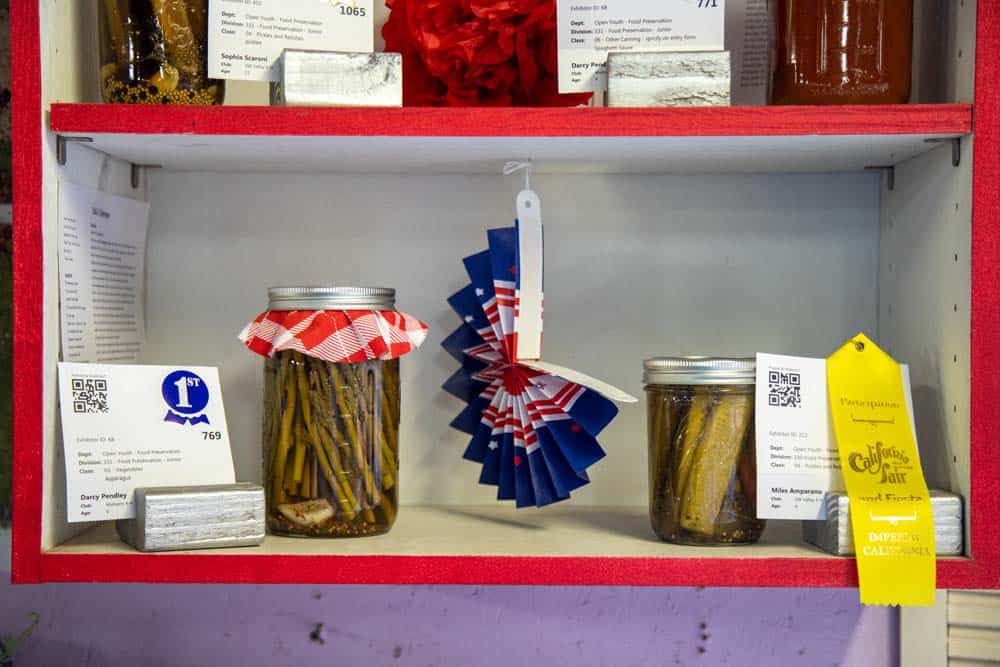
What Makes the California Midwinter Fair Unique
As the southernmost District Agricultural Association fair in California, it reflects a region where agriculture is not just heritage but a year-round economic engine. Unlike many fairs held in the summer, the California Midwinter Fair is held in late winter. This aligns with one of the most important growing seasons in Imperial Valley.
The fair’s strong participation from 4-H and FFA programs also sets it apart. For many students, this is not just an event; it is the culmination of months of work and a stepping stone into careers in agriculture – from farming and ranching to veterinary science, crop management, and agricultural business.
At the California Midwinter Fair, the rides and grandstands may draw the crowds. The real story however is happening in the barns, classrooms, and show rings. This is where California agriculture introduces itself to the public and where the next generation steps into the spotlight.
Plan Your Imperial Valley Fair Visit
The California Midwinter Fair runs for about ten days every spring in Imperial, California, less than two hours from San Diego and under three hours from Los Angeles. For more on California’s agricultural education programs and agritourism, browse CA GROWN’s 4-H and FFA stories, or plan your next stop at Experience California Agriculture.
Need a new soundtrack for your next road trip? Check out this CA GROWN Spotify playlist:
Frequently Asked Questions About the California Midwinter Fair
What is the California Midwinter Fair?
The California Midwinter Fair in Imperial Valley is one of California’s largest agricultural fairs. It showcases livestock, crop production, and youth education through 4-H and FFA programs. Held each spring in Imperial, California, it highlights how agriculture drives the region’s economy while preparing the next generation of farmers and ag professionals.
When and where is the California Midwinter Fair?
The California Midwinter Fair & Fiesta takes place every year in late February and early March at the 45th District Agricultural Association fairgrounds in Imperial, California. It is the southernmost CDFA-governed DAA fair in the state.
What is the difference between 4-H and FFA?
4-H is a youth program administered by the University of California Cooperative Extension. It runs through local community clubs and accepts primary members as young as five to seven, with livestock showing starting at age nine.
FFA, or Future Farmers of America, is embedded in California high school curricula through the state’s Career Technical Education (CTE) pathway and includes classes in botany, plant biology, vet science, and agricultural marketing in addition to livestock projects.
Can I attend the California Midwinter Fair if I am not from the Imperial Valley?
Yes. The fair is open to the public throughout its run and attracts visitors from across Southern California. Livestock shows are spread across the weekend, carnival rides and concessions run all day, and the sprint-car racing on the track is a long-running local tradition. Arrive early if you want to watch the youth shows.
How does the fair support California agriculture?
The California Midwinter Fair celebrates the economic contribution of agriculture to the Imperial Valley, provides a public stage for 4-H and FFA livestock projects, and returns revenue and visibility to the programs that train the next generation of farmers, ranchers, and ag professionals.
This article was written by CA GROWN Content Creator Aida Mollenkamp and images from Salt & Wind.
Aida is a food and travel expert, author, chef, Food Network personality, and founder of Salt & Wind Travel. With a career in food travel media and hospitality, she has traveled the globe in search of the best food destinations. Her cookbook, Keys To The Kitchen, is a favorite among home cooks seeking adventure, and her Travel Guides For Food Lovers series is cherished by food travelers.
Influenced by her many adventures and inspired by California’s bountiful produce, Aida’s recipes are fun, fresh, and bursting with flavor. We’re loving her Grilled Artichoke Recipe with Herbed Roasted Garlic Aioli – you will too!