
What Grows in Imperial County: California’s Winter Salad Bowl
What grows in Imperial County is a significant part of the nation’s winter produce. Known as the country’s “winter salad bowl,” this desert region supplies a large share of the vegetables the United States eats between November and April, mirroring the role that California’s Salinas and Monterey County regions play as the nation’s primary “salad bowl” during the rest of the year.
The term “winter salad bowl” refers to regions that supply fresh vegetables during colder months when other growing areas are dormant. Imperial County fills that role each year, stepping in as the coastal regions’ slow production.
Imperial County is a desert agricultural region in southeastern California. It sits along the Mexican border, anchored by the Imperial Valley and the Salton Sea. The Imperial Valley is the county’s primary farming region, consisting of irrigated desert land that supports large-scale agriculture.
From Cotton Fields to the Nation’s Winter Salad Bowl
So, what grows in Imperial County? Imperial County is one of the most productive agricultural regions in the United State. It boasts a crop list that runs well past 100 commodities. Agriculture here exists because of water and because of reinvention. Water is delivered through an extensive canal system fed by the Colorado River, enabling farming in an otherwise arid desert.
In the early 20th century, irrigation infrastructure transformed the region from a desert into productive farmland over several decades. Cotton became one of the dominant crops, and for much of the 20th century, the Imperial Valley was a major cotton-producing region in California.
Over time, shifting markets and water economics pushed growers toward higher-value crops. By the late 20th century, Imperial County had transitioned into large-scale vegetable production. Ultimately, it is now one of the most important winter produce regions in the United States.
What makes Imperial County unique is not just what it grows, but when it grows. The valley’s mild winters, intense sunlight, and controlled irrigation allow for a nearly continuous production cycle. Instead of a single harvest season, Imperial County operates on a rolling calendar, supplying vegetables, field crops, and specialty products throughout the year.
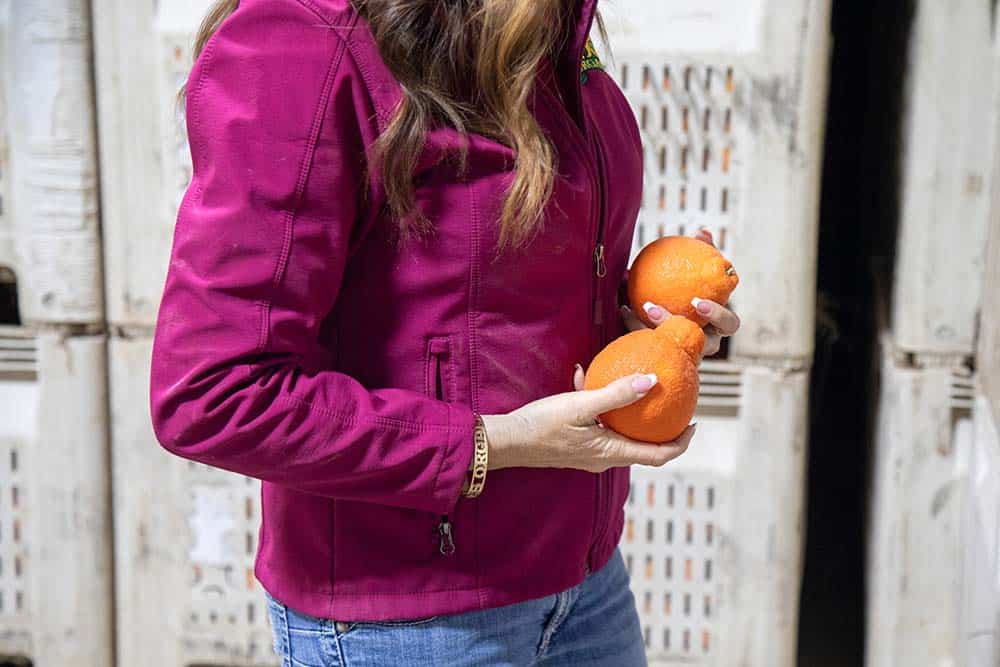
What Grows In Imperial Valley
Here are some of the most widely-grown crops in the Imperial Valley area:
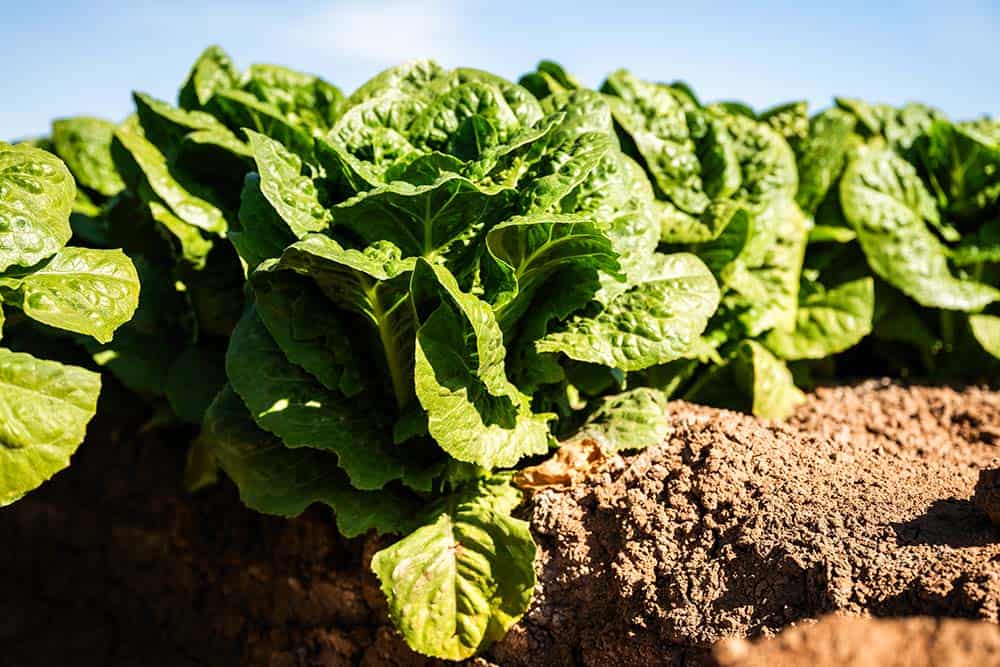
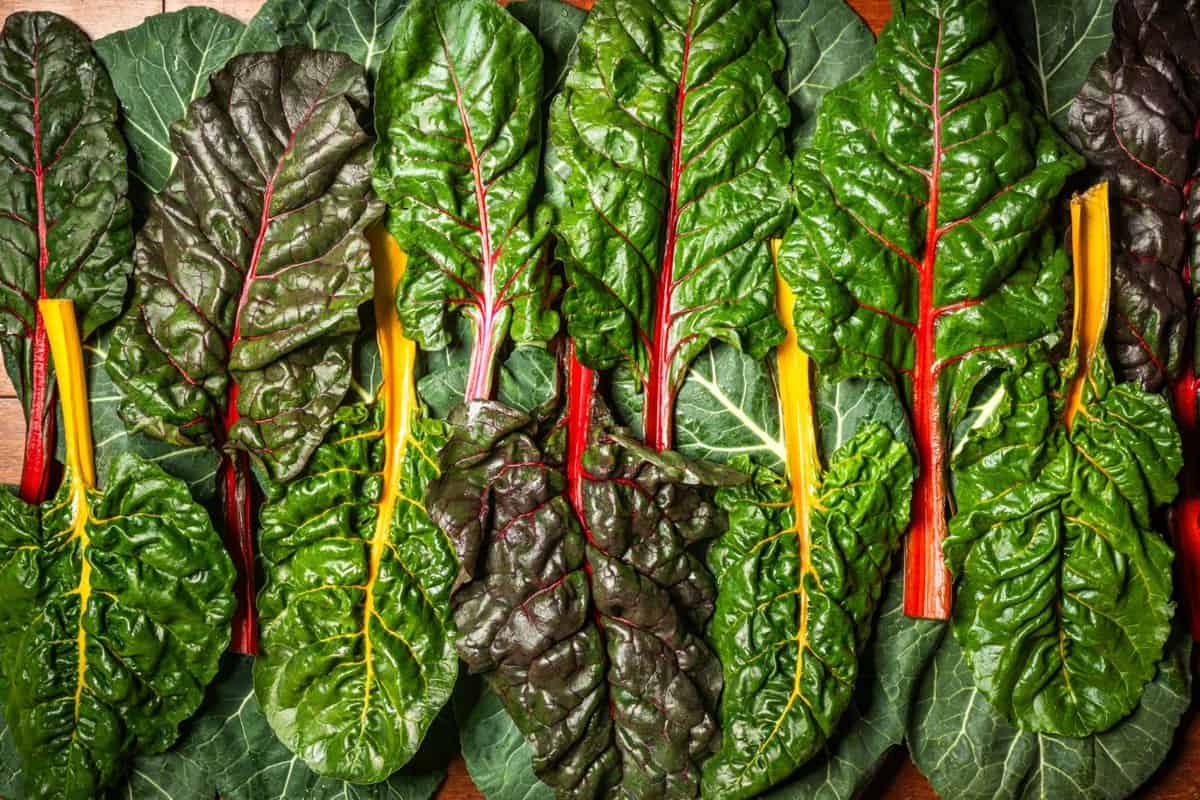
Winter Leafy Greens: Romaine, Spinach, Spring Mix, Leaf Lettuce
Imperial County’s identity is rooted in its winter vegetables, led by leafy greens. Romaine, iceberg, red and green leaf, butter lettuce, spinach, arugula, and mixed baby greens are all produced here at scale from November through April.
When coastal growing regions like Salinas slow down in the colder months, Imperial Valley fields enter peak production. This seasonal handoff helps allow California to supply fresh produce year-round.
Mild temperatures, Colorado River irrigation, and tightly coordinated harvest systems allow for same-day harvest-to-cooling and rapid distribution. That efficiency is why a container of spring mix purchased in January in cities across the country likely originated in fields near Brawley, Holtville, or Calipatria just days earlier.
The winter harvest extends well beyond lettuce. Celery, green onions, radishes, and fresh herbs like cilantro and parsley are widely grown, along with specialty peppers and other row crops. Together, these crops make Imperial County a full-spectrum winter vegetable region, not just a greens producer.
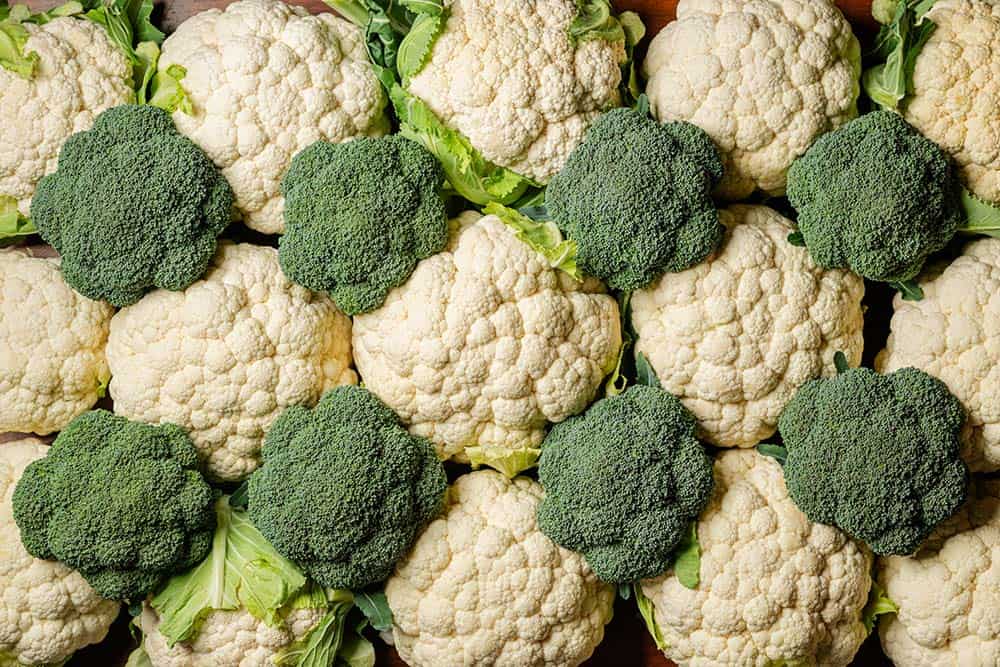
Brassicas: Cabbage, Cauliflower, Broccoli, and Bok Choy
Alongside leafy greens, brassicas are a major part of Imperial County’s winter production. Brassicas are a family of vegetables that includes cabbage, cauliflower, broccoli, and bok choy.
These crops thrive in the valley’s cooler growing window, with peak harvest stretching from late fall through early spring. Cauliflower, in particular, has become a defining crop of the region. This is supported by strong demand and consistent quality during months when other regions cannot produce at the same scale.
Brassicas also play an important role in field management, helping maintain soil structure as part of broader crop rotation systems.
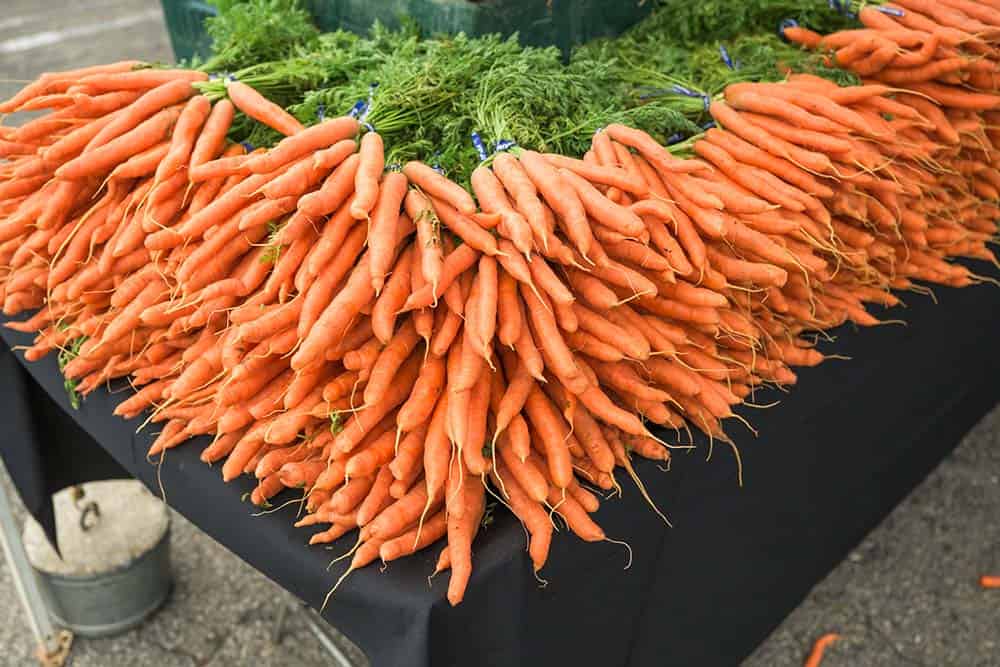
Carrots: A Major Crop with Year-Round Production
Carrots are a major crop in Imperial County’s agricultural rotation, supporting both fresh and processed markets.
Grown at scale across the valley, carrots benefit from sandy soils that promote uniform root development and allow for efficient mechanical harvesting. Imperial County supplies both conventional and organic carrots, many of which go for peeling, cutting, and then packaging for grocery stores and food service operations nationwide.
Dates and Citrus: Desert Tree Crops
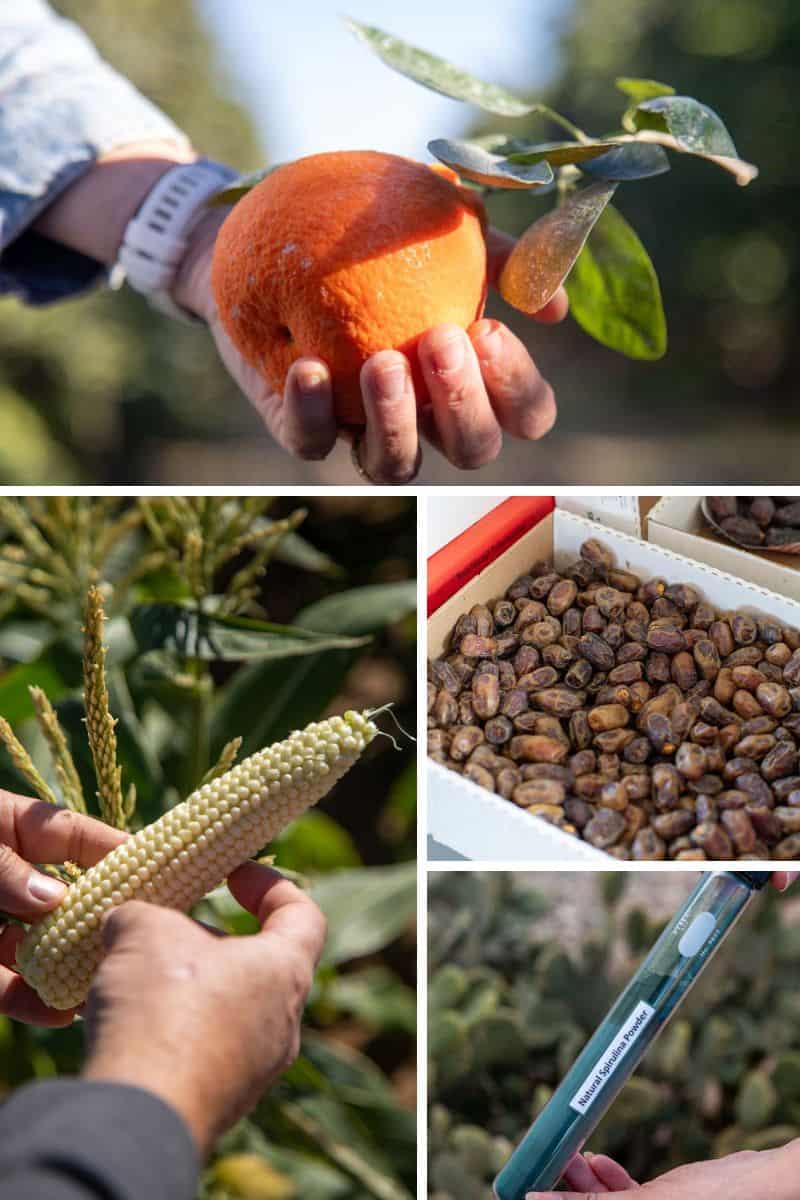
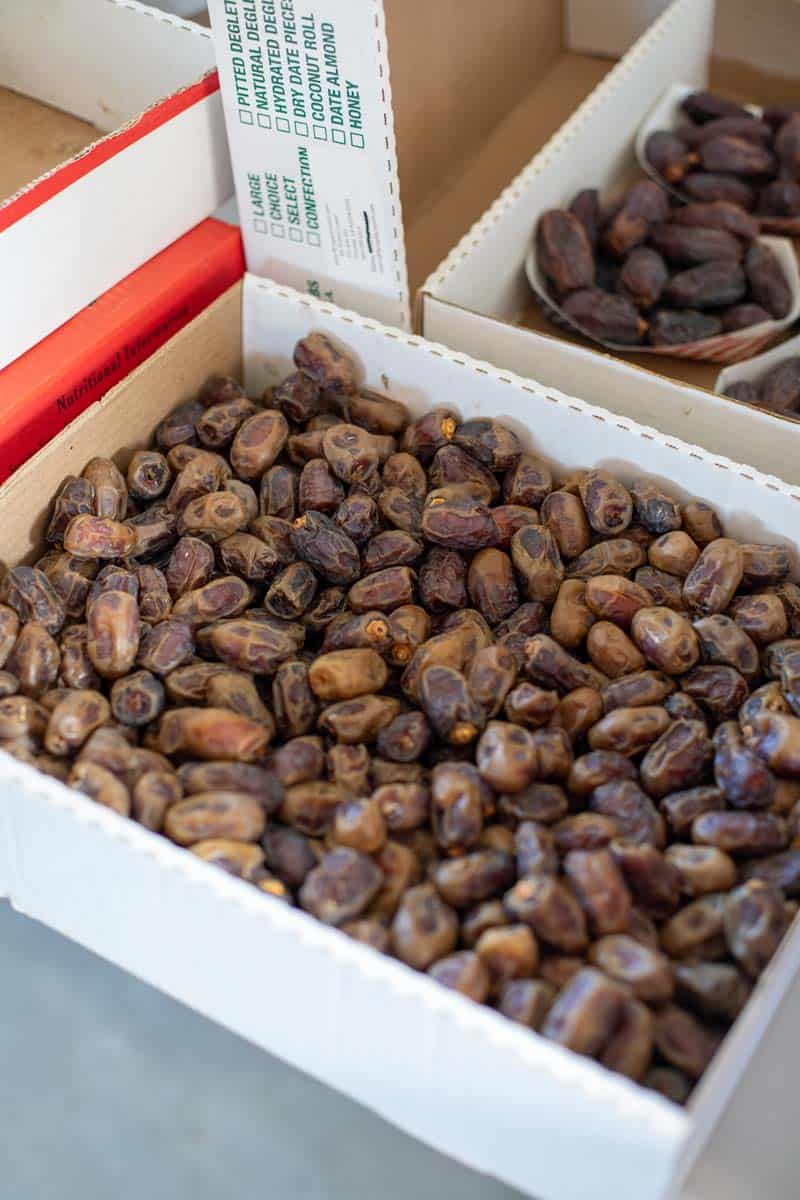
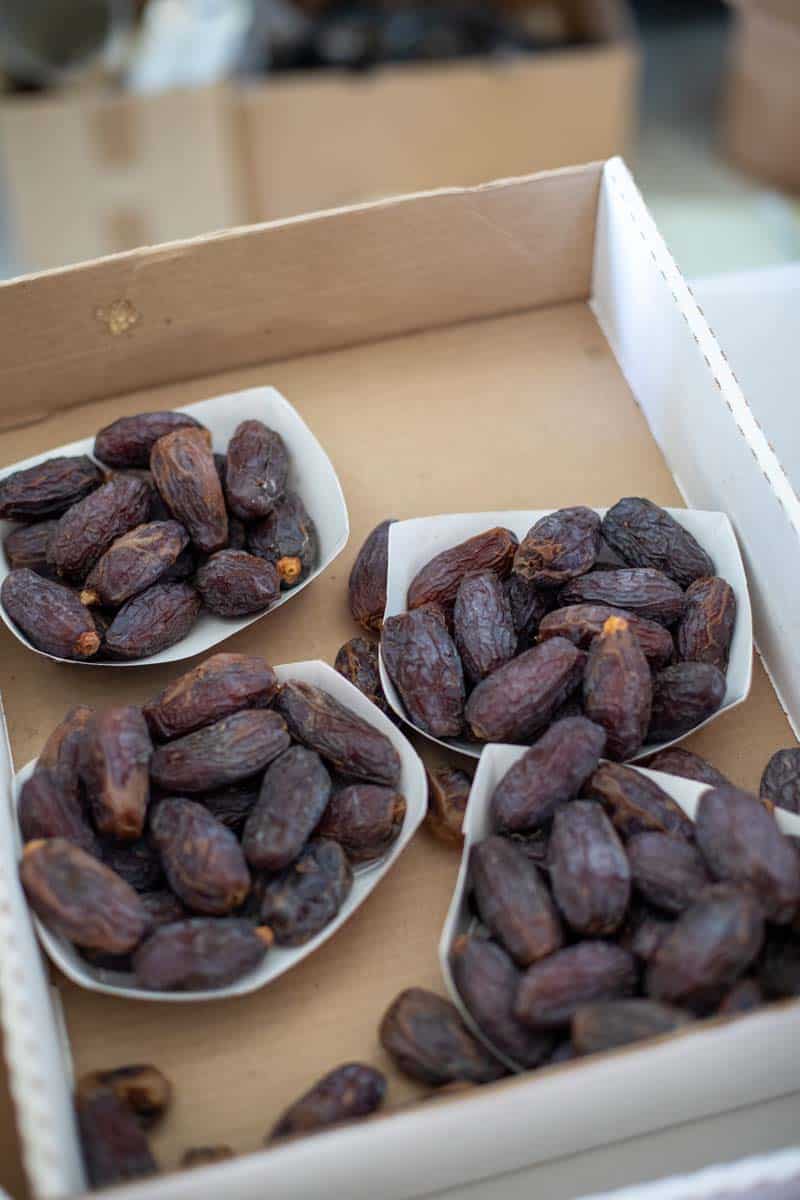
At the north end of the Imperial Valley, the leafy-green fields give way to orchards, and the valley’s tree crops kick in. Medjool dates, Deglet Noor dates, and a long list of specialty date varieties are grown here in commercial quantities, sharing the Coachella-adjacent desert climate that makes the Coachella Valley the date capital of the United States.
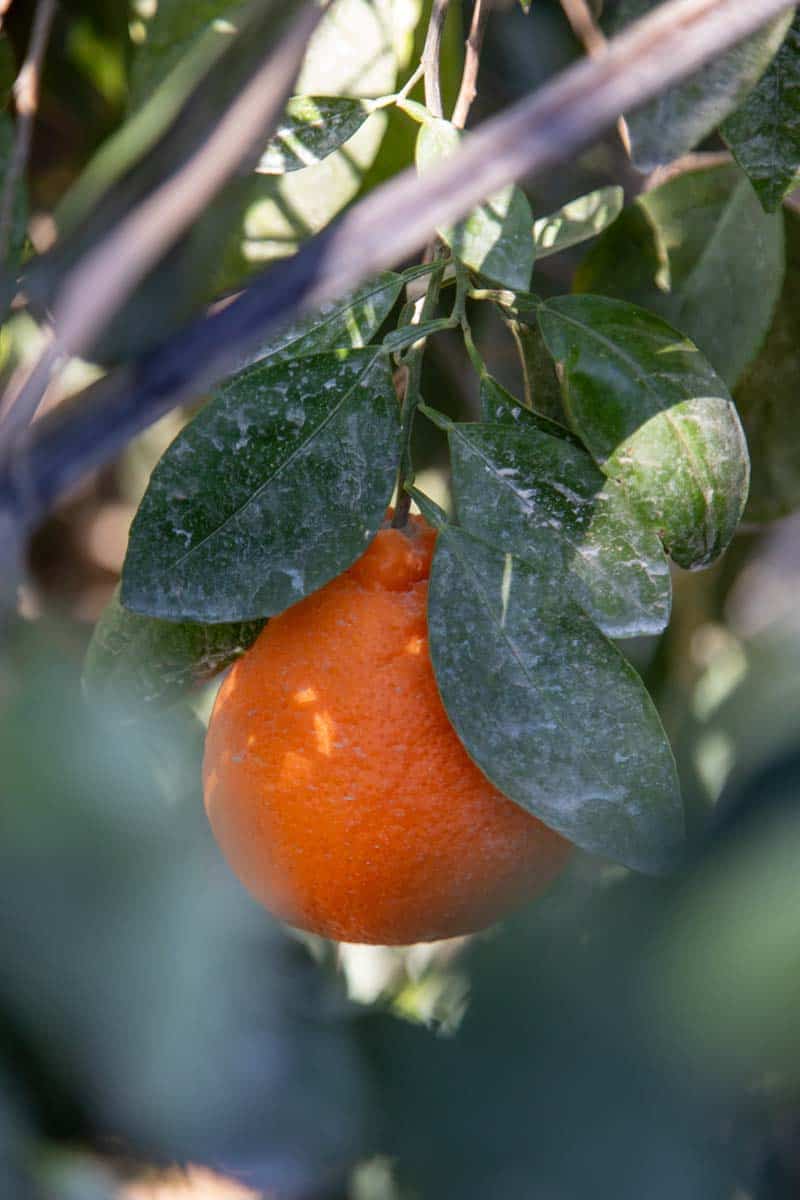
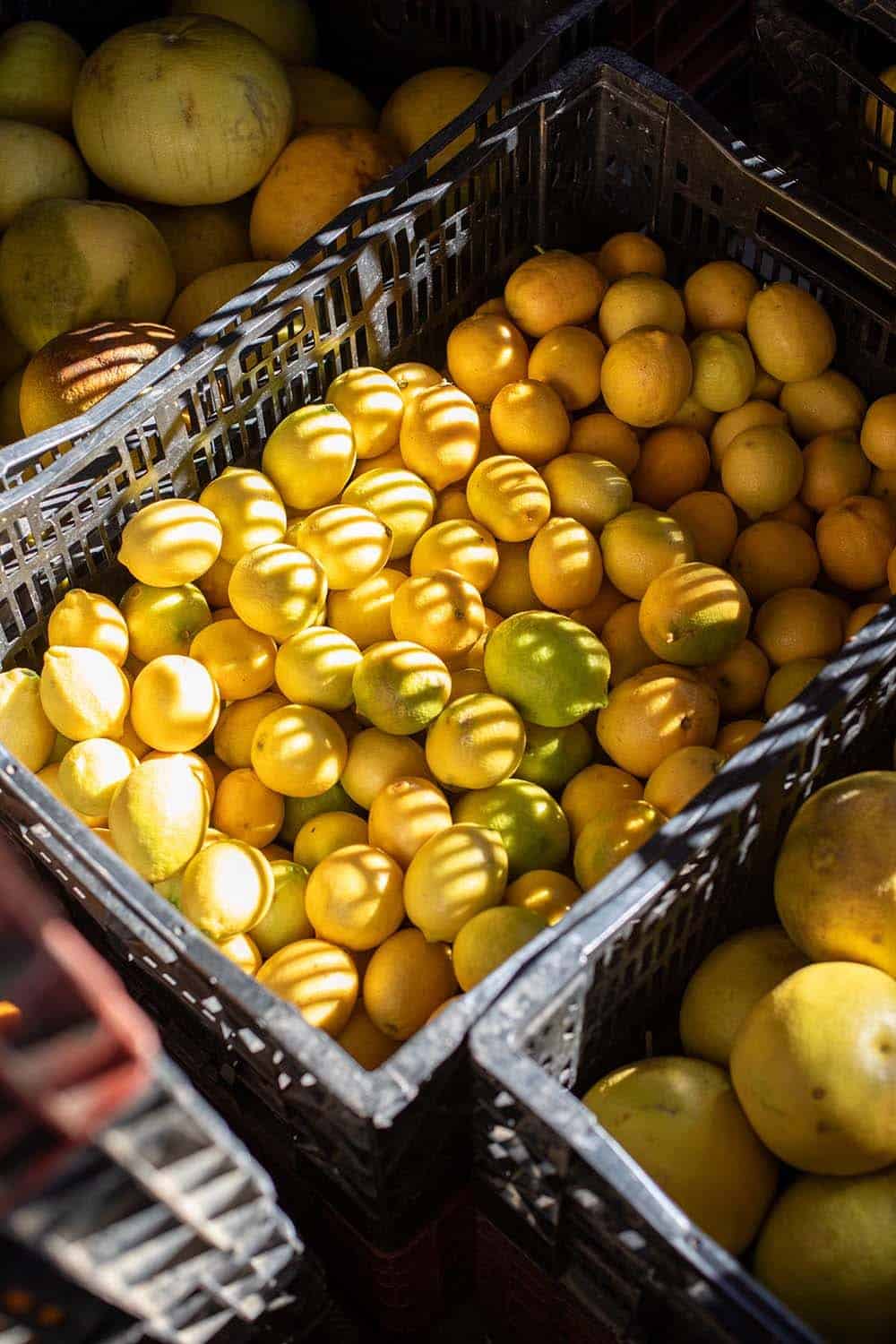
Imperial citrus, including organic navel oranges, lemons, limes, and specialty cultivars, grows on the same hard-ground acreage. Doc’s Organic farms roughly a thousand acres of certified-organic citrus and medjool dates at the north end of the valley, packs fruit in its own organic-dedicated packing house, and ships across the country and to Japan.
The same tree-crop belt produces fewer mangoes, guavas, and specialty desert fruits for farmers’ markets and high-end restaurants.
Artichokes, Asparagus, and Transitional Crops
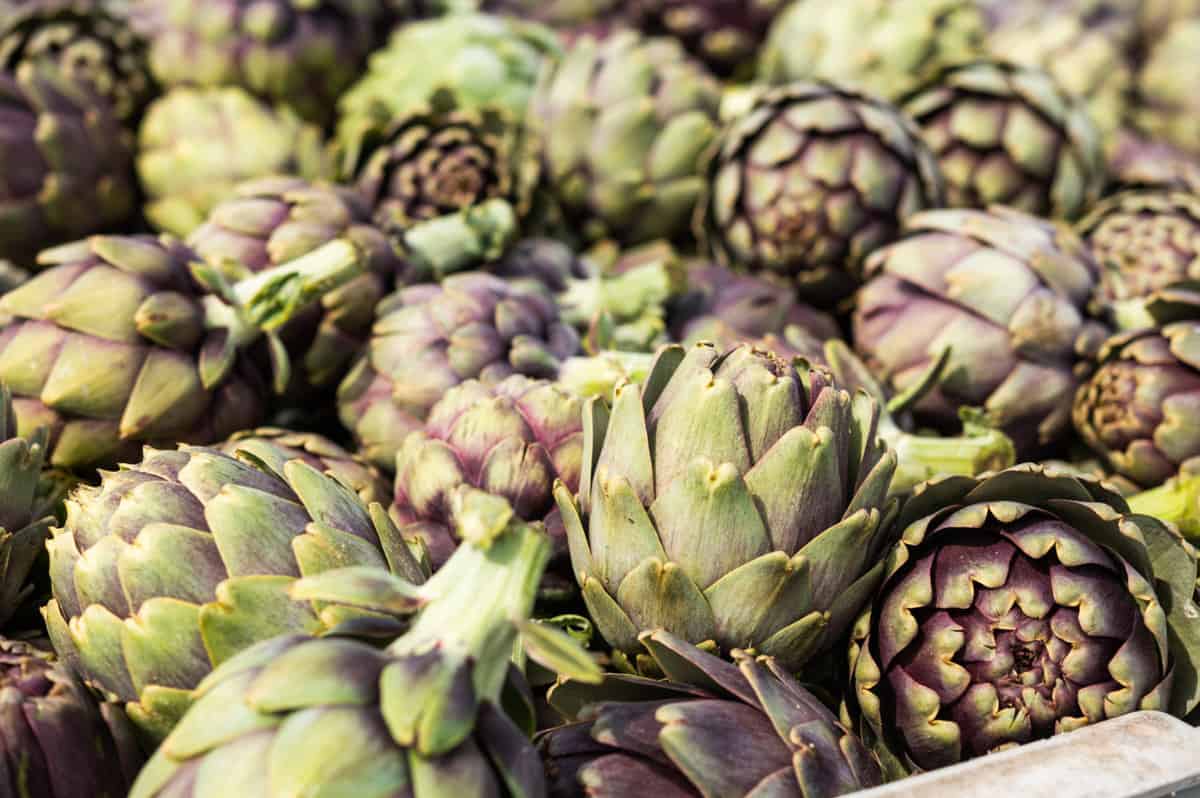
Imperial County is one of the very few U.S. regions that grows vegetables associated with spring, like artichokes, asparagus, and carrots, in winter. Asparagus and carrots grow from winter into spring, and artichokes follow shortly after.
These crops help bridge seasonal gaps, supplying restaurants and retailers with fresh produce when availability is limited elsewhere. Their presence reinforces the valley’s role as a stabilizing force in the national food system.
Onions, Sweet Corn, Melons, and Summer Crops
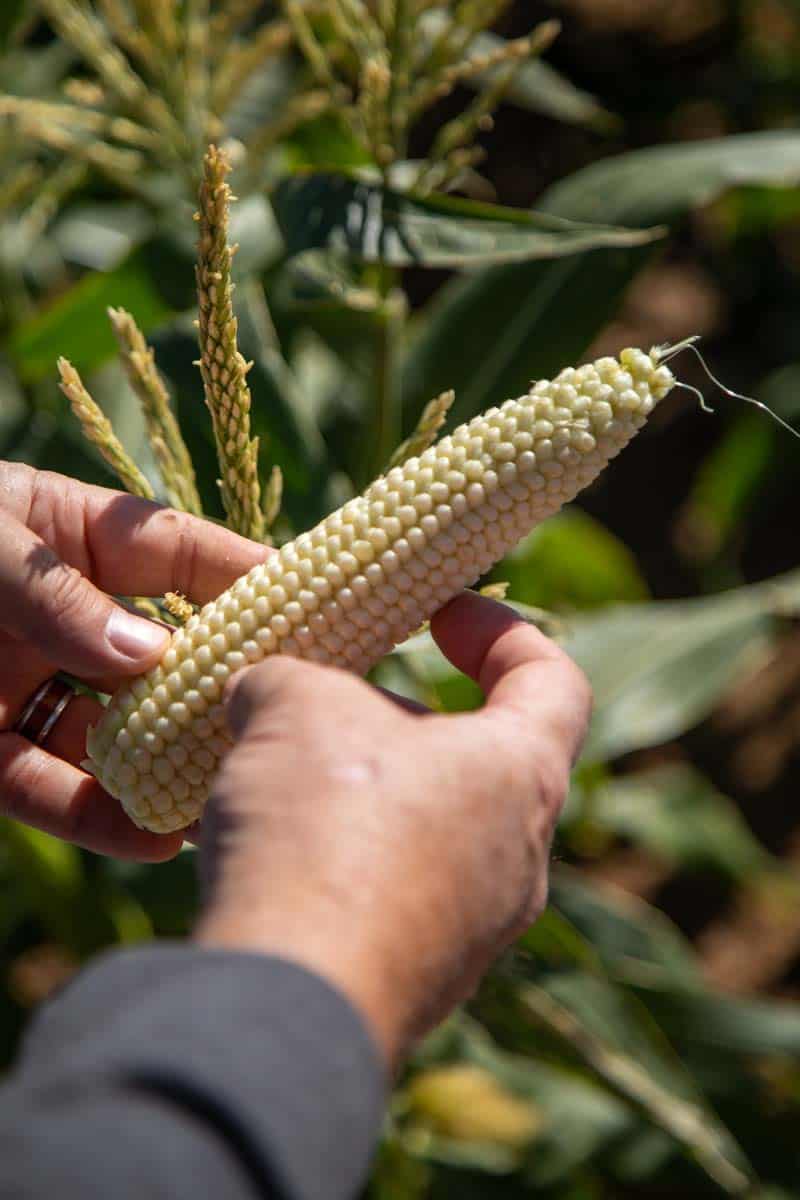
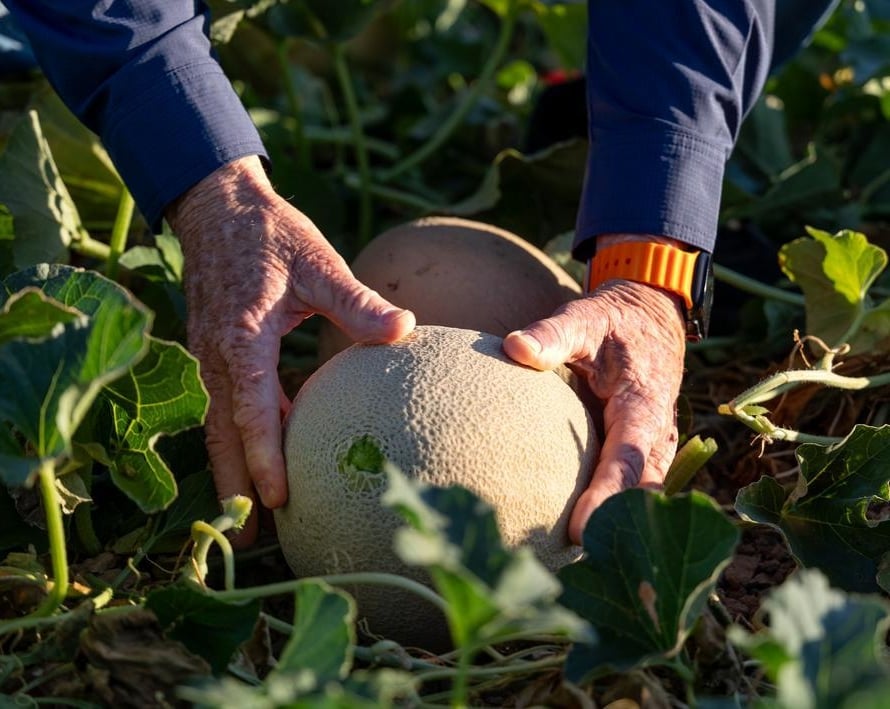
As soon as temperatures rise, the valley shifts to summer crops. Cantaloupes, honeydews, watermelons, and specialty melons. Sweet corn, including pre-shucked and pre-peeled convenience packs from Imperial Valley growers, follows into late spring and early summer.
Onions are an important crop, with the region supplying early-season yellow and red onions that reach market before many other U.S. growing areas come online.
By mid-summer, the hottest months shift field use to less-heat-sensitive commodities, but the valley never really stops producing. Imperial’s growing calendar is one of the most continuous in the United States.
Spirulina: The Valley’s Quiet Superfood
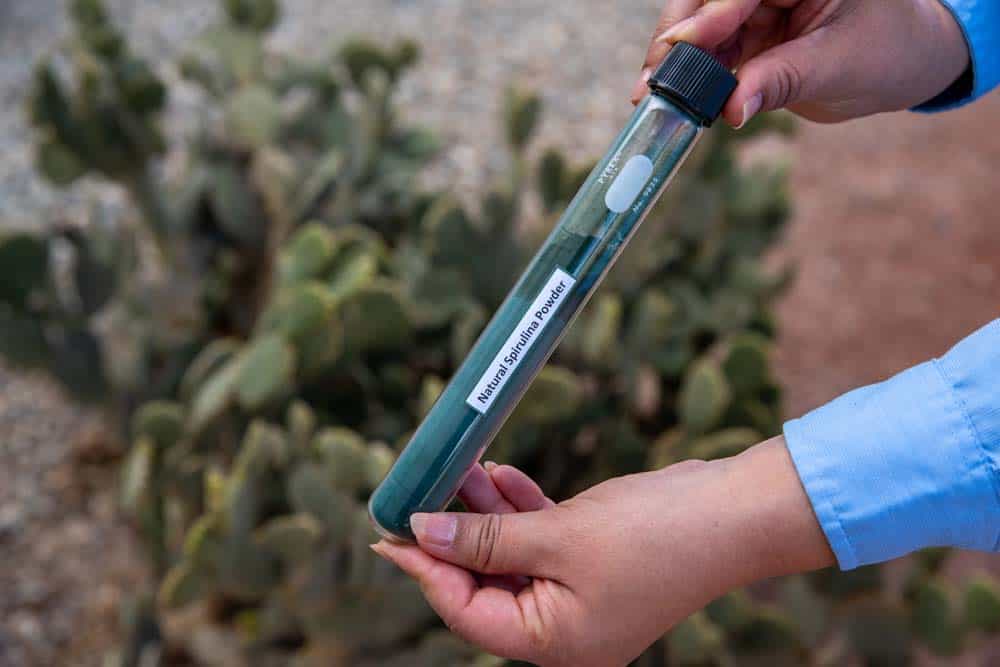
Imperial Valley’s agricultural output extends beyond traditional crops. It is also home to one of the largest spirulina production facilities in the world.
Spirulina is a nutrient-dense blue-green algae common in dietary supplements, natural food colorants, and health products. Earthrise Nutritionals in Calipatria grows spirulina across more than 100 acres of open ponds, producing powders, tablets, and natural pigments used globally.
The region’s intense sunlight, mineral-rich water, and long growing season make it uniquely suited for this type of production, highlighting the diversity of Imperial County agriculture.
Alfalfa, Sudangrass, Sugar Beets, and Field Crops
Not everything grown in Imperial County lands on a dinner plate. Alfalfa and sudangrass hay are major Imperial Valley crops, feeding dairy cows in California and the Southwest and, in some years, shipping to Japan, South Korea, and the Middle East. Sugar beets, wheat, and other field crops round out the rotation.

Plan Your Imperial County Agriculture Visit
The best time to visit Imperial County for agriculture is January through March, when the winter-vegetable harvest is in full swing, the California Midwinter Fair is running in Imperial, and the weather is ideal for farm tours and outdoor markets. Pair a fair visit with a drive through the date-and-citrus orchards at the north end of the valley, or a detour to East Jesus or the Salton Sea.
Browse additional CA GROWN grower profiles about what grows in Imperial County and beyond on the blog or plan your next stop at Experience California Agriculture.
Need a new soundtrack for your next road trip? Check out this CA GROWN Spotify playlist:
Frequently Asked Questions About Imperial County Agriculture
How much farmland is in Imperial County?
Imperial County has roughly half a million acres of irrigated farmland, making it one of the largest year-round agricultural regions in the United States. Its irrigation comes from the Colorado River via the All-American Canal.
What is Imperial County best known for growing?
Imperial County grows winter leafy greens (romaine, iceberg, spinach, leaf lettuce, and spring mix), cauliflower, cabbage, broccoli, dates, organic citrus, artichokes, asparagus, melons, sweet corn, and alfalfa hay. It is also home to one of the world’s largest spirulina farms.
Why is Imperial County such a productive growing region?
Imperial County has an exceptionally mild winter, a long growing season, abundant sunlight, Colorado River irrigation, and roughly half a million acres of farmable ground. The combination allows most U.S. winter leafy greens and many off-season vegetables to be produced here between November and April.
Where does Imperial County produce and ship?
Imperial County produces ships across the continental United States and internationally. Organic citrus from the valley goes as far as Japan. Alfalfa hay exports to the Middle East, Japan, and South Korea. Spirulina from Earthrise Nutritionals ships worldwide.
This article was written by CA GROWN Creator Aida Mollenkamp, and images from Salt & Wind.

Aida is a food and travel expert, author, chef, Food Network personality, and founder of Salt & Wind Travel. With a career in food travel media and hospitality, she has traveled the globe in search of the best food destinations. Her cookbook, Keys To The Kitchen, is a favorite among home cooks seeking adventure, and her Travel Guides For Food Lovers series is cherished by food travelers.
Influenced by her many adventures and inspired by California’s bountiful produce, Aida’s recipes are fun, fresh, and bursting with flavor. We’re loving her Grilled Artichoke Recipe with Herbed Roasted Garlic Aioli – you will too!