
Why Bernard Ranch Citrus Stands Out at SoCal Farmers Markets
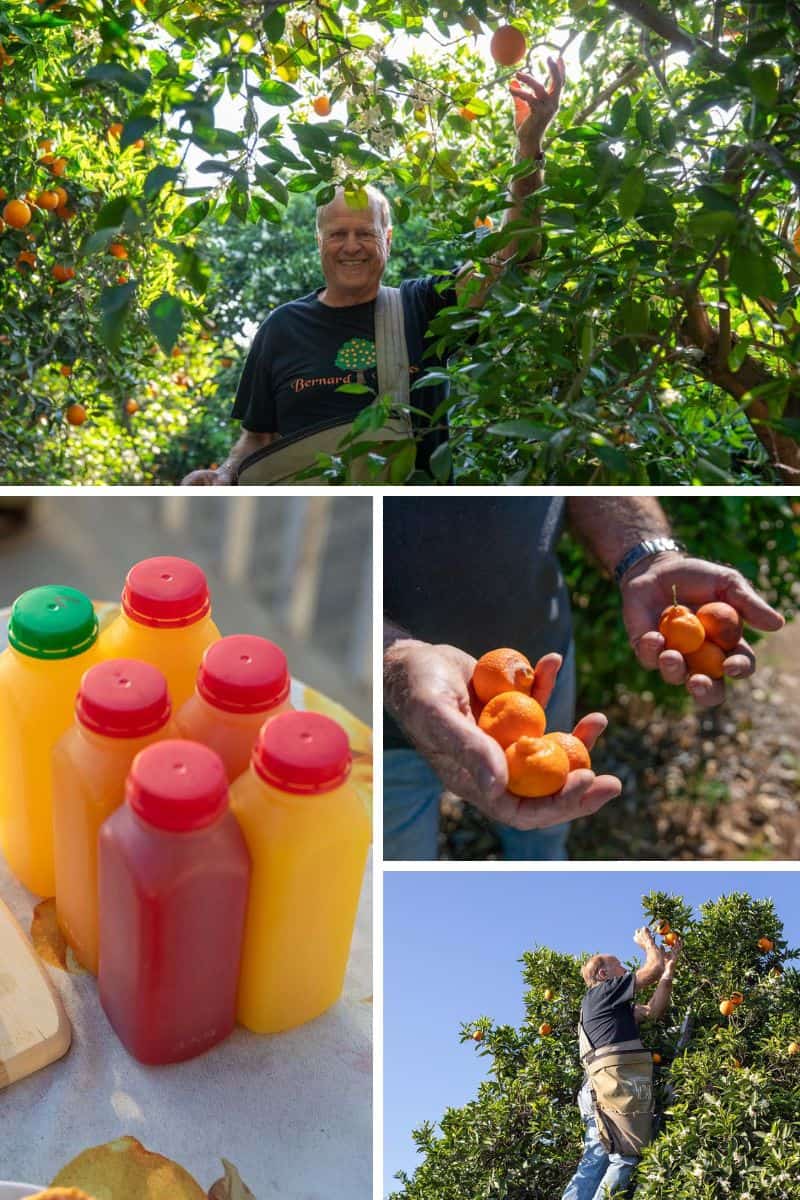
Bernard Ranch in Riverside, California, is known for some of the freshest citrus at Southern California farmers’ markets, as it’s often picked just two to three days before it’s sold. With dozens of varieties, no cold storage, and a loyal following built over decades, this family-run farm has quietly become a standout for anyone who cares about flavor.
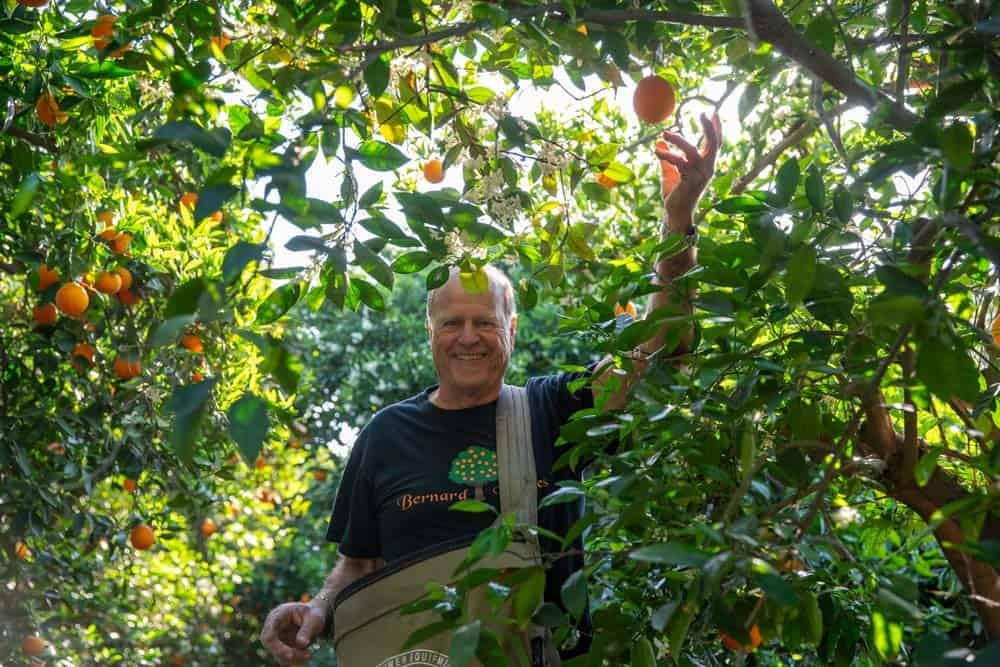
That reputation isn’t just local lore. At a blind taste test at the Santa Monica Farmers Market, Bernard Ranch’s navel oranges took first place. Even owner Vince Bernard still sounds surprised when he tells the story: “Give me a break. How do you do that?”
The answer is dozens of citrus varieties, no cold storage, and a turnaround so fast that the orange you buy on Sunday was likely hanging on a tree in Riverside on Friday.
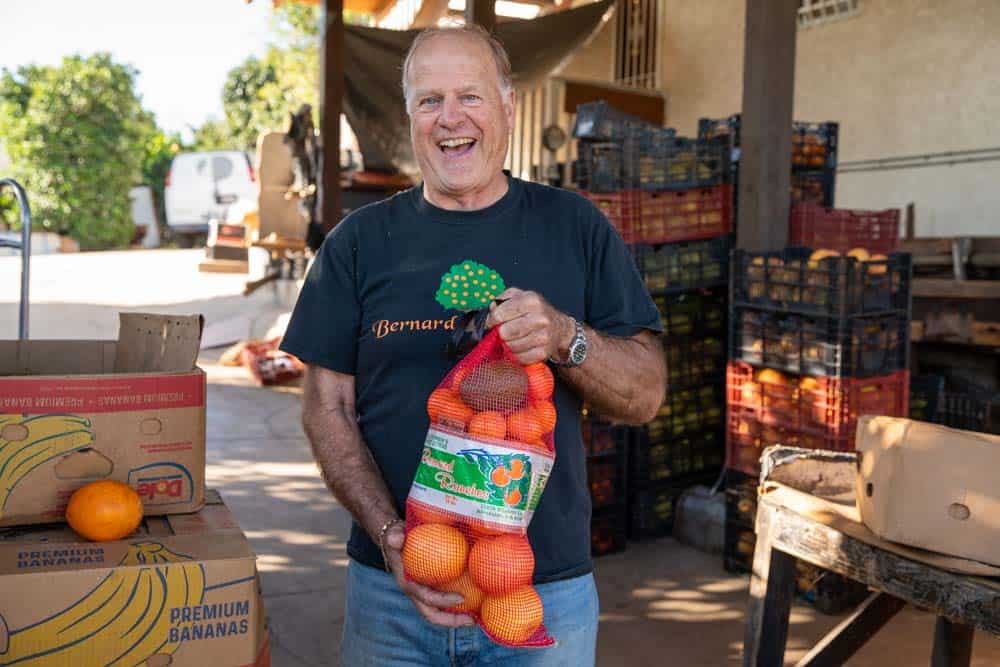
Bernard Ranch is a direct-to-consumer citrus operation run by Vince and his wife, Vicky, in the town where California’s commercial citrus industry began. They sell at farmers’ markets four to five days a week, and some families who line up for their fruit have been doing so for decades.
The History of Bernard Ranch Citrus
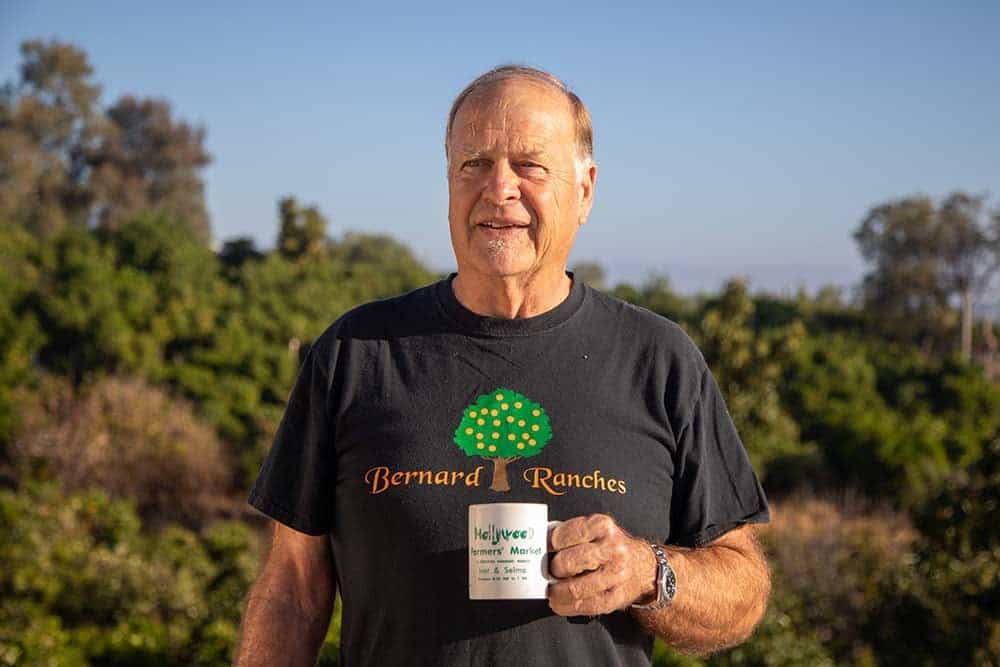
Vince Bernard grew up on a dairy farm, and he has always been an outdoorsy person. He is the kind of guy who tells his wife that if he doesn’t come home, she should check the ditches because he’ll be in one on a tractor.
In the early 1980s, he bought five acres of citrus land in Riverside. The trees on it were a little neglected and old, so he set out to bring them all back to life. By 1986, he had built a house on the property. Five acres became ten, then twenty, with new groves planted as the previous ones matured. “It is not much for California farms,” Vince says, “but for Riverside, that’s not bad.”
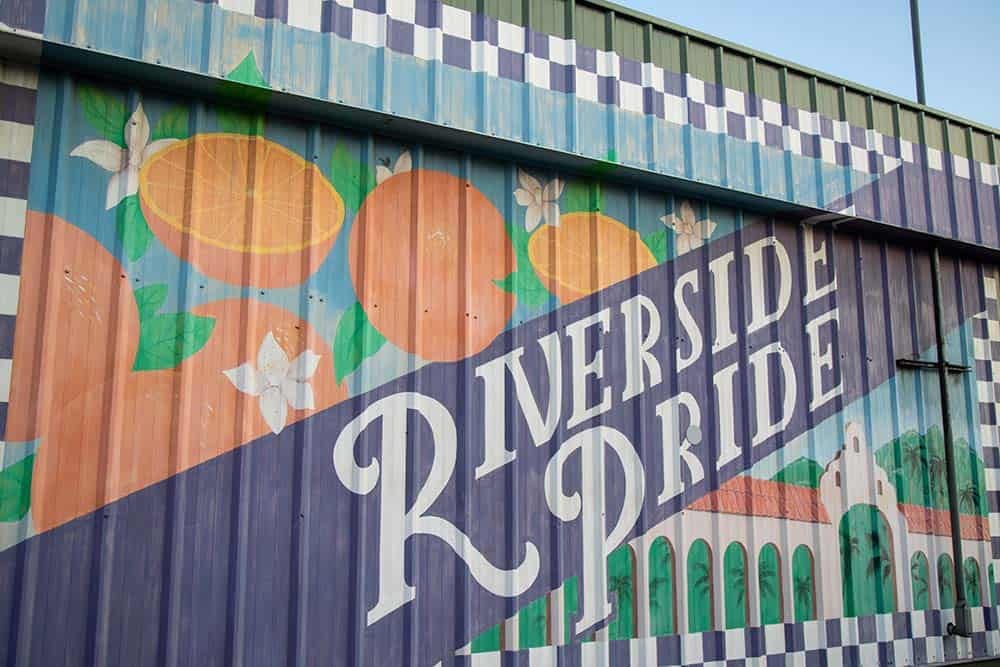
And the location plays a key role. Riverside, California, is the birthplace of the commercial citrus industry in the United States. In the 1870s, trees from Brazil made their way to Washington, D.C., then to Eliza Tibbets in Riverside, and from her handful of trees, the entire California citrus industry grew.
In fact, the Parent Washington Navel Tree is still alive and producing, and you can see it just across town in Riverside. Vince has read the books his kids gave him over the years about navel history, and he farms the same soil that launched it. “It’s just phenomenal that we have them in this area,” he says.
What Citrus Varieties Bernard Ranch Grows
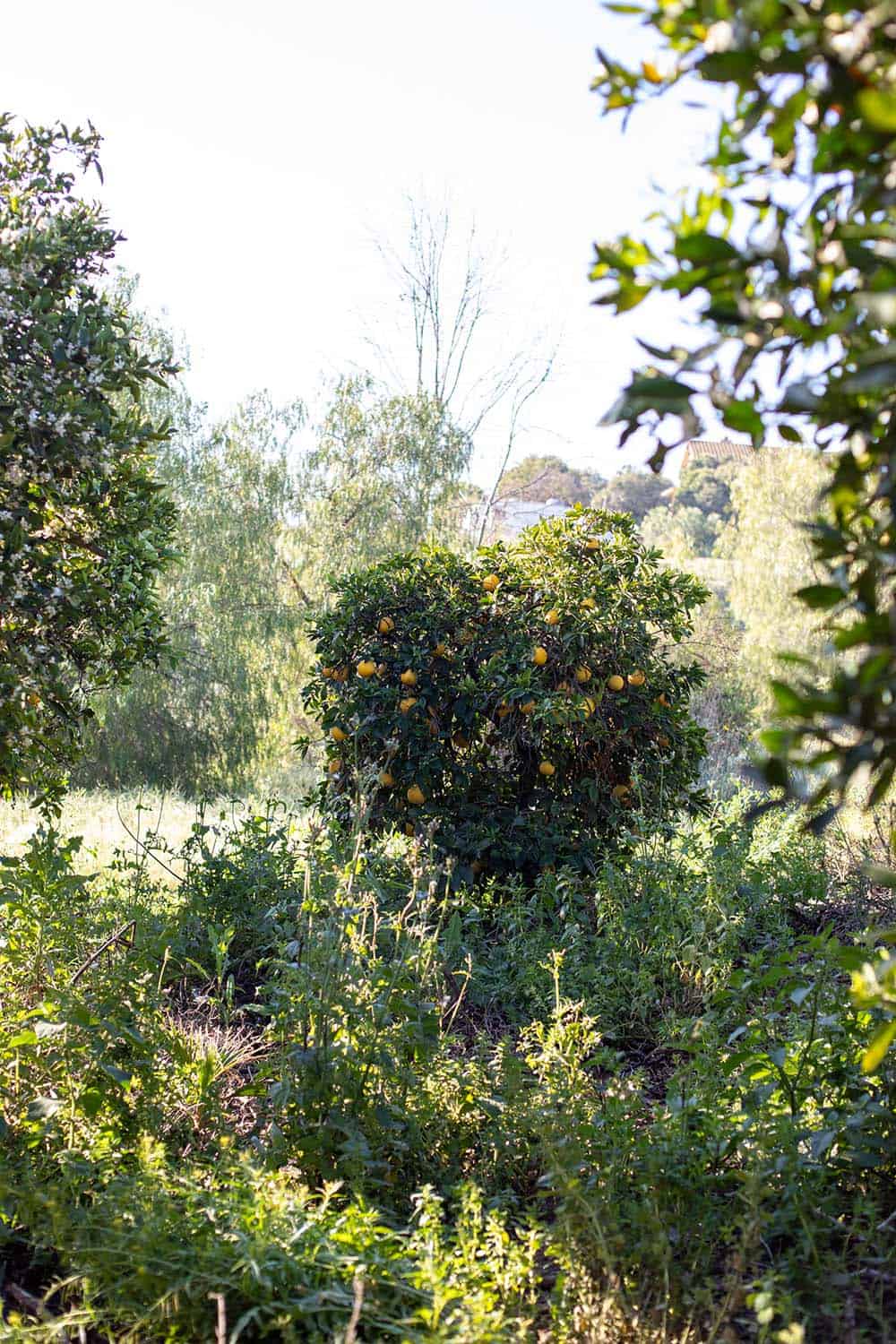
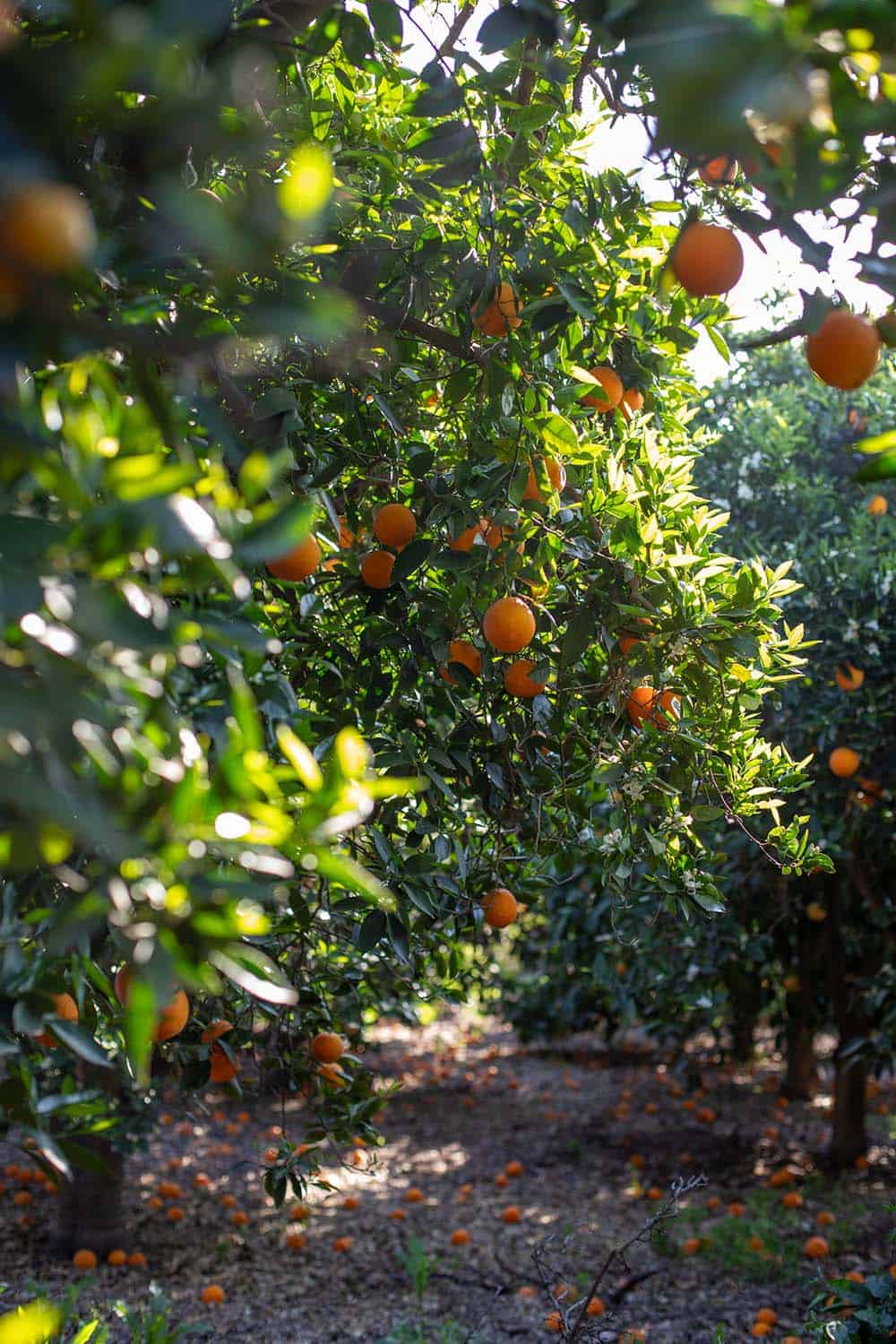
Most commercial growers would look at Bernard Ranch and say the layout won’t work. The orchard is not planted in neat single-variety blocks. By Vince’s own description, it is “kind of willy nilly.” There are orange trees down the main rows, with grapefruit, blood oranges, finger limes, and mandarins interplanted wherever young trees fit. As the canopy fills in, he prunes or pulls trees to keep everything in place.
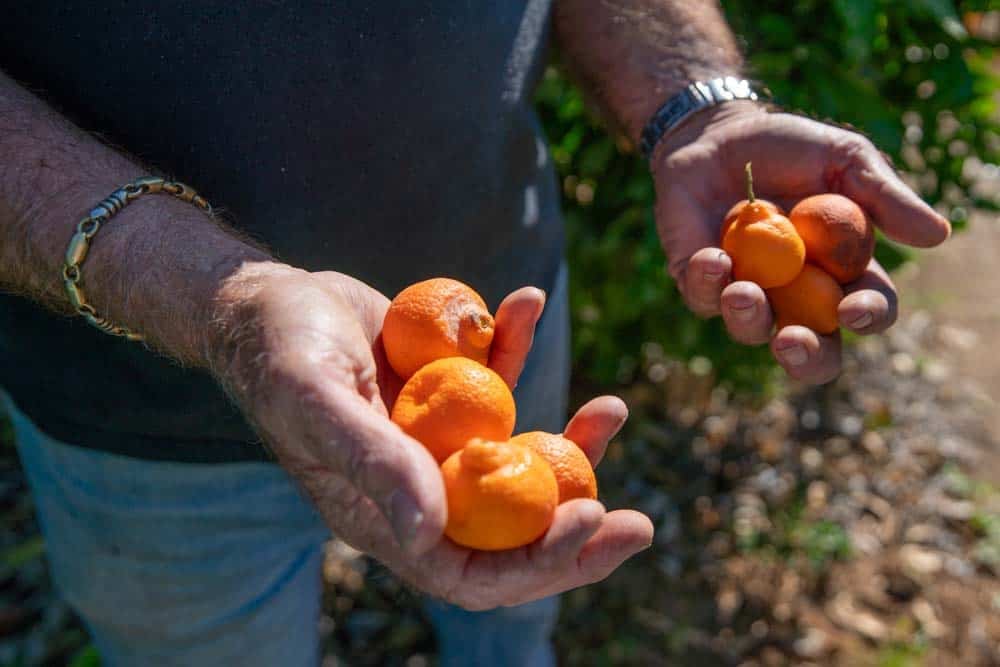
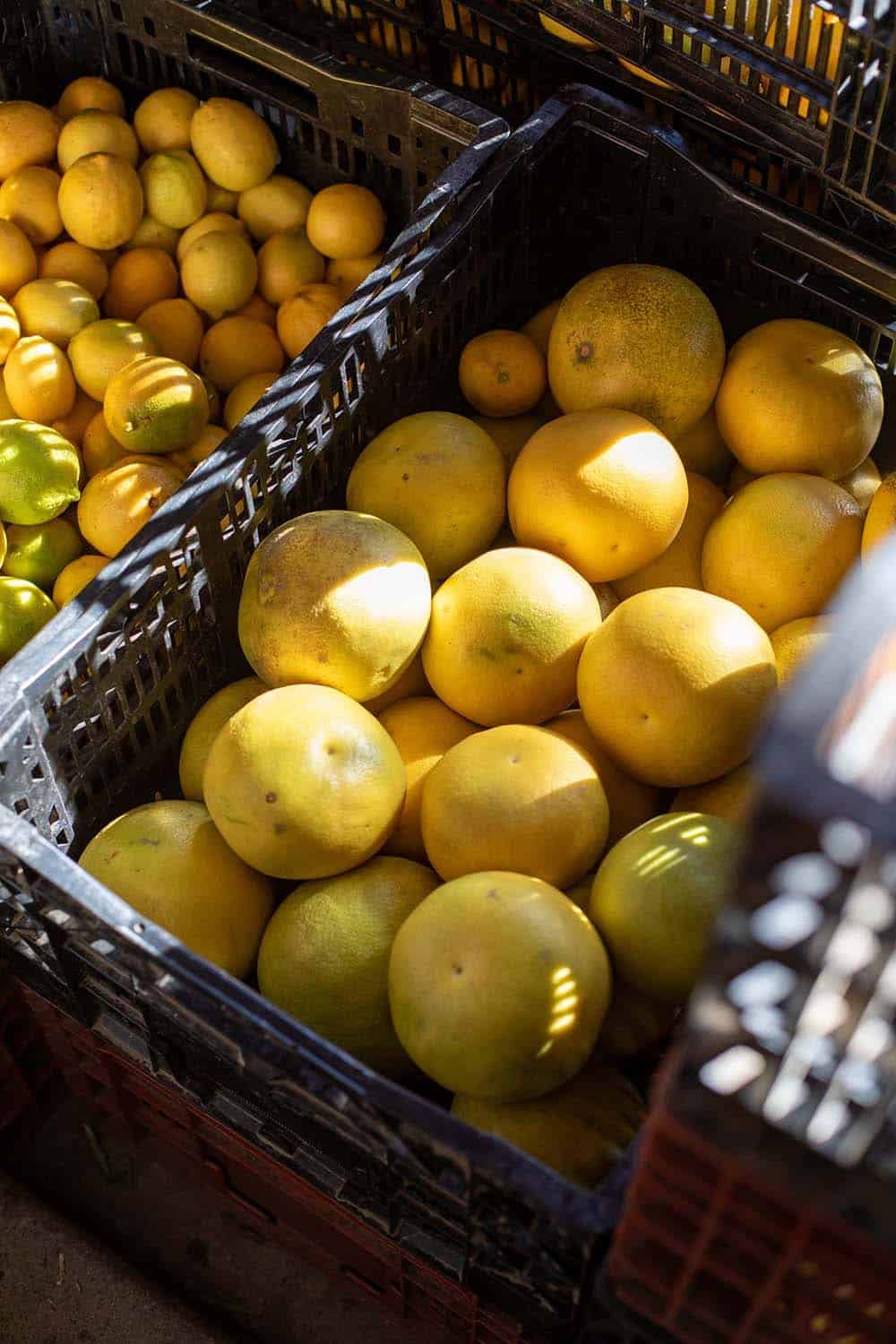
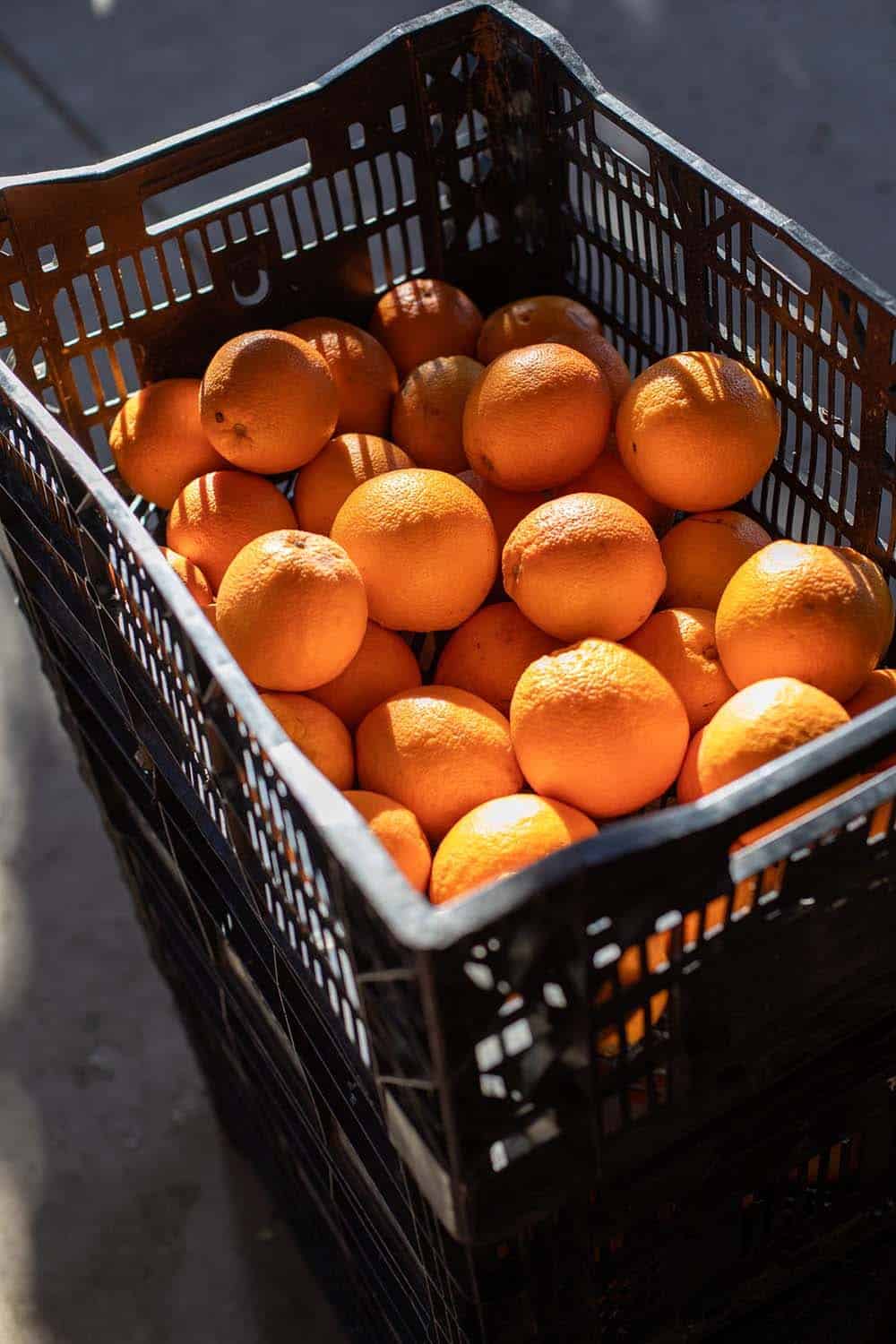
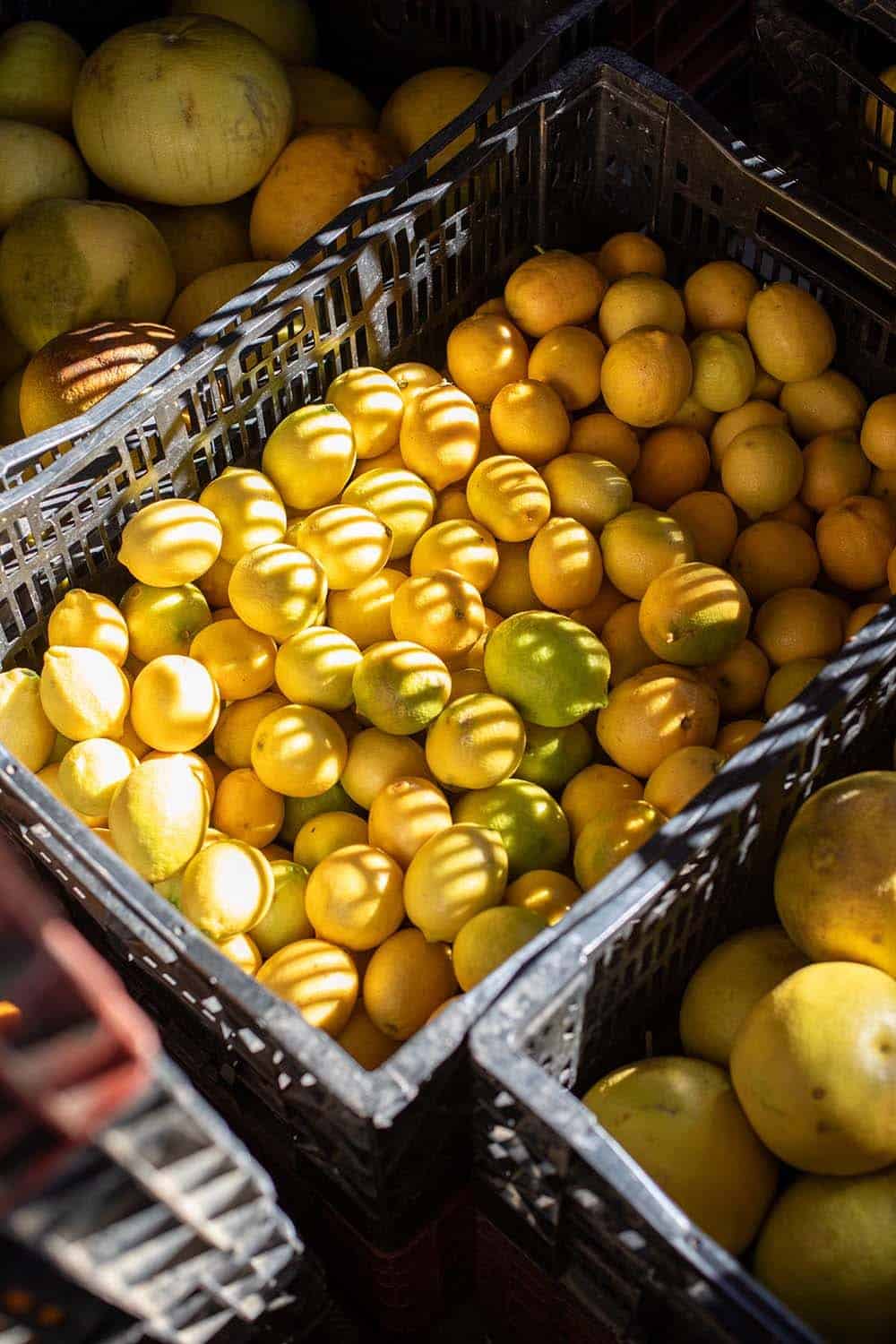
The citrus roster is unusually deep for a twenty-acre operation. There are varieties of navel oranges and Valencias. Cara Caras and blood oranges. Six to eight mandarin and tangerine varieties, including the prized Kishu. Four or five types of grapefruit, including the customer favorite, the cocktail grapefruit. There are also two or three types of lemons, three varieties of sweet limes, plus the novel-looking finger limes.
About five or six varieties of avocado were planted as a hedge after the Asian citrus psyllid arrived on California’s doorstep in 2008 and put the state’s entire citrus crop in jeopardy.
Why Bernard Ranch Citrus Tastes So Fresh
There is no cold storage at Bernard Ranch. It is two to three days, tree-to-table. Fruit picking from the trees occurs on one day and sorting, cleaning and bagging on the next. The day after that, they deliver it to the market for sale. “It’s on the trees one day, and three days later, it’s sold and gone,” Vince says.
That three-day window, with no wax and no warehouse, is the other half of the flavor equation. With the citrus, each variety is picked at the peak of its season and at the last reasonable minute. “That stuff is what helps the flavor, if you pick at the right time,” Vince says. “Pick the peak of flavor.”
Everything on the ranch is done by hand. Hand-harvested, hand-weeded, hand-sorted. To harvest, Vince and his team climb 20-foot ladders to fill 60-pound fruit-picking bags.
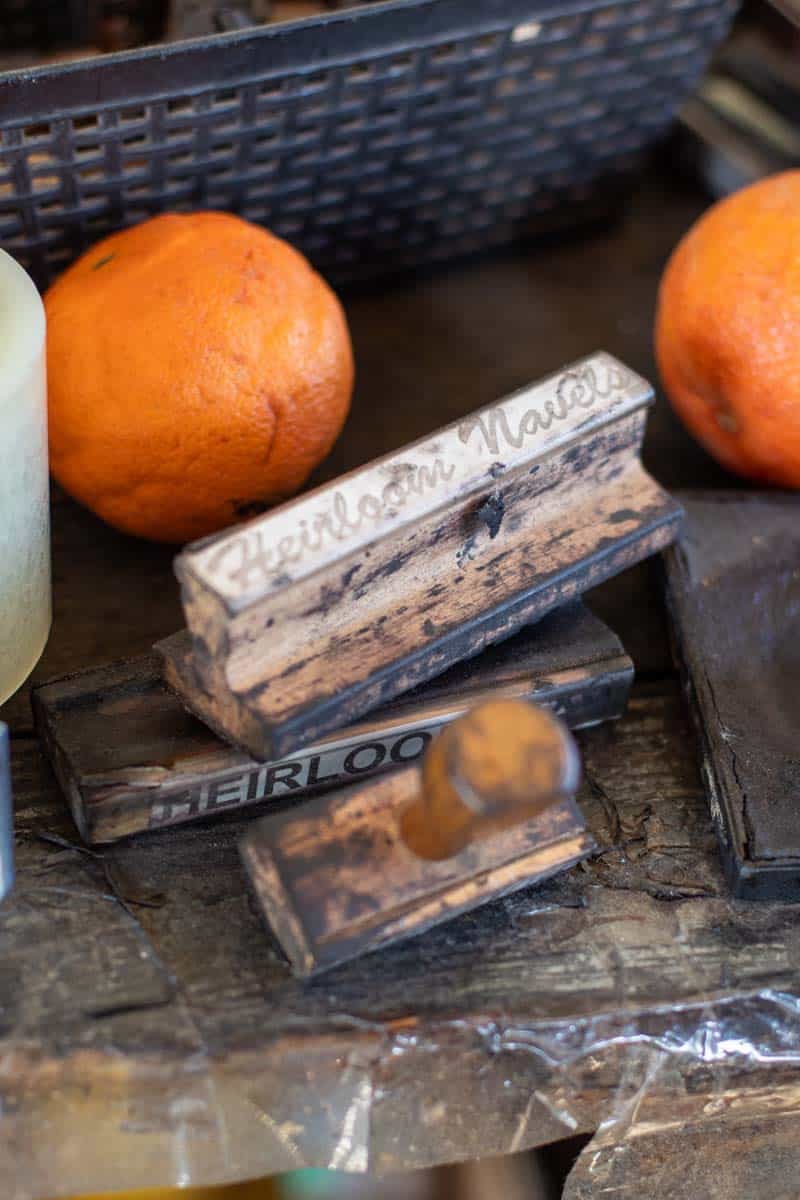
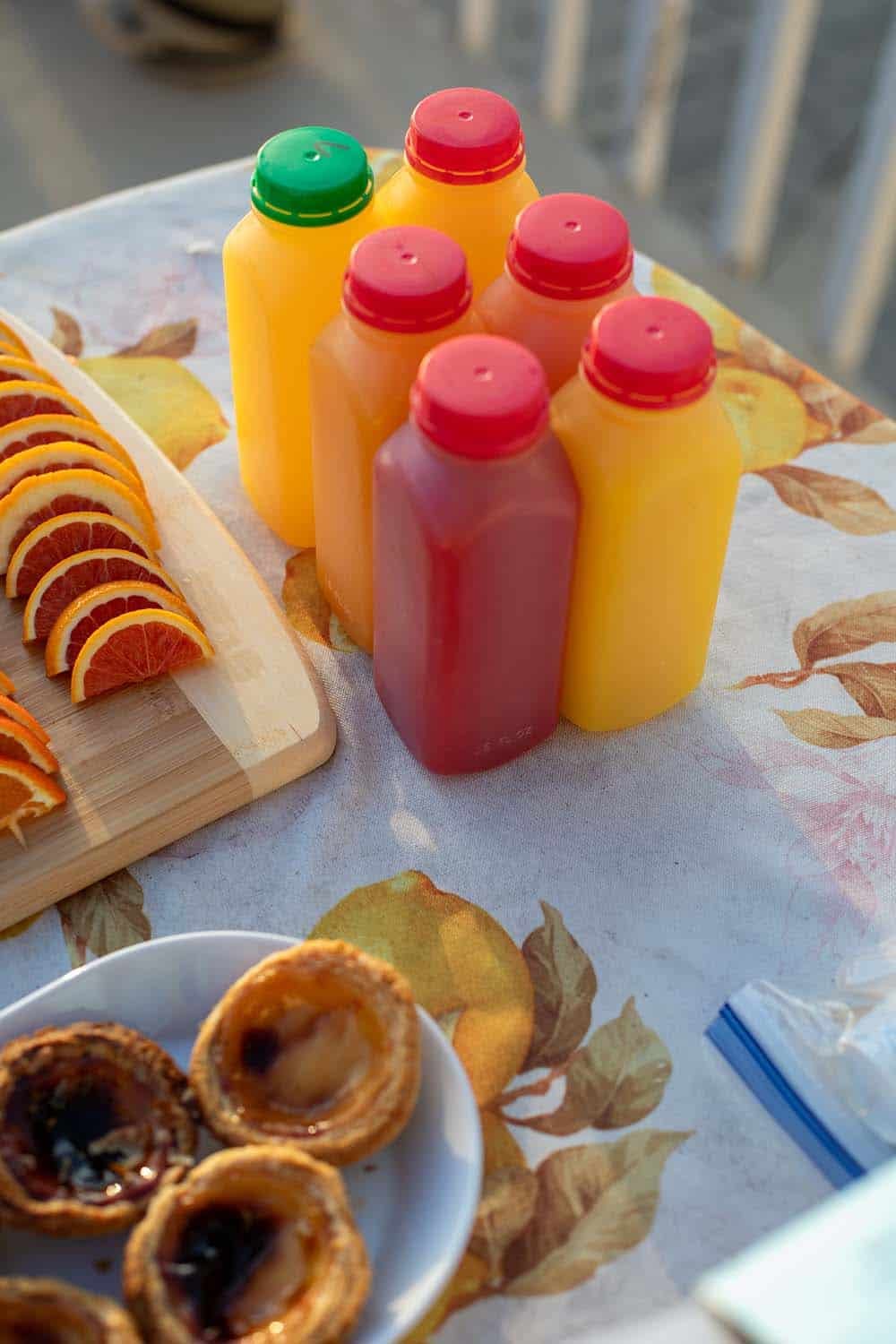
The larger Washington navel, easier to peel, is the eating orange. But about seventy percent of Bernard Ranch customers juice the oranges rather than eat them out of hand. Vince grows an heirloom navel specifically for those juicers: denser, sweeter, juicier, thinner-skinned. At some farmers’ markets, the ranch is planning to start pressing juice on-site.
How Bernard Ranch Grows High-Flavor Citrus
When customers tell Vince his fruit is “head and shoulders above everybody else’s,” he credits the ground beneath the trees. “A lot of the things have to do with the soil,” he says. “You start with the soil.”
From there, the list builds. His methods of soil enhancement and grove management have evolved through the years. These days, he credits a portion of the fruit’s intense flavor to the use of seaweed and mushroom compost.
He also maintains a deliberate population of good weeds. Most commercial growers strip their groves clean, but Vince keeps weeds in the rows. The belief is that the right weeds attract the right bugs. And bugs help the whole system. “All of these things add to flavor, and it’s not any one thing,” he says. “It’s all of them that add up. Use seaweed, use mushroom compost. You leave a few weeds on there, so you have bugs; bugs are great. They help everything.”
The approach is the opposite of industrial citrus, and it is entirely by design. No single input is the answer. Soil health, compost, biodiversity, peak-season picking, same-week delivery: the flavor is cumulative.
Generations at the Market, Forty-Two Years and Counting
Bernard Ranch is at Southern California farmers markets four to five days a week. The regular circuit includes Long Beach, Beverly Hills, Hollywood, Encino, and Santa Monica, where the Wednesday market draws chefs who arrive with large trucks and buy in volume.
But Vince’s real motivation is the families, not the chefs. “I’ve seen families grow up,” he says. “I’ve seen their grandkids go to school, come back, and their kids buy from us at the market. That connection is what keeps me going.”
At his son’s wedding, the conversation at one table turned to who had been buying Bernard Ranch citrus the longest. One friend said thirty-eight years. A quiet customer named Kevin waited a beat. “Forty-two.”
The pressures on small California farms are real, and he does not pretend otherwise. “It’s hot, it’s cold, it’s windy, it’s rainy. The trees don’t stop. My trees never stop. I don’t stop. And my crew doesn’t stop.” But the love for his market families keeps him at it. “Without that, no, I could have retired many years ago and been quite happy sitting on a beach somewhere with my wife.”
Plan Your Riverside Visit
Pair a Bernard Ranch farmers market stop with a visit to the California Citrus State Historic Park to learn the story that launched the industry. For a broader look at what grows in Riverside County, check out the full guide, or plan a longer stay with our things to do in Palm Springs and Riverside County.
For more California farming stories, browse California Grown grower profiles or plan your next farm visit on Experience California Agriculture.
Need a new soundtrack for your next road trip? Check out this CA GROWN Spotify playlist:
Frequently Asked Questions About Bernard Ranch
What does Bernard Ranch grow?
Primarily citrus: multiple varieties of navel oranges, Valencias, Cara Caras, blood oranges, Kishu mandarins, cocktail grapefruit, lemons, sweet limes, and finger limes. The ranch also grows several varieties of avocado.
Why does Bernard Ranch citrus taste different?
A combination of soil care (seaweed, mushroom compost, and beneficial insects), peak-season picking, hand harvesting, and a two- to three-day turnaround from tree to market with no cold storage or wax.
Where can I buy Bernard Ranch citrus?
Bernard Ranch sells direct at Southern California farmers’ markets in Long Beach, Beverly Hills, Hollywood, Encino, and Santa Monica. They do not sell through retail grocery chains.
Is Bernard Ranch organic?
Vince uses natural inputs like seaweed and mushroom compost and relies on beneficial insects rather than chemical sprays, but the ranch’s specific certification status should be confirmed directly at the market.
This article was written by CA GROWN Content Creator Aida Mollenkamp, and images from Salt & Wind.
Aida is a food and travel expert, author, chef, Food Network personality, and founder of Salt & Wind Travel. With a career in food travel media and hospitality, she has traveled the globe in search of the best food destinations. Her cookbook, Keys To The Kitchen, is a favorite among home cooks seeking adventure, and her Travel Guides for Food Lovers series is cherished by food travelers.
Influenced by her many adventures and inspired by California’s bountiful produce, Aida’s recipes are fun, fresh, and bursting with flavor. We’re loving her Grilled Artichoke Recipe with Herbed Roasted Garlic Aioli – you will too!