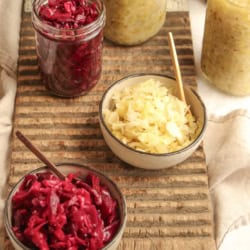
Homemade Sauerkraut Recipe
Celebrate 2026, the Year of the Cabbage, by making an easy homemade sauerkraut recipe with California-grown cabbage, salt, & caraway seeds.
Ingredients
- 3 small heads of green or red cabbage, or 2 large equaling 1950 grams
- 4 TBSP kosher salt, 3% of the shredded cabbage's weight, equaling approximately 58 grams
- 1 heaping TBSP caraway seeds
Instructions
Stage 1: Prep the Cabbage
- Core the cabbage and discard the core. Thinly slice the heads of cabbage into strips and place in a very large bowl.
- Sprinkle the kosher salt and caraway seeds over the sliced cabbage.
- Using clean hands, massage the cabbage hard for 3 to 5 minutes until it begins to wilt and release liquid.
- Cover the bowl with a tea towel and let rest for 30 to 45 minutes.
- Return and massage again for another 3 to 5 minutes.
- Cover and rest for another 30 to 45 minutes.
- Massage one final time for 3 to 5 minutes. By now there should be a good amount of liquid pooled at the bottom of the bowl. If not, cover and rest for another 30 to 45 minutes, then check again.
Stage 2: Fill & Ferment
- Pack the cabbage tightly into clean fermentation jars, leaving 3/4-inch headroom.
- Pour all the liquid from the process over the cabbage until it is fully submerged.
- Place a fermentation weight on top of the cabbage to keep it below the brine line at all times. See recipe notes for what to do if you do not have fermentaion weights.
- Cover loosely with a lid or cloth to allow fermentation gases to escape.
- Store at room temperature 65 to 75℉ (18-21℃) in a dark place for 14 days. Check every couple of days to ensure the cabbage stays submerged.
Stage 3: Store & Serve
- After 14 days, transfer the jar to the refrigerator. The sauerkraut is ready to eat.
- Keeps refrigerated for several months as long as the cabbage stays submerged in its brine.
Video
Notes
Use a kitchen scale for best results.
The salt ratio is 3% of the cabbage weight — accuracy matters for safe fermentation.
No fermentation weights, no problem! Fill a zip-lock freezer bag halfway with brine (1 TBSP kosher salt to 2 cups water), seal tightly, double-bag it, and press it down on top of the cabbage.
Air bubbles in the brine during fermentation are normal and a good sign that fermentation is active.
Taste starting at day 7 to find your preferred level of tanginess.
Nutrition
Serving: 0.25cupCalories: 17kcalCarbohydrates: 4gProtein: 1gFat: 0.1gSaturated Fat: 0.02gPolyunsaturated Fat: 0.01gMonounsaturated Fat: 0.01gSodium: 710mgPotassium: 116mgFiber: 2gSugar: 2gVitamin A: 67IUVitamin C: 25mgCalcium: 28mgIron: 0.3mg
Tried this recipe?Mention @cagrownofficial or tag #CAGROWN!