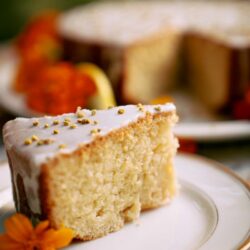
Honey Lemon Cake
My honey lemon cake is as simple as it is delicious. Everything gets mixed together in one bowl, and it bakes in a regular round cake pan. But while it’s easy to make, a little bit of glaze on top, a scattering of bee pollen, and some edible flowers make it feel really special. My favorite thing about this cake is the honey, which gives it all its sweetness and makes it rich and dense. Because the honey adds so much flavor, changing the type of honey you use will also change the flavor a bit. I always make this cake with the wildflower-and-sage honey from the ranch, but you could try it with another kind of honey with a distinctive flavor, like orange blossom. This cake is one of my favorite treats to bake in the spring, when fresh lemons pop up in farmers markets and backyards all across Southern California.
Ingredients
- 2 1/2 cups all-purpose flour
- 1 1/2 tsp baking powder
- 1 tsp kosher salt
- 1 cup 2 sticks unsalted butter, at room temperature
- 3 large eggs
- 1 cup whole milk
- 1 tsp vanilla extract
- 1 tsp finely grated lemon zest
- 1 tsp freshly squeezed lemon juice
- 1 cup honey
- 1 TBSP vegetable oil for the baking pan
- 1 TBSP dried bee pollen
- Sage blossoms or other edible flowers for decorations
Lemon Glaze
- 2 cups powdered sugar
- 1/2 cup freshly squeezed lemon juice
Instructions
To make the honey lemon cake:
- Preheat the oven to 350℉ (180℃)
- Sift the flour into a large bowl and mix it with the baking powder and salt; set the bowl aside. Put the butter and eggs into a large bowl and beat them with a hand mixer until the butter is whipped and fluffy, about 2 minutes. (Alternatively, you can mix the ingredients together in a stand mixer, using a paddle attachment.) Add the milk, vanilla, lemon zest, and lemon juice, and beat until well mixed.
- Add about 1/3 of the flour mixture to the mixing bowl and beat it into the wet ingredients until just incorporated; scrape down the sides of the mixing bowl with a rubber spatula, then repeat the process two more times to use all of the remaining flour mixture. Slowly pour the honey into the batter, and gently mix and fold it in until it is thoroughly incorporated.
- Using a paper towel, spread the oil into an 8-inch (20 cm) round cake pan, making sure to cover the bottom and sides well. Pour the batter into the pan and bake until a tester inserted into the center of the cake comes out clean, about 45 minutes.
- When the cake is done, let it cool in the pan for 15 minutes, then flip it onto a cooling rack, and let it continue cooling upside down. (Using the bottom of the cake as the top will give it a nice, flat surface.)
- While the cake is cooling, make the glaze (see recipe below). With the cake still on the baking rack, gently pour the glaze onto it, so that it sits on top of the cake and drips naturally over the sides, then transfer the cake to a serving plate.
- Crush the bee pollen with a mortar and pestle until it becomes a fine powder, and scatter big pinches of it onto the glaze. Arrange the sage blossoms or other edible flowers around the edges of the cake.
To make the Lemon Glaze:
- Sift the powdered sugar to remove any lumps, then drizzle in the lemon juice, beating the mixture slowly with a whisk, until the mixture is fluid and drips easily.
Nutrition
Serving: 1sliceCalories: 644kcalCarbohydrates: 98gProtein: 8gFat: 26gSaturated Fat: 16gPolyunsaturated Fat: 1gMonounsaturated Fat: 7gTrans Fat: 1gCholesterol: 126mgSodium: 413mgPotassium: 157mgFiber: 1gSugar: 67gVitamin A: 849IUVitamin C: 7mgCalcium: 108mgIron: 2mg
Tried this recipe?Mention @cagrownofficial or tag #CAGROWN!